 Call
Call Patient Reports
Laparoscopic Renal Cyst Decortication Surgery by Expert Urologists
At Medicover Hospitals, our skilled urologists, with qualifications like MS, DNB, and MCh, perform Laparoscopic Renal Cyst Decortication using minimally invasive techniques. This approach ensures smaller incisions and typically results in a shorter hospital stay for patients across India.
Expert Surgeons
Yearly Surgeries
Patient Satisfaction
What is Laparoscopic Renal Cyst Decortication?
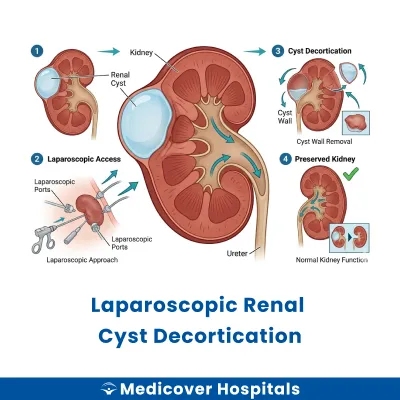
Laparoscopic Renal Cyst Decortication is a minimally invasive surgery to remove the outer layer of a cyst from the kidney (renal cyst). The procedure involves using small incisions and a camera to guide the surgical instruments. This approach reduces recovery time and minimizes scarring compared to traditional open surgery.
This surgery is needed when renal cysts cause pain, infection, or affect kidney function. Conditions like polycystic kidney disease can lead to the formation of these cysts. If left untreated, they may cause complications such as hypertension or kidney damage. Modern surgical approaches for this procedure include laparoscopic and robotic-assisted techniques, which offer precision and quicker recovery.
Laparoscopic Renal Cyst Decortication Doctors Near You
Find experienced urologists for laparoscopic renal cyst decortication at Medicover Hospitals across India. Choose your city and book a consultation to discuss your treatment options today.
Why Choose Medicover Hospitals for Laparoscopic Renal Cyst Decortication?
Get a second opinion from trusted experts and makeconfident, informed decisions.
 Get Second Opinion
Complete Guide To Laparoscopic Renal Cyst Decortication
Everything you need to know about the procedure, preparation, and recovery
Laparoscopic Renal Cyst Decortication Surgery Indications
Laparoscopic Renal Cyst Decortication is recommended when renal cysts cause significant symptoms or complications. This minimally invasive procedure is often considered when conservative treatments do not alleviate the patient's condition.
Persistent Flank Pain
Patients may experience continuous or severe pain in the flank area. This pain often persists despite medication. Imaging tests like ultrasounds or CT scans reveal large or complex cysts causing discomfort. When pain management fails, surgery is advised.
Recurrent Infections
Frequent urinary tract infections may occur due to cysts. Patients often report fever, chills, and painful urination. Doctors find cysts on imaging that contribute to these infections. If antibiotics do not prevent recurrence, surgical intervention is necessary.
Hypertension
Some patients develop high blood pressure linked to renal cysts. Blood pressure remains uncontrolled despite medication. Imaging shows cysts exerting pressure on renal structures. Surgery is considered when hypertension is resistant to treatment.
Hematuria
Visible blood in urine can be alarming for patients. This symptom may indicate cyst rupture or irritation. Doctors confirm cyst presence through imaging. When hematuria is persistent and unexplained, surgery may be needed.
Obstructive Uropathy
Patients may experience difficulty urinating or frequent urination. Imaging reveals cysts obstructing urine flow. When obstruction leads to kidney function decline, surgery becomes necessary.
How to Prepare for Laparoscopic Renal Cyst Decortication?
Proper preparation for laparoscopic renal cyst decortication is crucial to ensure a smooth procedure and recovery. It helps in reducing complications and aids in a quicker recovery process.
- Medication Review: Stop NSAIDs, anticoagulants, and herbal supplements as advised by your doctor.
- Fasting Guidelines: Do not eat or drink anything for at least 8 hours before the surgery.
- Medical History: Bring a list of all medications with dosages to the hospital.
- Clothing: Wear loose, comfortable clothing on the day of the surgery.
- Transportation: Arrange for someone to drive you home post-surgery.
- Pre-Surgery Instructions: Follow any specific instructions given by your healthcare provider.
- Hygiene: Take a shower the night before or the morning of the surgery.
- Valuables: Leave all jewelry and valuables at home.
Laparoscopic Renal Cyst Decortication Surgery (Step-by-Step)
Overview: This procedure is performed by urologists. It typically lasts 1-2 hours and is done under general anaesthesia.
- Preparation: The patient is placed under general anaesthesia. The surgical area is sterilised to prevent infection.
- Incision and Access: Small incisions (1-2 cm) are made in the abdomen. A trocar is inserted to provide access for the laparoscope and other instruments.
- Visualisation: A laparoscope is inserted through the trocar. It provides a clear view of the kidney and surrounding structures on a monitor.
- Cyst Identification: The surgeon identifies the renal cyst. The cyst is carefully examined to determine the best approach for decortication.
- Decortication: Using a harmonic scalpel or bipolar cautery, the cyst wall is incised. The fluid is drained, and the cyst wall is removed or collapsed.
- Closure: The instruments are removed. The incisions are closed with sutures or surgical glue. A dressing is applied to protect the area.
- Recovery: The patient is moved to a recovery area. Vital signs are monitored as they wake from anaesthesia.
Who Performs Laparoscopic Renal Cyst Decortication Surgery?
This surgery is performed by urology doctors. They specialise in the urinary tract and male reproductive organs. Their expertise ensures precise handling of renal cysts.
Recovery After Laparoscopic Renal Cyst Decortication Surgery
Recovery from laparoscopic renal cyst decortication surgery is generally smooth, with most patients resuming normal activities within a few weeks. It's important to follow your doctor's advice for a successful recovery.
Day 1-3:
- Expect mild discomfort and soreness around the incision sites.
- Rest is crucial. Avoid strenuous activities.
- Start with a light diet. Include foods like curd, dal-rice, and soups to aid digestion.
Day 4-7:
- Pain and discomfort should gradually decrease.
- Slowly increase physical activity, like short walks, to promote circulation.
- Continue with a balanced diet. Incorporate khichdi and moong dal for easy digestion.
Day 8-14:
- Most patients can resume work or school, depending on their comfort and doctor's advice.
- Avoid heavy lifting and intense exercise until fully cleared by your doctor.
- Maintain a nutritious diet to support healing.
Phase 3 (Week 3-4):
- Gradually return to normal activities, including light exercises.
- Monitor your body's response to increased activity levels.
- Continue with a healthy diet to maintain energy and support recovery.
When to Seek Urgent Help:
- Severe pain not relieved by medication.
- Fever or signs of infection at the incision site.
- Difficulty urinating or blood in urine.
- Persistent nausea or vomiting.
Benefits of Laparoscopic Renal Cyst Decortication Surgery
Laparoscopic renal cyst decortication is a minimally invasive procedure aimed at alleviating symptoms caused by renal cysts.
- Minimally Invasive: Smaller incisions lead to reduced scarring and quicker recovery.
- Reduced Pain: Patients often experience less postoperative pain compared to open surgery.
- Shorter Hospital Stay: Most patients can return home sooner, promoting faster return to daily activities.
- Improved Symptom Relief: Effectively alleviates symptoms such as pain and discomfort caused by cysts.
Risks and Complications of Laparoscopic Renal Cyst Decortication Surgery
While generally safe, laparoscopic renal cyst decortication carries some risks and potential complications.
Common Risks
- Infection at the incision site may occur, requiring medical attention.
- Bleeding during or after the procedure, which may need intervention.
Rare Risks
- Injury to surrounding organs or tissues, potentially requiring additional treatment.
- Blood clots may form, posing a risk of further complications.
- Anaesthesia-related complications, though uncommon, can occur.
Cost of Laparoscopic Renal Cyst Decortication Surgery
The cost of Laparoscopic Renal Cyst Decortication Surgery at Medicover Hospitals ranges from ₹27,000 to over ₹1,50,000. The price varies depending on the ward category chosen, such as day care, general, private, or deluxe options. We offer transparent pricing and support for insurance and TPA, including CGHS, ESI, and major TPAs. Cashless facilities are also available to ease the financial process. Please contact the hospital for the latest insurance panel details as these may change periodically.
Frequently Asked Questions
1. How much does Laparoscopic Renal Cyst Decortication surgery cost at Medicover Hospitals?
The cost ranges from ₹27,000 to over ₹1,50,000 across Medicover Hospitals. Prices depend on the type of room and care required.
2. Is Laparoscopic Renal Cyst Decortication surgery covered under health insurance at Medicover?
It is often covered by CGHS, ESI, and major TPAs with cashless options. Please contact the hospital for current panel details.
3. Will I experience kidney function changes post-surgery?
Laparoscopic Renal Cyst Decortication usually does not affect kidney function. However, follow-up tests are essential to monitor kidney health.
4. Can I develop new cysts after the surgery?
While the surgery removes existing cysts, new cysts may form over time. Regular check-ups help in early detection and management.
5. What dietary changes should I follow post-surgery?
Post-surgery, a light diet with curd, dal-rice, and khichdi is recommended. Avoid spicy and oily foods for a few weeks.
6. How soon can I resume normal activities?
Most patients can return to normal activities within 2-4 weeks. Avoid heavy lifting and strenuous exercise during the recovery period.
7. Are there any specific complications to watch for?
Watch for signs of infection like fever or unusual pain. Contact your doctor if you experience any unusual symptoms post-surgery.


