 Call
Call Patient Reports
Laparoscopic Pyeloplasty Surgery by Expert Urologists
At Medicover Hospitals, our skilled urologists, holding qualifications like MS, DNB, and MCh, perform Laparoscopic Pyeloplasty with precision. This minimally invasive approach results in smaller incisions and reduced blood loss, ensuring a quicker recovery for patients across India.
Expert Surgeons
Yearly Surgeries
Patient Satisfaction
What is Laparoscopic Pyeloplasty?
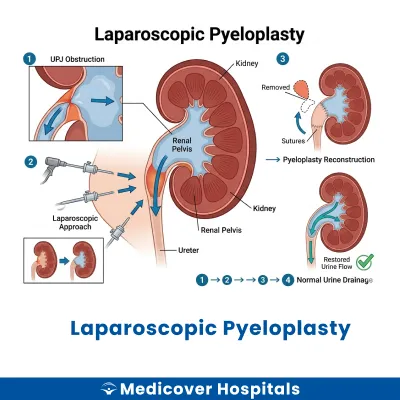
Laparoscopic Pyeloplasty is a minimally invasive surgical procedure. It aims to correct a condition called ureteropelvic junction (UPJ) obstruction. This involves the renal pelvis, which is the funnel-like part of the kidney. The surgery helps in removing the blockage and restoring normal urine flow from the kidney to the bladder.
This surgery is necessary when there is a blockage at the junction where the kidney meets the ureter. Conditions like congenital abnormalities or scar tissue can lead to UPJ obstruction. If left untreated, it can cause kidney damage or infection. Modern surgical approaches include robotic-assisted laparoscopic pyeloplasty and traditional laparoscopic techniques. These methods offer quicker recovery and less postoperative pain.
Laparoscopic Pyeloplasty Doctors Near You
Discover skilled urologists for laparoscopic pyeloplasty at Medicover Hospitals across India. Choose your city and book a consultation to address your urological needs with expert care.
Why Choose Medicover Hospitals for Laparoscopic Pyeloplasty?
Get a second opinion from trusted experts and makeconfident, informed decisions.
 Get Second Opinion
Complete Guide To Laparoscopic Pyeloplasty
Everything you need to know about the procedure, preparation, and recovery
Laparoscopic Pyeloplasty Surgery Indications
Doctors recommend laparoscopic pyeloplasty when there is an obstruction at the junction of the kidney and ureter. This procedure helps improve urine flow and relieve symptoms caused by the blockage.
Ureteropelvic Junction Obstruction
Patients often experience flank pain, especially after drinking fluids. Imaging tests like an ultrasound or CT scan reveal a blockage at the ureteropelvic junction. When medications and lifestyle changes do not alleviate symptoms, surgery is considered.
Recurrent Urinary Tract Infections
Frequent urinary tract infections can occur due to urine stagnation. Patients may report fever, pain during urination, and frequent urination. If antibiotics and other treatments fail, surgery may be necessary to resolve the underlying obstruction.
Hydronephrosis
Patients may notice abdominal swelling or pain. An ultrasound or MRI shows swelling of the kidney due to urine buildup. When this condition leads to kidney function deterioration, surgical intervention is recommended.
Decreased Kidney Function
Blood tests may show reduced kidney function. Patients might not have obvious symptoms initially. When kidney function tests show significant decline despite medical management, surgery becomes crucial.
Severe Flank Pain
Persistent and severe pain in the side or back is common. This pain is often linked to urine flow obstruction. When pain management and other treatments do not provide relief, surgery is advised.
How to Prepare for Laparoscopic Pyeloplasty?
Proper preparation is crucial for a successful laparoscopic pyeloplasty. It helps reduce risks and ensures a smooth recovery. Follow these steps to get ready for your surgery.
- Medication Review: Stop NSAIDs, anticoagulants, and herbal supplements as advised by your doctor.
- Fasting: Do not eat or drink anything for at least 8 hours before the surgery to ensure safety during anaesthesia.
- Pre-Surgery Tests: Complete all required blood tests, imaging, and any other evaluations as instructed.
- Personal Items: Bring a list of your current medications with dosages to the hospital.
- Clothing: Wear loose, comfortable clothing on the day of the surgery for ease and comfort.
- Transportation: Arrange for someone to drive you home post-surgery, as you will not be able to drive yourself.
- Hygiene: Take a shower the night before or the morning of the surgery using antibacterial soap.
- Smoking and Alcohol: Avoid smoking and alcohol for at least 24 hours before the procedure.
Laparoscopic Pyeloplasty Surgery (Step-by-Step)
Overview: Laparoscopic Pyeloplasty is performed by urologists. The surgery typically lasts 2-4 hours. It is done under general anaesthesia, ensuring the patient is asleep and pain-free.
- Preparation: The patient is positioned on the operating table. General anaesthesia is administered. The surgical area is sterilised.
- Port Placement: Small incisions of about 1-2 cm are made in the abdomen. Trocars are inserted through these incisions to allow access for surgical instruments.
- Accessing the Kidney: A laparoscope is inserted through one of the trocars. This provides a visual guide for the surgeon. The kidney and ureter are located.
- Dissection: Using instruments like harmonic scalpel and bipolar cautery, the surgeon carefully dissects the ureteropelvic junction. The obstructed segment is identified and removed.
- Reconstruction: The ureter is reattached to the renal pelvis. This is done to ensure proper urine flow. Sutures are used to secure the connection.
- Closure: The instruments are removed. The small incisions are closed with sutures or surgical glue. Dressings are applied to protect the wounds.
- Recovery: The patient is moved to the recovery room. Vital signs are monitored as they wake from anaesthesia. Pain management is provided as needed.
Who Performs Laparoscopic Pyeloplasty Surgery?
Laparoscopic Pyeloplasty is performed by urology doctors. These specialists are trained in minimally invasive techniques. They focus on surgeries involving the urinary tract and kidneys.
Recovery After Laparoscopic Pyeloplasty Surgery
Recovery from laparoscopic pyeloplasty surgery involves gradual healing and resuming daily activities. It's important to follow your doctor's advice for a smooth recovery.
Day 1-3:
- Rest is crucial. Avoid strenuous activities.
- Start with liquids and gradually introduce soft foods like curd, dal-rice, and soups.
- Manage pain with prescribed medications.
Day 4-7:
- Slowly increase mobility by taking short walks.
- Continue with a light diet including khichdi and moong dal.
- Monitor the surgical site for any signs of infection.
Day 8-14:
- Resume light activities but avoid heavy lifting.
- Return to work or school if you feel comfortable and your doctor approves.
- Maintain a balanced diet to support healing.
Phase 3 (Week 3-4):
- Gradually return to normal activities.
- Continue to avoid high-impact exercises.
- Regular follow-up appointments to monitor recovery.
When to Seek Urgent Help
- Fever above 100°F (37.8°C).
- Severe pain not relieved by medication.
- Redness, swelling, or discharge from the incision site.
- Difficulty urinating or blood in urine.
Benefits of Laparoscopic Pyeloplasty Surgery
Laparoscopic pyeloplasty is a minimally invasive procedure to correct ureteropelvic junction obstruction. It offers several advantages over traditional open surgery.
- Minimally Invasive: Smaller incisions lead to less pain and quicker recovery.
- Reduced Scarring: Tiny incisions result in minimal scarring.
- Shorter Hospital Stay: Patients often experience a quicker discharge.
- Faster Return to Activities: Patients can resume daily activities sooner.
- Lower Infection Risk: Smaller wounds reduce the chance of infection.
Risks and Complications of Laparoscopic Pyeloplasty Surgery
While laparoscopic pyeloplasty is generally safe, like any surgery, it carries certain risks. It's important to be aware of potential complications.
Common Risks
- Bleeding at the surgical site.
- Infection, though less likely than in open surgery.
Rare Risks
- Injury to surrounding organs or tissues.
- Urine leakage from the surgical site.
- Blood clots, which can occur post-surgery.
- Anaesthesia-related complications.
Cost of Laparoscopic Pyeloplasty Surgery
The cost of Laparoscopic Pyeloplasty Surgery at Medicover Hospitals ranges from ₹75,000 to ₹3,00,000, depending on the ward category chosen. Prices vary across different ward types, ensuring options to suit various preferences and budgets.
We offer transparent pricing and support for insurance and TPA, including CGHS, ESI, and major TPAs. A cashless facility is also available for your convenience. Please contact the hospital for the latest insurance panel details as these may change periodically.
Frequently Asked Questions
1. How much does Laparoscopic Pyeloplasty surgery cost at Medicover Hospitals?
The cost of Laparoscopic Pyeloplasty surgery ranges from ₹75,000 to ₹3,00,000 across Medicover Hospitals, depending on the room category chosen.
2. Is Laparoscopic Pyeloplasty surgery covered under health insurance at Medicover?
Laparoscopic Pyeloplasty surgery is often covered by CGHS, ESI, and major TPAs for cashless treatment. Please contact the hospital for current panel details.
3. Will I need a stent after Laparoscopic Pyeloplasty?
Yes, a ureteral stent is usually placed to ensure proper urine flow post-surgery. It is typically removed a few weeks later.
4. Can I experience kidney pain after Laparoscopic Pyeloplasty?
Mild discomfort or kidney pain is common initially after surgery. It usually subsides as healing progresses over the following weeks.
5. How soon can I return to work after Laparoscopic Pyeloplasty?
Most patients can return to work within 2 to 4 weeks after surgery. This depends on the nature of their job and recovery progress.
6. What dietary changes are needed after Laparoscopic Pyeloplasty?
Post-surgery, a light diet including curd, dal-rice, and khichdi is recommended. Avoid spicy and heavy foods for a smoother recovery.
7. Can urinary infections occur after Laparoscopic Pyeloplasty?
Urinary infections can occur post-surgery, but they're generally preventable with proper care. Drinking plenty of fluids and following medical advice helps.


