 Call
Call Patient Reports
Best Hospital for Laparoscopic Ovarian Endometrioma Excision with Expert Care
At Medicover Hospitals, our gynecologists, with qualifications like MS, DNB, and FMAS, perform laparoscopic ovarian endometrioma excision. This minimally invasive procedure involves smaller incisions, leading to reduced blood loss and a shorter hospital stay for patients across India.
Expert Surgeons
Yearly Surgeries
Patient Satisfaction
What is Laparoscopic Ovarian Endometrioma Excision?
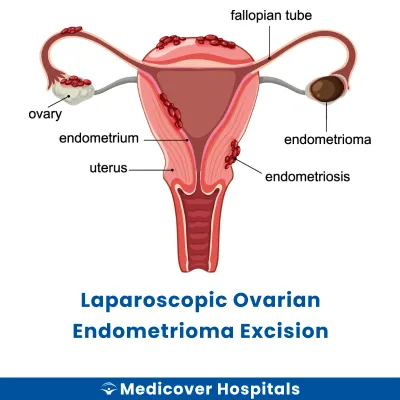
Laparoscopic ovarian endometrioma Excision is a minimally invasive surgery to remove endometriomas (cysts formed by endometrial tissue) from the ovaries. The procedure involves small incisions in the abdomen. A laparoscope (a thin tube with a camera) helps the surgeon see and remove the cysts. This method is less invasive than traditional open surgery, leading to quicker recovery.
This surgery is needed when endometriomas cause pain, infertility, or other complications. Endometriosis can lead to severe pelvic pain and affect fertility if untreated. Laparoscopic techniques, such as excision or ablation, are modern approaches. They help in effectively managing the condition while preserving ovarian function. Early intervention can prevent complications and improve quality of life.
Laparoscopic Ovarian Endometrioma Excision Doctors Near You
Discover expert gynecologists for laparoscopic ovarian endometrioma excision at Medicover Hospitals across India. Choose your city and book a consultation to explore treatment options tailored to your needs.
Why Choose Medicover Hospitals for Laparoscopic Ovarian Endometrioma Excision?
Get a second opinion from trusted experts and makeconfident, informed decisions.
 Get Second Opinion
Complete Guide To Laparoscopic Ovarian Endometrioma Excision
Everything you need to know about the procedure, preparation, and recovery
Laparoscopic Ovarian Endometrioma Excision Surgery Indications
Laparoscopic ovarian endometrioma excision is recommended when symptoms of endometriosis significantly affect quality of life. Doctors suggest this procedure when conservative treatments do not provide relief.
Chronic Pelvic Pain
Patients often experience persistent pelvic pain that worsens during menstruation. On examination, doctors may find tenderness in the pelvic region. When pain management and hormonal therapies fail, surgery is considered.
Infertility
Women may struggle to conceive due to endometriomas affecting ovarian function. Imaging tests like ultrasounds reveal cysts on the ovaries. If fertility treatments are unsuccessful, surgical intervention may be advised.
Severe Menstrual Cramps
Intense cramps that disrupt daily activities are common. Doctors may find enlarged ovaries or cysts during a pelvic exam. When pain relief medications do not work, surgery may be necessary.
Ovarian Cysts Detected on Ultrasound
Ultrasounds may show cysts larger than 4 cm, causing discomfort or pressure. If these cysts persist or grow despite medication, surgery is recommended.
Failed Medical Management
Patients who do not respond to hormonal treatments or pain relief methods may need surgery. Persistent symptoms despite medication indicate the need for excision.
How to Prepare for Laparoscopic Ovarian Endometrioma Excision?
Proper preparation is crucial for a smooth laparoscopic ovarian endometrioma excision. It helps minimise complications and ensures a quicker recovery.
- Medication Review: Stop NSAIDs, anticoagulants, and herbal supplements at least a week before surgery.
- Fasting: Do not eat or drink anything for at least 8 hours before the procedure to ensure safety during anaesthesia.
- Bowel Preparation: Follow your doctor's instructions for bowel prep, which may include laxatives or enemas.
- Clothing: Wear loose, comfortable clothing on the day of the surgery for ease of movement post-procedure.
- Transportation: Arrange for someone to drive you home, as you will not be able to drive after the anaesthesia.
- Medication List: Bring a list of all medications you are currently taking, including dosages, to the hospital.
- Pelvic Floor Exercises: Consider doing pelvic floor exercises as advised by your doctor to aid recovery.
- Pre-Op Consultation: Attend any scheduled pre-operative consultations to discuss the procedure and address any concerns.
Laparoscopic Ovarian Endometrioma Excision Surgery (Step-by-Step)
This procedure is performed by gynecologists. It typically lasts 1-3 hours and is done under general anaesthesia.
- Preparation: The patient is placed under general anaesthesia. A sterile environment is prepared.
- Incision: Small incisions (1-2 cm) are made in the abdomen. A trocar is inserted for access.
- Insertion of Laparoscope: A laparoscope is inserted through one of the incisions. It provides a clear view of the pelvic organs.
- Identification of Endometrioma: The surgeon identifies the ovarian endometrioma using the laparoscope.
- Excision: The endometrioma is carefully excised using instruments like a harmonic scalpel or bipolar cautery. Care is taken to preserve healthy ovarian tissue.
- Closure: The excised tissue is removed. Incisions are closed with sutures or surgical glue.
- Recovery: The patient is moved to a recovery area. Monitoring continues as anaesthesia wears off.
Who Performs Laparoscopic Ovarian Endometrioma Excision Surgery?
This surgery is performed by gynecologists who specialise in minimally invasive procedures. They have expertise in using laparoscopic instruments and techniques to treat ovarian conditions.
Recovery After Laparoscopic Ovarian Endometrioma Excision Surgery
Recovery from laparoscopic ovarian endometrioma excision surgery is generally smooth and quicker compared to open surgery. However, each individual's recovery may vary. Here is a general timeline to help you understand what to expect during the recovery process.
Day 1-3:
- Expect mild discomfort and some bloating. Pain relief medication will be provided.
- Rest is crucial. Avoid strenuous activities.
- Start with a light diet. Include soft foods like curd, dal-rice, and soups.
Day 4-7:
- Pain and bloating should gradually decrease.
- Begin gentle walking to promote circulation.
- Continue with a balanced diet. Add easily digestible foods like khichdi and moong dal.
Day 8-14:
- Most patients can resume light activities and return to work or school, depending on how they feel.
- Avoid lifting heavy objects and intense physical activities.
- Maintain a nutritious diet to aid healing.
Phase 3 (Week 3-4):
- Gradually increase activity levels as comfort allows.
- Continue to avoid heavy lifting and high-impact exercises.
- Follow up with your doctor for a post-operative check-up.
When to Seek Urgent Help:
- Severe abdominal pain or swelling.
- High fever or chills.
- Heavy bleeding or unusual discharge from the incision site.
- Persistent nausea or vomiting.
Benefits of Laparoscopic Ovarian Endometrioma Excision Surgery
Laparoscopic ovarian endometrioma excision is a minimally invasive procedure aimed at alleviating symptoms and improving fertility.
- Minimal Scarring: The procedure involves small incisions, leading to less visible scarring.
- Reduced Pain: Many patients experience significant relief from pelvic pain post-surgery.
- Improved Fertility: Removing endometriomas can enhance fertility prospects for some women.
- Shorter Recovery Time: Patients often recover faster compared to traditional open surgery.
Risks and Complications of Laparoscopic Ovarian Endometrioma Excision Surgery
While generally safe, laparoscopic ovarian endometrioma excision carries certain risks and complications.
- Infection at the incision site may occur, requiring medical attention.
- Bleeding during or after the procedure is a possibility.
- Damage to surrounding organs, such as the bladder or bowel, can happen.
- Formation of adhesions, which may cause future pelvic pain.
- Anesthesia-related complications could arise during the procedure.
Cost of Laparoscopic Ovarian Endometrioma Excision Surgery
The cost of Laparoscopic Ovarian Endometrioma Excision Surgery at Medicover Hospitals ranges from Rs. 1,12,500 to Rs. 1,64,000. The price varies based on the ward category chosen, such as day care, general, or private rooms. We offer transparent pricing and support for insurance and TPA, including CGHS, ESI, and major TPAs. Cashless facilities are also available. Please contact the hospital for the latest insurance panel details as these may change periodically.
Frequently Asked Questions
1. How much does Laparoscopic Ovarian Endometrioma Excision surgery cost at Medicover Hospitals?
The cost ranges from Rs. 1,12,500 to Rs. 1,64,000 across Medicover Hospitals. Prices vary based on room type and care level.
2. Is Laparoscopic Ovarian Endometrioma Excision surgery covered under health insurance at Medicover?
Yes, it is often covered by CGHS, ESI, and major TPAs with cashless options. Please contact the hospital for current panel details.
3. Will I lose ovarian function after the surgery?
The surgery aims to preserve ovarian function while removing endometrioma. Discuss with your doctor about potential impacts on fertility.
4. Can I conceive naturally after the surgery?
Many women can conceive naturally after the surgery. Discuss fertility plans with your doctor to understand your specific chances.
5. Will I experience hormonal changes post-surgery?
Hormonal changes are uncommon as the surgery preserves the ovaries. Consult your doctor if you notice any unusual symptoms.
6. What diet should I follow after the surgery?
A light diet with curd, dal-rice, and khichdi is recommended initially. Gradually reintroduce regular foods as advised by your doctor.
7. Is there a risk of endometrioma recurrence?
There is a possibility of recurrence, although the surgery reduces this risk. Regular follow-ups with your doctor are important for monitoring.


