 Call
Call Patient Reports
Best Hospital for Laparoscopic Orchidopexy Surgery with Expert Care
At Medicover Hospitals, laparoscopic orchidopexy is performed by skilled pediatric surgeons with MS and MCh qualifications. This minimally invasive procedure involves smaller incisions, leading to reduced blood loss and a shorter hospital stay, ensuring a quicker recovery for young patients.
Expert Surgeons
Yearly Surgeries
Patient Satisfaction
What is Laparoscopic Orchidopexy?
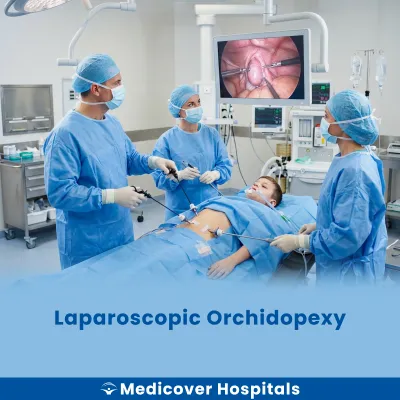
Laparoscopic orchidopexy is a minimally invasive surgical procedure. It is used to correct an undescended testicle (cryptorchidism). The testicle is located in the scrotum, a pouch of skin below the penis. During the procedure, small incisions are made in the abdomen. A laparoscope (a thin tube with a camera) helps guide the surgeon to move the testicle into its proper position.
This surgery is necessary for boys with undescended testicles. If left untreated, the condition can lead to fertility issues or an increased risk of testicular cancer. Laparoscopic orchidopexy is preferred for its precision and faster recovery. Modern approaches include single-incision laparoscopic surgery and robotic-assisted techniques. These methods aim to reduce scarring and improve outcomes.
Laparoscopic Orchidopexy Doctors Near You
Find experienced pediatric-surgeons for laparoscopic orchidopexy at Medicover Hospitals across India. Choose your city and book a consultation to discuss your child's needs with our specialists.
Why Choose Medicover Hospitals for Laparoscopic Orchidopexy?
Get a second opinion from trusted experts and makeconfident, informed decisions.
 Get Second Opinion
Complete Guide To Laparoscopic Orchidopexy
Everything you need to know about the procedure, preparation, and recovery
Laparoscopic Orchidopexy Surgery Indications
Laparoscopic orchidopexy is recommended for children with undescended testicles. This minimally invasive procedure helps position the testicle correctly in the scrotum, reducing future complications.
Undescended Testicle
When a testicle does not move into the scrotum naturally, it is termed undescended. Parents may notice an empty scrotum or a lump in the groin area. Doctors confirm this through physical examination and ultrasound. Surgery is advised if the testicle remains undescended by 6-12 months of age.
Retractile Testicle
Some children experience a testicle that moves between the scrotum and groin. This may cause discomfort or a noticeable change in scrotal appearance. Doctors may observe this during a physical exam. Surgery is considered if the testicle does not settle in the scrotum over time.
Testicular Torsion Risk
Undescended testicles are at a higher risk of twisting, leading to torsion. Symptoms include sudden groin pain and swelling. An ultrasound can reveal abnormal testicular positioning. Surgery is necessary to prevent torsion and preserve testicular function.
Fertility Concerns
Undescended testicles may affect fertility later in life. Parents may not notice symptoms, but doctors assess this risk through examination and history. Surgery is recommended to improve fertility outcomes.
Inguinal Hernia
Undescended testicles can be associated with inguinal hernias. Symptoms include a bulge in the groin, especially when crying or straining. Doctors diagnose this through examination and imaging. Surgery corrects both the hernia and testicle position.
How to Prepare for Laparoscopic Orchidopexy ?
Proper preparation for laparoscopic orchidopexy ensures a smooth surgical process and recovery. It helps in minimizing risks and complications.
- Medication Review: Stop NSAIDs, anticoagulants, and herbal supplements as advised by your doctor.
- Fasting Guidelines: Fast for at least 6-8 hours before the surgery to ensure safety during anaesthesia.
- Pre-Surgery Bath: Take a shower with antibacterial soap the night before to reduce infection risk.
- Comfortable Clothing: Wear loose-fitting clothes on the day of surgery for comfort and ease of movement post-surgery.
- Transport Arrangement: Arrange for someone to drive you home after the procedure, as you may feel drowsy from anaesthesia.
- Medication List: Bring a list of current medications with dosages to inform the medical team.
- Pre-Op Instructions: Follow any additional instructions provided by your surgeon or healthcare team.
- Emotional Preparation: Discuss any concerns with your doctor to ease anxiety before the procedure.
Laparoscopic Orchidopexy Surgery (Step-by-Step)
Laparoscopic orchidopexy is performed by a pediatric surgeon. The procedure typically lasts 1-2 hours and is done under general anaesthesia.
- Preparation: The patient is placed under general anaesthesia. The surgical area is cleaned and sterilized.
- Port Insertion: Small incisions (1-2 cm) are made in the abdomen. A trocar is inserted through these incisions to allow access for surgical instruments.
- Visualisation: A laparoscope is inserted through one of the ports. This instrument provides a magnified view of the internal structures on a monitor.
- Mobilisation: The surgeon uses instruments like a harmonic scalpel or bipolar cautery to carefully free the undescended testis from surrounding tissues.
- Positioning: The testis is gently moved into the scrotum. A small incision is made in the scrotum to secure the testis in place.
- Closure: The incisions are closed with sutures or surgical glue. The patient is then moved to the recovery area.
- Recovery: The patient wakes up in the recovery room. Pain management and monitoring are provided as the anaesthesia wears off.
Who Performs LAPAROSCOPIC ORCHIDOPEXY Surgery?
A pediatric surgeon performs laparoscopic orchidopexy. These specialists are trained in minimally invasive techniques for children. They ensure the procedure is done safely and effectively.
Recovery After Laparoscopic Orchidopexy Surgery
Recovery from laparoscopic orchidopexy is generally smooth, with most children returning to normal activities within a few weeks. Parents should monitor their child's progress and follow the surgeon's advice for optimal recovery.
Day 1-3:
- Rest is crucial. Encourage your child to take it easy and avoid strenuous activities.
- Diet should be light. Offer soft foods like curd, dal-rice, and soups to ease digestion.
- Pain and discomfort are common. Follow the prescribed pain management plan.
Day 4-7:
- Gradually reintroduce regular foods. Khichdi and moong dal are good options.
- Short walks can be encouraged, but avoid running or jumping.
- Monitor the surgical site for any signs of infection.
Day 8-14:
- Most children can return to school, but physical education or sports should be avoided.
- Continue with a balanced diet to support healing.
- Follow up with the doctor to ensure proper healing.
Phase: 2-4 Weeks:
- Gradually resume normal activities as advised by the doctor.
- Ensure your child stays hydrated and maintains a nutritious diet.
- Regular follow-ups may be needed to monitor recovery.
When to Seek Urgent Help
- Fever over 100F or persistent vomiting.
- Redness, swelling, or discharge from the surgical site.
- Severe pain not relieved by medication.
- Difficulty urinating or any unusual symptoms.
Benefits of Laparoscopic Orchidopexy Surgery
Laparoscopic orchidopexy is a minimally invasive procedure to correct undescended testicles. It offers several advantages.
- Minimally Invasive: Smaller incisions lead to less pain and quicker recovery.
- Improved Visualisation: Enhanced view of the internal structures aids precision.
- Reduced Scarring: Smaller cuts result in minimal scarring.
- Shorter Hospital Stay: Most patients can return home the same day.
- Faster Recovery: Patients often resume normal activities sooner.
Risks and Complications of LAPAROSCOPIC ORCHIDOPEXY Surgery
While generally safe, laparoscopic orchidopexy carries some risks, as with any surgical procedure.
- Mild pain or discomfort at the incision sites.
- Swelling or bruising in the groin area.
- Infection at the incision sites.
- Bleeding or hematoma formation.
- Injury to surrounding tissues or organs.
- Testicular atrophy or loss of testicular function.
- Recurrence of the undescended testicle.
What is the Cost of Laparoscopic Orchidopexy Surgery
The cost of laparoscopic orchidopexy surgery can vary based on factors such as the surgical approach, duration of hospital stay, room category, required diagnostics, and post-operative care. At Medicover Hospitals, we ensure transparent pricing to help you plan your treatment effectively.
The estimated cost of laparoscopic orchidopexy surgery at Medicover Hospitals ranges from Rs.75,000 to Rs. 2,02,000, depending on the individual case and treatment requirements.
We offer support for insurance and TPA, including CGHS, ESI, and major TPAs, with a cashless facility available for your convenience. Please contact the hospital for the latest insurance panel details, as these may change periodically.
Frequently Asked Questions
1. How much does Laparoscopic orchidopexy surgery cost at Medicover Hospitals?
The cost for laparoscopic orchidopexy can vary depending on individual case requirements. At Medicover Hospitals, the estimated cost ranges from ₹75,000 to ₹2,02,
2. Please contact the hospital for the most accurate and current pricing details. 2. Is Laparoscopic orchidopexy surgery covered under health insurance at Medicover?
Laparoscopic orchidopexy is often covered by CGHS, ESI, and major TPAs. Please contact the hospital for current panel details as insurance panels may change.
3. Will my child experience pain post-orchidopexy?
Mild discomfort is common after laparoscopic orchidopexy. Pain relief medication can help manage any discomfort effectively.
4. Can my child play sports after orchidopexy?
Your child should avoid sports for at least 2 weeks post-surgery. Gradual return to physical activities is advised after consulting the doctor.
5. What are the risks of testicular torsion post-surgery?
The risk of testicular torsion is significantly reduced after orchidopexy. Regular follow-ups ensure proper healing and positioning of the testis.
6. Will my child need a special diet after orchidopexy?
A light diet with foods like curd, dal-rice, and khichdi is recommended initially. Gradually, your child can return to their normal diet.
7. Is swelling normal after laparoscopic orchidopexy?
Mild swelling around the surgical site is normal and usually subsides in a few days. If swelling persists, consult your doctor for advice.


