 Call
Call Patient Reports
Laparoscopic Low Anterior Resection with Diverting Ileostomy Surgery by Expert Oncologists
At Medicover Hospitals, our team of oncologists, including those with MS, DNB, and MCh qualifications, perform Laparoscopic Low Anterior Resection with Diverting Ileostomy. This minimally invasive approach ensures smaller incisions and reduced blood loss, enhancing recovery for patients across India.
Expert Surgeons
Yearly Surgeries
Patient Satisfaction
What is Laparoscopic Low Anterior Resection With Diverting Ileostomy?
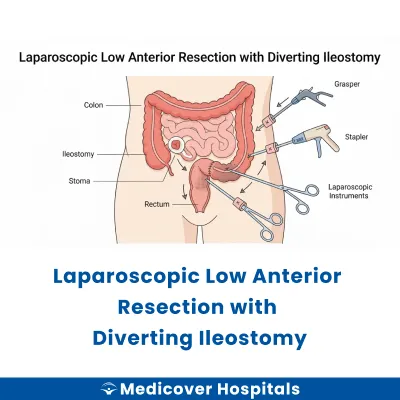
Laparoscopic Low Anterior Resection with Diverting Ileostomy is a minimally invasive surgery involving the removal of the rectum's diseased section. The rectum is part of the large intestine. A temporary ileostomy (an opening in the abdominal wall) is created to divert waste, allowing the rectum to heal. This procedure uses small incisions and a camera to guide the surgery.
This surgery is often needed for conditions like rectal cancer or inflammatory bowel disease. If left untreated, these conditions can lead to severe complications, including bowel obstruction or cancer spread. Modern surgical approaches include laparoscopic and robotic-assisted techniques. These methods aim to reduce recovery time and improve outcomes.
Laparoscopic Low Anterior Resection With Diverting Ileostomy Doctors Near You
Discover skilled oncologists for laparoscopic low anterior resection with diverting ileostomy at Medicover Hospitals across India. Choose your city and book a consultation to explore your treatment options.
Why Choose Medicover Hospitals for Laparoscopic Low Anterior Resection With Diverting Ileostomy?
Get a second opinion from trusted experts and makeconfident, informed decisions.
 Get Second Opinion
Complete Guide To Laparoscopic Low Anterior Resection With Diverting Ileostomy
Everything you need to know about the procedure, preparation, and recovery
Laparoscopic Low Anterior Resection with Diverting Ileostomy Surgery Indications
Doctors recommend laparoscopic low anterior resection with diverting ileostomy for specific colorectal conditions. This minimally invasive procedure is often chosen when conservative treatments are ineffective.
Colorectal Cancer
Patients may experience rectal bleeding, changes in bowel habits, or abdominal pain. Imaging and Colon examination can reveal tumours in the lower rectum. When chemotherapy or radiation fails to control tumour growth, surgery is necessary.
Diverticulitis
Symptoms include severe abdominal pain, fever, and changes in bowel movements. CT scans may show inflamed or perforated diverticula. Surgery is considered when recurrent episodes occur despite medical management.
Ulcerative Colitis
Patients often suffer from chronic diarrhoea, rectal bleeding, and abdominal cramps. Colonoscopy may show extensive inflammation. Surgery becomes an option when medication no longer controls symptoms.
Familial Adenomatous Polyposis
Individuals may not have symptoms initially but are at high risk for cancer. Genetic testing and colonoscopy can detect numerous polyps. Surgery is advised when polyp burden increases despite surveillance.
Rectal Prolapse
Patients might notice a protruding rectum, discomfort, and incontinence. Physical examination confirms the prolapse. When non-surgical treatments fail, surgery is recommended to restore normal function.
How to Prepare for Laparoscopic Low Anterior Resection with Diverting Ileostomy?
Proper preparation is crucial for a successful laparoscopic low anterior resection with diverting ileostomy. It helps reduce complications and ensures a smoother recovery.
- Medication Review: Stop NSAIDs, anticoagulants, and herbal supplements as advised by your doctor.
- Fasting Guidelines: Do not eat or drink anything for at least 8 hours before the surgery.
- Bowel Preparation: Follow the prescribed bowel cleansing routine to ensure the colon is clear.
- Pelvic Floor Exercises: Practice exercises to strengthen pelvic muscles, if recommended by your healthcare provider.
- Comfortable Clothing: Wear loose-fitting clothes on the day of surgery for comfort and ease of movement.
- Transportation: Arrange for someone to drive you home post-surgery, as you may feel drowsy from anaesthesia.
- Medication List: Bring a list of your current medications, including dosages, to the hospital.
- Pre-Surgery Consultation: Attend all pre-surgery appointments to discuss any concerns and receive specific instructions.
Laparoscopic Low Anterior Resection with Diverting Ileostomy Surgery (Step-by-Step)
Overview: This procedure is performed by surgical oncologists. It typically lasts 3-4 hours and is done under general anaesthesia.
- Preparation: The patient is positioned on the operating table. General anaesthesia is administered to ensure the patient is asleep and pain-free.
- Port Insertion: Small incisions of about 1-2 cm are made in the abdomen. Trocars are inserted through these incisions to allow access for surgical instruments.
- Laparoscope Insertion: A laparoscope, a camera-equipped instrument, is inserted through one of the trocars. This provides a clear view of the abdominal cavity on a monitor.
- Tumour Resection: The affected section of the rectum is identified. A harmonic scalpel is used to carefully cut and remove the diseased tissue while minimizing blood loss.
- Anastomosis: The remaining healthy sections of the colon are reconnected. This is done to restore the continuity of the digestive tract.
- Diverting Ileostomy Creation: A small opening is made in the abdominal wall. Part of the ileum is brought out through this opening to create a temporary stoma.
- Closure: The incisions are closed with sutures or staples. The patient is then moved to the recovery area for monitoring.
Who Performs Laparoscopic Low Anterior Resection with Diverting Ileostomy Surgery?
This surgery is performed by surgical oncologists. They specialise in treating cancers and are trained in advanced laparoscopic techniques. Their expertise ensures the procedure is conducted with precision.
Recovery After Laparoscopic Low Anterior Resection with Diverting Ileostomy Surgery
Recovery from this surgery involves gradual healing and adaptation to changes in bowel function. Patients can expect a hospital stay followed by a period of home recovery. It's important to follow medical advice for a smooth recovery.
Day 1-3:
- Hospital stay for monitoring and pain management.
- Begin with a liquid diet, gradually introducing soft foods like soups and dal water.
- Encouraged to walk short distances to improve circulation.
Day 4-7:
- Transition to a soft diet including curd, dal-rice, and khichdi.
- Continue walking and light activities; avoid lifting heavy objects.
- Focus on hydration and small, frequent meals.
Day 8-14:
- Gradually introduce more solid foods like moong dal and soft chapatis.
- Increase walking duration but avoid strenuous activities.
- Monitor the stoma site for any signs of infection.
Phase 3 (Week 3-6):
- Resume normal diet as tolerated, focusing on balanced meals.
- Return to work/school may be possible, depending on recovery and type of work.
- Continue to avoid heavy lifting and intense exercise.
When to Seek Urgent Help
- Severe abdominal pain or swelling.
- High fever or chills.
- Persistent vomiting or inability to pass stool or gas.
- Signs of infection at the stoma site, such as redness, swelling, or discharge.
Benefits of Laparoscopic Low Anterior Resection with Diverting Ileostomy Surgery
This minimally invasive procedure offers several advantages for patients with rectal cancer or other conditions.
- Reduced Recovery Time: Patients often experience quicker recovery compared to open surgery.
- Less Postoperative Pain: Smaller incisions typically result in less pain after surgery.
- Lower Risk of Infection: The laparoscopic approach reduces the chance of wound infections.
- Improved Cosmetic Outcome: Smaller scars are a benefit of this minimally invasive technique.
- Better Preservation of Bowel Function: The procedure aims to maintain normal bowel function as much as possible.
Risks and Complications of Laparoscopic Low Anterior Resection with Diverting Ileostomy Surgery
While generally safe, this surgery carries certain risks and potential complications.
Common Risks
- Bleeding during or after the procedure
- Infection at the site of surgery or the ileostomy.
Rare Risks
- Anastomotic leak, which may require additional intervention.
- Bowel obstruction due to scar tissue formation.
- Damage to nearby organs or structures.
- Complications related to anaesthesia.
- Ileostomy-related issues such as skin irritation or dehydration.
Cost of Laparoscopic Low Anterior Resection with Diverting Ileostomy Surgery
The cost for Laparoscopic Low Anterior Resection with Diverting Ileostomy Surgery at Medicover Hospitals ranges from ₹2,50,000. to ₹3,00,000. The price varies based on the ward category chosen, such as general, twin sharing, or private rooms.
We offer transparent pricing and support for insurance and TPAs, including CGHS, ESI, and major TPAs. Cashless facility is available for eligible patients. Please contact the hospital for the latest insurance panel details as these may change periodically.
Frequently Asked Questions
1. How much does Laparoscopic Low Anterior Resection with Diverting Ileostomy surgery cost at Medicover Hospitals?
The cost ranges from ₹2,50,
2. to ₹3,00,000 across Medicover Hospitals. Prices vary based on room type and other factors. 2. Is Laparoscopic Low Anterior Resection with Diverting Ileostomy surgery covered under health insurance at Medicover?
Yes, it is often covered by CGHS, ESI, and major TPAs for cashless treatment. Please contact the hospital for current panel details.
3. Will I need a stoma bag permanently?
The stoma bag is usually temporary and may be reversed later. Consult your surgeon for a personalised recovery plan.
4. What foods should I avoid after surgery?
Avoid high-fibre foods like whole grains and raw vegetables initially. Opt for soft foods like curd, dal-rice, and khichdi.
5. Can I exercise after the surgery?
Light walking is encouraged soon after surgery, but avoid strenuous activities. Consult your doctor for a tailored exercise plan.
6. Will I experience bowel changes?
Bowel habits may change temporarily, including frequency and consistency. These usually improve over time with dietary adjustments.
7. What if I experience stoma complications?
Contact your healthcare provider if you notice redness, swelling, or leakage. Prompt attention can prevent further complications.


