 Call
Call Patient Reports
Laparoscopic Gastrojejunostomy Surgery by Expert Gastroenterologists Surgical
At Medicover Hospitals, our team of consultant surgical gastroenterologists, with qualifications like MS, DNB, and MCh, perform laparoscopic gastrojejunostomy. This minimally invasive approach ensures smaller incisions and reduced blood loss, facilitating quicker recovery for patients across India.
Expert Surgeons
Yearly Surgeries
Patient Satisfaction
What is Laparoscopic Gastrojejunostomy?
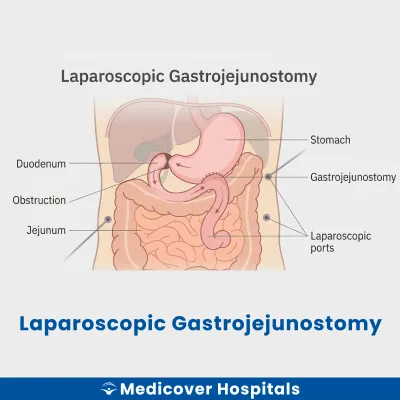
Laparoscopic Gastrojejunostomy is a minimally invasive surgery. It creates a connection between the stomach and the jejunum (part of the small intestine). This procedure bypasses a blocked or narrowed part of the stomach or duodenum. Surgeons use small incisions and a camera to perform the surgery, which reduces recovery time.
This surgery is needed when there is an obstruction in the stomach or duodenum. Conditions like gastric cancer or peptic ulcers can lead to this blockage. If untreated, it can cause severe pain, vomiting, and nutritional issues. Modern surgical approaches include laparoscopic techniques, which offer less pain and quicker recovery compared to traditional open surgery.
Laparoscopic Gastrojejunostomy Doctors Near You
Find experienced gastroenterologists-surgical at Medicover Hospitals across India. Choose your city and book a consultation for laparoscopic gastrojejunostomy. Get expert care close to home.
Why Choose Medicover Hospitals for Laparoscopic Gastrojejunostomy?
Get a second opinion from trusted experts and makeconfident, informed decisions.
 Get Second Opinion
Complete Guide To Laparoscopic Gastrojejunostomy
Everything you need to know about the procedure, preparation, and recovery
Laparoscopic Gastrojejunostomy Surgery Indications
Laparoscopic Gastrojejunostomy is recommended when patients experience severe gastrointestinal issues that do not respond to conservative treatments. It is often considered when there is a need to bypass a blocked or narrowed part of the stomach or duodenum.
Gastric Outlet Obstruction
Patients may experience persistent vomiting, abdominal pain, and bloating. Imaging may reveal a blockage at the stomach's exit. When dietary changes and medications fail to relieve symptoms, surgery is considered.
Peptic Ulcer Disease
Severe ulcers can cause pain, nausea, and bleeding. Endoscopy might show ulcers obstructing the gastric outlet. If medication and lifestyle changes do not heal the ulcers, surgery may be necessary.
Pancreatic Cancer
Patients often report jaundice, weight loss, and abdominal discomfort. Scans may show a tumour pressing on the duodenum. When chemotherapy and other treatments are insufficient, surgery is an option.
Chronic Duodenal Obstruction
Symptoms include nausea, vomiting, and weight loss. Imaging tests might reveal a narrowed duodenum. If symptoms persist despite medical management, surgery is advised.
Gastroparesis
Patients experience delayed gastric emptying, leading to nausea and bloating. Gastric emptying studies confirm the diagnosis. When dietary changes and medications fail, surgery may be considered.
How to Prepare for Laparoscopic Gastrojejunostomy?
Proper preparation is crucial for a successful laparoscopic gastrojejunostomy. It helps reduce complications and ensures a smoother recovery.
- Medication Review: Stop NSAIDs, anticoagulants, and herbal supplements a week before surgery.
- Fasting: Do not eat or drink anything for at least 8 hours before the procedure.
- Bowel Preparation: Follow the doctor's instructions for bowel cleansing if advised.
- Clothing: Wear loose, comfortable clothing on the day of the surgery.
- Transportation: Arrange for someone to drive you home post-surgery.
- Medication List: Bring a list of all medications with dosages to the hospital.
- Pre-Surgery Tests: Complete any required blood tests or imaging as instructed by your doctor.
- Health Conditions: Inform your doctor about any existing health issues or allergies.
Laparoscopic Gastrojejunostomy Surgery (Step-by-Step)
Overview: This surgery is performed by gastroenterologists-surgical. It typically lasts 2-3 hours and is done under general anaesthesia.
- Preparation: The patient is positioned on the operating table. General anaesthesia is administered to ensure comfort and pain-free experience.
- Incision and Access: Small incisions, usually 1-2 cm, are made on the abdomen. Trocars are inserted to provide access for surgical instruments.
- Insertion of Laparoscope: A laparoscope, a thin tube with a camera, is inserted through one of the incisions. It provides a clear view of the stomach and surrounding organs on a monitor.
- Dissection and Mobilisation: The stomach and jejunum are carefully mobilised using instruments like the harmonic scalpel and bipolar cautery. This ensures minimal bleeding and precise dissection.
- Anastomosis Creation: A connection (anastomosis) is created between the stomach and the jejunum. This is done using sutures or staplers, allowing food to bypass the obstructed or diseased part of the stomach.
- Closure: The instruments are removed, and the incisions are closed with sutures or surgical glue. The patient is then moved to the recovery area.
- Recovery: The patient is monitored as they wake up from anaesthesia. Pain management and post-operative care instructions are provided before discharge.
Who Performs Laparoscopic Gastrojejunostomy Surgery?
This procedure is performed by surgical gastroenterologists who specialise in minimally invasive techniques. They have expertise in using laparoscopic instruments and managing gastrointestinal conditions.
Recovery After Laparoscopic Gastrojejunostomy Surgery
Recovery from laparoscopic gastrojejunostomy surgery involves gradual healing and adjustment to dietary changes. Patients can expect to resume normal activities within a few weeks, but it's important to follow medical advice closely for a smooth recovery.
Day 1-3:
- Rest is crucial. Avoid strenuous activities.
- Start with clear liquids like water, coconut water, and clear soups.
- Monitor for any immediate post-surgical complications.
Day 4-7:
- Gradually introduce soft foods such as curd, dal-rice, and khichdi.
- Continue avoiding heavy lifting and intense physical activities.
- Walk short distances to improve circulation.
Week 2-4:
- Introduce more variety in diet, including moong dal and soft-cooked vegetables.
- Light activities can be resumed, but avoid any activity that strains the abdomen.
- Most patients can return to work or school, depending on their comfort and doctor's advice.
Week 5 and Beyond:
- Gradually return to normal diet, incorporating more solid foods as tolerated.
- Resume regular activities, but continue to avoid heavy lifting for a few more weeks.
- Follow up with your doctor to ensure proper healing.
When to Seek Urgent Help:
- Severe abdominal pain or bloating.
- Persistent nausea or vomiting.
- Fever or signs of infection at the incision site.
- Difficulty swallowing or significant changes in bowel habits.
Benefits of Laparoscopic Gastrojejunostomy Surgery
Laparoscopic gastrojejunostomy is a minimally invasive procedure offering several advantages for patients.
- Reduced Recovery Time: Patients often experience quicker recovery compared to open surgery.
- Less Postoperative Pain: Smaller incisions typically result in less pain after the procedure.
- Minimal Scarring: The laparoscopic approach usually leads to smaller scars.
- Lower Risk of Infection: Smaller incisions reduce the chance of infection.
Risks and Complications of Laparoscopic Gastrojejunostomy Surgery
While generally safe, laparoscopic gastrojejunostomy carries potential risks and complications.
Common Risks
- Bleeding may occur during or after the procedure.
- Infection at the incision site is possible.
Rare Risks
- Injury to surrounding organs may happen.
- Anastomotic leakage, where the connection between the stomach and intestine leaks, can occur.
- Bowel obstruction might develop post-surgery.
- Blood clots are a potential risk.
Cost of Laparoscopic Gastrojejunostomy Surgery
The cost of laparoscopic gastrojejunostomy surgery can vary from₹60,000 to ₹1,25,000. based on several factors, including the surgical approach, duration of hospital stay, room category, diagnostics, and post-operative care.
At Medicover Hospitals, we ensure transparent pricing for all procedures. We offer support for insurance and third-party administrators (TPA), including CGHS, ESI, and major TPAs, with cashless facility options available. Please contact the hospital for the latest insurance panel details as these may change periodically.
Frequently Asked Questions
1. How much does Laparoscopic Gastrojejunostomy surgery cost at Medicover Hospitals?
The cost of Laparoscopic Gastrojejunostomy surgery varies from ₹60,000 to ₹1,25,
2. please contact Medicover Hospitals directly as prices may vary based on location and specific requirements. 2. Is Laparoscopic Gastrojejunostomy surgery covered under health insurance at Medicover?
Laparoscopic Gastrojejunostomy surgery may be covered by CGHS, ESI, and major TPAs. Please contact the hospital for current panel details.
3. Will I experience dumping syndrome after surgery?
Dumping syndrome is a possible complication after gastrojejunostomy. It involves rapid gastric emptying, causing nausea and abdominal cramps.
4. Can I eat spicy food after gastrojejunostomy?
Spicy food should be avoided for at least 4 weeks post-surgery. Gradually reintroduce mild foods like dal-rice and khichdi.
5. Will I need nutritional supplements after surgery?
Nutritional supplements may be necessary to ensure adequate nutrient absorption. Your doctor will guide you based on your recovery progress.
6. How long before I can return to normal activities?
Most patients can resume normal activities within 4-6 weeks. However, avoid heavy lifting and strenuous exercise during this period.
7. Is there a risk of bowel obstruction post-surgery?
Bowel obstruction is a rare but possible complication after gastrojejunostomy. Regular follow-ups are essential to monitor and address any concerns.


