 Call
Call Patient Reports
Best Hospital for Laparoscopic Excision of Mesenteric Cyst with Advanced General Surgery Care
At Medicover Hospitals, our skilled gastroenterologists perform laparoscopic excision of mesenteric cysts. With qualifications like MS, DNB, and MCh, they ensure precise surgical intervention. This minimally invasive approach results in smaller incisions and reduced blood loss, enhancing patient recovery.
Expert Surgeons
Yearly Surgeries
Patient Satisfaction
What is Laparoscopic Excision of Mesenteric Cyst?
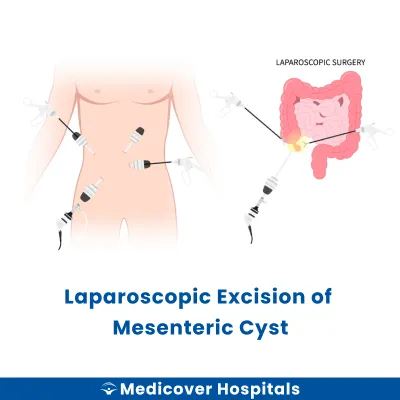
Laparoscopic excision of a mesenteric cyst is a minimally invasive surgical procedure. It involves the removal of a cyst from the mesentery, a fold of tissue that attaches the intestines to the abdominal wall. The procedure uses small incisions and a laparoscope (a thin tube with a camera) to guide the surgery. This approach reduces recovery time and minimizes scarring compared to traditional open surgery.
This surgery is needed when a mesenteric cyst causes symptoms like abdominal pain, bloating, or obstruction. Untreated cysts can lead to complications such as infection or rupture. Conditions like congenital abnormalities or trauma can lead to cyst formation. Modern surgical approaches include laparoscopic and robotic-assisted techniques. These methods offer precision and quicker recovery.
Laparoscopic Excision of Mesenteric Cyst Doctors Near You
Find surgical gastroenterologists for laparoscopic excision of mesenteric cysts at Medicover Hospitals across India. Choose your city and book a consultation today for expert care.
Why Choose Medicover Hospitals for Laparoscopic Excision of Mesenteric Cyst?
Get a second opinion from trusted experts and makeconfident, informed decisions.
 Get Second Opinion
Complete Guide To Laparoscopic Excision Of Mesenteric Cyst
Everything you need to know about the procedure, preparation, and recovery
Laparoscopic Excision of Mesenteric Cyst Surgery Indications
Laparoscopic excision of a mesenteric cyst is recommended when the cyst causes symptoms or complications. Doctors suggest this minimally invasive procedure when conservative treatments do not provide relief or when the cyst poses a risk to health.
Abdominal Pain
Patients may experience persistent or severe abdominal pain due to the pressure exerted by the cyst. On examination, doctors may find a palpable mass in the abdomen. Imaging tests like ultrasound or CT scans reveal the presence of a cyst. When pain persists despite medication, surgery is considered.
Intestinal Obstruction
Symptoms like nausea, vomiting, and inability to pass stools may indicate an intestinal obstruction. Doctors may detect bowel distension during examination. Imaging studies confirm the obstruction caused by the cyst. Surgery is recommended when the obstruction does not resolve with conservative management.
Infection or Abscess Formation
Patients may present with fever, tenderness, and swelling in the abdomen. Blood tests may show elevated white blood cell counts. Imaging may reveal an infected cyst or abscess. When antibiotics fail to control the infection, surgical removal is necessary.
Rapid Cyst Growth
Patients may notice a rapidly enlarging abdominal mass. Doctors confirm the growth through serial imaging studies. Rapid growth can lead to complications, prompting surgical intervention when monitoring alone is insufficient.
Bleeding or Hemorrhage
Symptoms like sudden abdominal pain and signs of internal bleeding may occur. Blood tests may show anemia, and imaging can identify bleeding within the cyst. Surgery is advised when bleeding is significant or recurrent.
How to Prepare for Laparoscopic Excision of Mesenteric Cyst?
Proper preparation is crucial for a smooth laparoscopic excision of a mesenteric cyst. It helps reduce complications and ensures a quicker recovery.
- Medication Review: Stop NSAIDs, anticoagulants, and herbal supplements at least a week before surgery.
- Fasting Guidelines: Do not eat or drink for at least 8 hours before the procedure to ensure safety during anaesthesia.
- Bowel Preparation: Follow any specific bowel prep instructions provided by your doctor to clear the intestines.
- Comfortable Clothing: Wear loose, comfortable clothing on the day of surgery for ease of movement post-procedure.
- Transportation Arrangement: Arrange for someone to drive you home after the surgery as you may feel drowsy.
- Medication List: Bring a list of all medications you are currently taking, including dosages, for the medical team.
- Pre-Surgery Consultation: Attend all pre-surgery appointments to discuss any concerns and confirm all preparations.
- Personal Items: Bring necessary personal items like eyeglasses or hearing aids, if needed, on the day of surgery.
Laparoscopic Excision of Mesenteric Cyst Surgery (Step-by-Step)
This procedure is performed by gastroenterologists-surgical. It typically lasts 1-3 hours and is done under general anaesthesia.
- Preparation: The patient is administered general anaesthesia to ensure they are asleep and pain-free. The abdomen is cleaned and sterilised.
- Incision and Access: Small incisions, usually 1-2 cm, are made in the abdomen. A trocar is inserted to allow the laparoscope and other instruments to enter.
- Visualisation: A laparoscope, equipped with a camera, is inserted through one of the incisions. It provides a clear view of the abdominal cavity on a monitor.
- Dissection: Using instruments like the harmonic scalpel or bipolar cautery, the surgeon carefully dissects the tissues around the mesenteric cyst.
- Excision: The cyst is gently separated from surrounding tissues. It is then excised and removed through one of the incisions.
- Closure: The incisions are closed with sutures or surgical glue. A sterile dressing is applied to protect the area.
- Recovery: The patient is moved to a recovery room. They are monitored as they wake up from anaesthesia.
Who Performs Laparoscopic Excision of Mesenteric Cyst Surgery?
This surgery is performed by gastroenterologists-surgical. These specialists are trained in minimally invasive techniques and have expertise in handling abdominal conditions. They use advanced tools to ensure precise excision of the cyst.
Recovery After Laparoscopic Excision of Mesenteric Cyst Surgery
Recovery from laparoscopic excision of a mesenteric cyst is generally quicker than open surgery. Patients can expect a gradual return to normal activities, with some dietary and activity restrictions to ensure proper healing.
Day 1-3:
- Rest is crucial. Avoid strenuous activities.
- Start with a liquid diet. Include clear soups and coconut water.
- Pain and discomfort are common. Follow prescribed medications.
Day 4-7:
- Gradually introduce soft foods like khichdi, dal-rice, and curd.
- Light walking is encouraged to improve circulation.
- Continue avoiding heavy lifting and bending.
Day 8-14:
- Resume normal diet with easily digestible foods like moong dal and soft chapati.
- Most patients can return to work or school, depending on their comfort level.
- Maintain good hygiene around the incision site.
Phase 3 (Week 3-4):
- Gradually return to normal activities, including light exercise.
- Monitor for any unusual symptoms and maintain follow-up appointments.
When to Seek Urgent Help
- Fever over 100F or chills.
- Severe abdominal pain or swelling.
- Persistent nausea or vomiting.
- Redness, pus, or unusual discharge from the incision site.
- Difficulty breathing or chest pain.
Benefits of Laparoscopic Excision of Mesenteric Cyst Surgery
Laparoscopic excision of a mesenteric cyst offers several advantages over traditional open surgery.
- Minimally Invasive: This procedure involves smaller incisions, leading to less post-operative pain.
- Faster Recovery: Patients often experience quicker recovery times and shorter hospital stays.
- Reduced Scarring: Smaller incisions result in minimal scarring, which is cosmetically beneficial.
- Lower Infection Risk: The minimally invasive nature reduces the risk of infection compared to open surgery.
Risks and Complications of Laparoscopic excision of mesenteric cyst Surgery
While generally safe, laparoscopic excision of a mesenteric cyst carries certain risks and complications.
- Bleeding during or after the procedure.
- Infection at the incision sites.
- Injury to surrounding organs or tissues.
- Adverse reactions to anaesthesia.
- Formation of blood clots.
- Recurrence of the cyst.
What is the Cost of Laparoscopic Excision of Mesenteric Cyst Surgery?
The cost of Laparoscopic Excision of a Mesenteric Cyst at Medicover Hospitals ranges from Rs. 49,000 to Rs 90,000, based on factors such as the surgical approach, duration of hospital stay, room category, required diagnostics, and post-operative care.
Medicover Hospitals offers transparent pricing with support for insurance and TPA, including CGHS, ESI, and major TPAs. A cashless facility is available for added convenience. Please contact the hospital for the latest insurance panel details as these may change periodically.
Frequently Asked Questions
1. How much does Laparoscopic excision of mesenteric cyst surgery cost at Medicover Hospitals?
The cost of Laparoscopic Excision of Mesenteric Cyst Surgery ranges from Rs. 49,000 to Rs. 90,
2. Please contact Medicover Hospitals for detailed pricing information. 2. Is Laparoscopic excision of mesenteric cyst surgery covered under health insurance at Medicover?
This surgery may be covered by CGHS, ESI, and major TPAs. Please contact the hospital for current panel details.
3. Will I experience digestive issues post-surgery?
Some patients may experience temporary digestive discomfort. It typically resolves within a few weeks after the procedure.
4. Can I resume normal activities immediately?
You should avoid strenuous activities for a few weeks. Light activities can be resumed as advised by your doctor.
5. Will I need a special diet after surgery?
A light diet including curd, dal-rice, and khichdi is recommended. Gradually return to your normal diet as advised by your doctor.
6. Is there a risk of cyst recurrence?
The risk of recurrence is low but possible. Regular follow-ups with your doctor can help monitor and manage any potential issues.
7. Can laparoscopic surgery cause bowel obstruction?
Bowel obstruction is a rare complication. If you experience severe pain or bloating, contact your doctor immediately.


