 Call
Call Patient Reports
Laparoscopic Distal Gastrectomy with Billroth Reconstruction Surgery by Expert Oncologists
At Medicover Hospitals, our team of skilled gastrointestinal surgeons, including those with MS, DNB, MCh, and DM qualifications, performs laparoscopic distal gastrectomy with Billroth reconstruction. This minimally invasive approach results in smaller incisions and reduced blood loss, enhancing recovery for patients across India.
Expert Surgeons
Yearly Surgeries
Patient Satisfaction
What is Laparoscopic Distal Gastrectomy With Billroth Reconstruction?
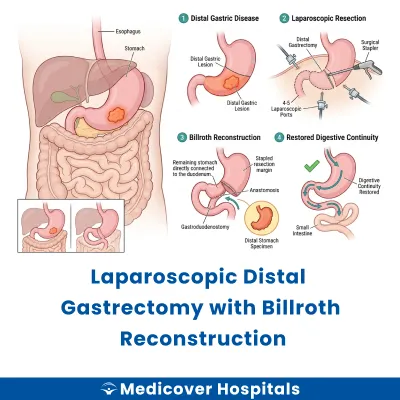
Laparoscopic Distal Gastrectomy with Billroth Reconstruction is a minimally invasive surgery involving the removal of the lower part of the stomach (distal gastrectomy). The Billroth Reconstruction refers to reconnecting the remaining stomach to the small intestine. This procedure helps maintain digestive function while addressing specific medical conditions.
This surgery is often needed for conditions like stomach cancer or severe peptic ulcers. If left untreated, these conditions can lead to complications such as bleeding, obstruction, or perforation. Modern surgical approaches include laparoscopic techniques, which use small incisions and a camera for guidance. This method typically results in less pain and faster recovery compared to traditional open surgery.
Laparoscopic Distal Gastrectomy With Billroth Reconstruction Doctors Near You
Find skilled gastrointestinal surgeons for laparoscopic distal gastrectomy with Billroth reconstruction at Medicover Hospitals across India. Choose your city and book a consultation to discuss your treatment options.
Why Choose Medicover Hospitals for Laparoscopic Distal Gastrectomy With Billroth Reconstruction?
Get a second opinion from trusted experts and makeconfident, informed decisions.
 Get Second Opinion
Complete Guide To Laparoscopic Distal Gastrectomy With Billroth Reconstruction
Everything you need to know about the procedure, preparation, and recovery
Laparoscopic Distal Gastrectomy with Billroth Reconstruction Surgery Indications
Doctors recommend laparoscopic distal gastrectomy with Billroth reconstruction for specific stomach conditions. This procedure is often suggested when less invasive treatments do not provide relief.
Gastric Cancer
Patients may experience persistent stomach pain, weight loss, and nausea. Imaging and tissue sample may reveal malignant tumours in the lower stomach. Surgery is advised when cancer is localized and other treatments are insufficient.
Severe Peptic Ulcer Disease
Symptoms include chronic abdominal pain, bloating, and vomiting. Endoscopy may show large ulcers resistant to medication. Surgery is considered when ulcers cause bleeding or perforation.
Gastric Outlet Obstruction
Patients often report vomiting, feeling full quickly, and weight loss. Tests may show narrowing of the stomach's exit due to scarring or tumours. Surgery is needed when obstruction does not improve with medication.
Recurrent Gastric Polyps
Symptoms can include abdominal discomfort and bleeding. Endoscopic findings of multiple polyps that recur after removal may lead to surgery. It is recommended when polyps have malignant potential.
Chronic Gastritis with Dysplasia
Patients may experience indigestion and stomach pain. Biopsy might show precancerous changes in the stomach lining. Surgery is suggested when dysplasia persists despite medical treatment.
How to Prepare for Laparoscopic Distal Gastrectomy with Billroth Reconstruction?
Proper preparation for Laparoscopic Distal Gastrectomy with Billroth Reconstruction is crucial for a smooth surgery and recovery. It helps minimise complications and ensures the procedure's success.
- Medication Review: Stop NSAIDs, anticoagulants, and herbal supplements at least a week before surgery.
- Fasting Guidelines: Do not eat or drink anything for at least 8 hours before the procedure.
- Bowel Preparation: Follow the doctor's instructions for bowel prep to ensure a clear digestive tract.
- Health Check: Complete any required blood tests or imaging studies as advised by your doctor.
- Clothing: Wear loose, comfortable clothing on the day of surgery for ease of movement.
- Transport Arrangement: Arrange for someone to drive you home post-surgery, as you may feel drowsy.
- Medication List: Bring a list of all medications with dosages to share with the medical team.
- Smoking and Alcohol: Avoid smoking and alcohol for at least 48 hours before surgery to aid recovery.
Laparoscopic Distal Gastrectomy with Billroth Reconstruction Surgery (Step-by-Step)
Overview: This procedure is performed by surgical oncologists. It typically lasts between 3 to 5 hours and is done under general anaesthesia.
- Preparation: The patient is placed under general anaesthesia. A sterile environment is prepared.
- Incision and Access: Small incisions (1-2 cm) are made in the abdomen. A trocar is inserted to allow the laparoscope and other instruments to enter.
- Stomach Resection: The distal part of the stomach is carefully dissected using a harmonic scalpel. The surrounding tissues are preserved.
- Billroth Reconstruction: The remaining part of the stomach is connected to the small intestine. This is done using sutures or staples, ensuring a secure connection.
- Closure: The instruments are removed. The incisions are closed with sutures or surgical glue.
- Recovery: The patient is moved to the recovery room. Vital signs are monitored as the patient wakes from anaesthesia.
Who Performs Laparoscopic Distal Gastrectomy with Billroth Reconstruction Surgery?
This surgery is performed by gastrointestinal surgeons. They are trained in minimally invasive techniques and have expertise in gastrointestinal surgeries.
Recovery After Laparoscopic Distal Gastrectomy with Billroth Reconstruction Surgery
Recovery from laparoscopic distal gastrectomy with Billroth reconstruction involves gradual healing and adaptation to dietary changes. Patients can expect to stay in the hospital for a few days post-surgery, followed by several weeks of recovery at home.
Day 1-3:
- Hospital stay is common. Monitoring for any immediate complications.
- Clear liquids like water and broth are introduced.
- Encouraged to walk short distances to aid circulation.
Day 4-7:
- Transition to a soft diet including curd, dal-rice, and soups.
- Continue light activities; avoid heavy lifting.
- Start gentle breathing exercises to improve lung function.
Week 2-4:
- Introduce semi-solid foods like khichdi and moong dal.
- Gradually increase activity levels, but avoid strenuous exercise.
- Most patients can return to work or school by the end of this phase, depending on their recovery progress.
Phase 2 (Week 5-8):
- Begin a more varied diet, focusing on small, frequent meals.
- Incorporate regular walks and light exercises.
- Continue to avoid heavy lifting or intense physical activity.
When to Seek Urgent Help
Contact your healthcare provider immediately if you experience any of the following:
- Severe abdominal pain or swelling.
- Persistent vomiting or inability to keep food down.
- Signs of infection like fever or pus at the incision site.
- Unexplained weight loss or dehydration.
It's important to follow the dietary and activity guidelines provided by your healthcare team for a smooth recovery. Please contact the hospital for current details as insurance panels may change.
Benefits of Laparoscopic Distal Gastrectomy with Billroth Reconstruction Surgery
This minimally invasive procedure offers several advantages for patients requiring stomach surgery.
- Reduced Pain: Smaller incisions typically result in less postoperative discomfort.
- Faster Recovery: Patients often experience quicker recovery times compared to open surgery.
- Lower Infection Risk: The minimally invasive approach may reduce the risk of wound infections.
- Improved Cosmetic Outcome: Smaller scars are usually less noticeable.
Risks and Complications of Laparoscopic Distal Gastrectomy with Billroth Reconstruction Surgery
While generally safe, this surgery carries potential risks and complications.
Common Risks
- Bleeding can occur during or after the procedure.
- Infection at the surgical site is a possible risk.
Rare Risks
- Leakage from the surgical connection between the stomach and intestine may happen.
- Strictures or narrowing at the surgical site can develop.
- Nutritional deficiencies may arise due to altered digestion.
- Dumping syndrome, causing rapid gastric emptying, can occur.
Cost of Laparoscopic Distal Gastrectomy with Billroth Reconstruction Surgery
The cost for Laparoscopic Distal Gastrectomy with Billroth Reconstruction Surgery at Medicover Hospitals ranges from ₹2,50,000 to ₹6,00,000. The price varies depending on the ward category chosen. We offer transparent pricing and support for insurance and TPAs, including CGHS, ESI, and major TPAs. Cashless facilities are also available. Please contact the hospital for the latest insurance panel details as these may change periodically.
Frequently Asked Questions
1. How much does Laparoscopic Distal Gastrectomy with Billroth Reconstruction surgery cost at Medicover Hospitals?
The cost ranges from ₹2,50,000 to ₹6,00,000 across Medicover Hospitals, depending on the type of room and care required.
2. Is Laparoscopic Distal Gastrectomy with Billroth Reconstruction surgery covered under health insurance at Medicover?
It is often covered by CGHS, ESI, and major TPAs, with cashless options available. Please contact the hospital for current panel details.
3. Will I experience dumping syndrome after surgery?
Dumping syndrome can occur after this surgery, causing nausea and diarrhea. It is important to follow dietary advice to manage symptoms.
4. What foods should I avoid post-gastrectomy?
Avoid high-sugar foods and fried items to prevent discomfort. Opt for soft foods like curd, dal-rice, and khichdi initially.
5. Can I drink alcohol after the surgery?
Alcohol should be avoided as it can irritate the stomach lining. Consult your doctor before reintroducing alcohol into your diet.
6. Will I need vitamin supplements after surgery?
Vitamin B12 and iron supplements may be necessary due to reduced absorption. Regular follow-ups will help ensure nutritional needs are met.
7. How soon can I return to work post-surgery?
Most patients can return to work within 4-6 weeks, depending on recovery. Light activities are encouraged during the initial recovery phase.


