 Call
Call Patient Reports
Labyrinthectomy Surgery Hospital with Advanced Care
Labyrinthectomy at Medicover Hospitals is performed using the open surgical approach by skilled ENT surgeons with qualifications like MS and DNB. This procedure is designed to address severe vertigo by removing the balance organ. Patients often experience reduced vertigo symptoms post-surgery.
Expert Surgeons
Yearly Surgeries
Patient Satisfaction
What is Labyrinthectomy?
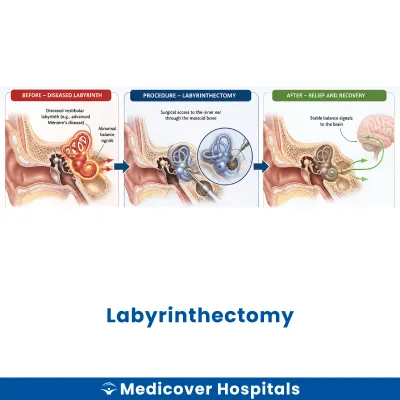
Labyrinthectomy is a surgical procedure involving the removal of the labyrinth, a part of the inner ear. The labyrinth contains the cochlea and vestibular system, which are responsible for hearing and balance. By removing these structures, the surgery aims to alleviate symptoms related to balance disorders.
This surgery is often needed for patients with severe Meniere's disease or other debilitating vestibular disorders. These conditions can cause vertigo, dizziness, and hearing loss. If left untreated, they may lead to significant impairment in daily activities. Modern surgical approaches for labyrinthectomy include transmastoid and translabyrinthine methods. These techniques help in accessing the inner ear with precision.
Labyrinthectomy Doctors Near You
Discover experienced ENT specialists for labyrinthectomy at Medicover Hospitals across India. Choose your city and book a consultation to explore your treatment options with our skilled professionals.
Why Choose Medicover Hospitals for Labyrinthectomy?
Get a second opinion from trusted experts and makeconfident, informed decisions.
 Get Second Opinion
Complete Guide To Labyrinthectomy
Everything you need to know about the procedure, preparation, and recovery
Labyrinthectomy Surgery Indications
Doctors recommend labyrinthectomy when other treatments for inner ear disorders do not relieve symptoms. This procedure is often considered when a patient experiences severe and persistent symptoms affecting their quality of life.
Intractable Vertigo
Patients experience intense, recurring dizziness that disrupts daily activities. Examination may reveal abnormal vestibular function. Surgery is considered when medications and vestibular therapy fail to control vertigo.
Severe Meniere's Disease
Symptoms include episodes of vertigo, hearing loss, and tinnitus. Audiometric tests show progressive hearing decline. When lifestyle changes and medications do not manage symptoms, surgery may be advised.
Unilateral Vestibular Dysfunction
Patients suffer from imbalance and dizziness due to one-sided vestibular issues. Tests like caloric stimulation show reduced function in one ear. Surgery is an option when rehabilitation does not improve balance.
Persistent Vestibular Neuritis
Patients report ongoing dizziness and imbalance after an initial viral infection. Vestibular tests show lasting dysfunction. Surgery is considered when symptoms persist despite medication and therapy.
Traumatic Inner Ear Injury
Symptoms include vertigo and hearing loss after head trauma. Imaging may reveal inner ear damage. Surgery is an option when symptoms do not improve with conservative management.
How to Prepare for Labyrinthectomy?
Proper preparation is crucial for a successful labyrinthectomy. It ensures safety and helps achieve the desired outcomes. Follow these steps to get ready for the procedure:
- Medication Review: Stop NSAIDs, anticoagulants, and herbal supplements at least a week before surgery.
- Fasting Guidelines: Do not eat or drink anything for at least 8 hours before the procedure, as general anaesthesia is used.
- Medical History: Bring a list of all medications with dosages to the hospital for review.
- Comfortable Clothing: Wear loose, comfortable clothing on the day of surgery for ease of changing and comfort.
- Transportation: Arrange for someone to drive you home post-surgery, as you will not be able to drive yourself.
- Pre-surgery Instructions: Follow any additional instructions provided by your healthcare provider, such as specific hygiene practices.
- Personal Items: Leave valuables at home and bring only essentials to the hospital.
- Support System: Inform a family member or friend about your surgery and recovery plan for additional support.
Labyrinthectomy Surgery (Step-by-Step)
Labyrinthectomy is performed by ENT specialists. It typically lasts 2-3 hours and is done under general anaesthesia.
- Preparation: The patient is given general anaesthesia to ensure they are asleep and pain-free. The surgical area is cleaned and sterilised.
- Incision: A small incision, about 1-2 cm, is made behind the ear to access the inner ear structures.
- Accessing the Labyrinth: The surgeon uses a curette to carefully remove bone and expose the labyrinth. This step requires precision to avoid damage to surrounding tissues.
- Removal of the Labyrinth: The labyrinth is meticulously removed using a combination of tools such as a harmonic scalpel and bipolar cautery. This eliminates the balance function of the inner ear.
- Sealing the Area: The area is sealed to prevent fluid leakage. The surgeon may use a coblation wand for precise tissue removal and sealing.
- Closing the Incision: The incision is closed with sutures. A sterile bandage is applied to protect the site and promote healing.
- Recovery: The patient is moved to a recovery room to wake up from anaesthesia. Monitoring continues to ensure stable vital signs.
Who Performs Labyrinthectomy Surgery?
Labyrinthectomy is performed by ENT (Ear, Nose, and Throat) surgeons. These specialists are trained in surgical procedures involving the ear and related structures. They have expertise in managing conditions affecting balance and hearing.
Recovery After Labyrinthectomy Surgery
Recovery from labyrinthectomy surgery involves gradual improvement in balance and hearing. It's important to follow your doctor's advice and allow your body time to heal. Here's a general timeline of what you can expect during the recovery process.
Day 1-3:
- Rest is crucial. Avoid sudden head movements.
- Stick to a soft diet. Include foods like curd, dal-rice, and soups.
- Expect some dizziness and nausea; these should gradually improve.
Day 4-7:
- Begin gentle head and neck exercises as advised by your doctor.
- Continue with a light diet. Khichdi and moong dal are good options.
- Avoid strenuous activities and heavy lifting.
Week 2:
- Balance should improve, but dizziness may persist.
- Gradually return to normal activities as tolerated.
- You may resume work or school if your job is not physically demanding.
Phase 3-6 Weeks:
- Most patients experience significant improvement in balance.
- Regular follow-up appointments are important to monitor progress.
- Continue to avoid high-risk activities like driving until cleared by your doctor.
When to Seek Urgent Help
- Severe or worsening dizziness or imbalance.
- Persistent nausea or vomiting.
- Signs of infection such as fever or discharge from the ear.
- Sudden hearing loss or severe headache.
Benefits of Labyrinthectomy Surgery
Labyrinthectomy is a surgical procedure aimed at alleviating symptoms of severe vertigo. It is typically considered when other treatments have not been effective.
- Vertigo Relief: Effectively reduces or eliminates episodes of vertigo.
- Improved Quality of Life: Helps patients return to daily activities without dizziness.
- Permanent Solution: Offers a long-term solution for patients with intractable vertigo.
- Symptom Management: Reduces associated symptoms like nausea and imbalance.
Risks and Complications of Labyrinthectomy Surgery
While labyrinthectomy can be beneficial, it is important to be aware of potential risks and complications. These vary in frequency and severity.
- Common - Hearing Loss: Complete hearing loss in the operated ear is expected.
- Common - Balance Issues: Temporary imbalance may occur as the body adjusts.
- Rare - Infection: Risk of infection at the surgical site.
- Rare - Facial Nerve Damage: Potential for facial muscle weakness or paralysis.
- Rare - Cerebrospinal Fluid Leak: Leakage of fluid from the ear may occur.
- Rare - Tinnitus: Persistent ringing in the ears may develop.
Cost of Labyrinthectomy Surgery
The cost of Labyrinthectomy Surgery at Medicover Hospitals ranges from Rs. 97,500 to Rs. 262,000. The price varies based on the ward category chosen, such as outpatient, day care, general, and more. We offer transparent pricing to ensure clarity for all patients.
Insurance and TPA support are available, with acceptance of CGHS, ESI, and major TPAs. A cashless facility is also provided for convenience. Please contact the hospital for the latest insurance panel details as these may change periodically.
Frequently Asked Questions
1. How much does Labyrinthectomy surgery cost?
The cost of Labyrinthectomy surgery at Medicover Hospitals ranges from Rs. 97,500 to Rs. 262,000, depending on the facility and room type.
2. Is Labyrinthectomy surgery covered under insurance?
Labyrinthectomy surgery may be covered under CGHS, ESI, and major TPAs with cashless options. Please contact the hospital for current panel details.
3. Will I experience hearing loss after Labyrinthectomy?
Yes, Labyrinthectomy results in permanent hearing loss in the treated ear. This procedure is typically considered when hearing is already significantly impaired.
4. Can vertigo return after Labyrinthectomy?
Labyrinthectomy aims to eliminate vertigo by removing the balance organs. However, some patients may experience residual symptoms which usually improve over time.
5. What lifestyle changes are needed post-Labyrinthectomy?
After Labyrinthectomy, you may need to adapt to balance changes. Regular physiotherapy can help improve balance and reduce dizziness over time.
6. Will I need balance therapy after Labyrinthectomy?
Yes, balance therapy is often recommended after Labyrinthectomy. It helps patients adapt to changes and regain stability in daily activities.
7. Can I fly after Labyrinthectomy surgery?
Flying is generally safe after Labyrinthectomy, but consult your doctor. It's advisable to wait a few weeks post-surgery for optimal recovery.
8. How long does a labyrinthectomy take?
A labyrinthectomy usually takes about 2 to 3 hours to complete, depending on the complexity of the case. It is typically done to treat severe vertigo when other treatments have failed.
9. What are the risks of labyrinthectomy?
Risks include permanent hearing loss in the treated ear, imbalance, dizziness, and infection. There is also a small risk of facial nerve injury and leakage of cerebrospinal fluid.


