 Call
Call Patient Reports
Best Hospital for Knee Washout with Wound Debridement and Closure Surgery
At Medicover Hospitals, our orthopedic Surgeons with MS, MCh, and DNB qualifications perform open Knee Washout with Wound Debridement and Closure. This procedure effectively cleanses the knee joint and removes damaged tissue. Patients benefit from reduced recovery time and improved joint function.
Expert Surgeons
Yearly Surgeries
Patient Satisfaction
What is Knee Washout With Wound Debridement and Closure?
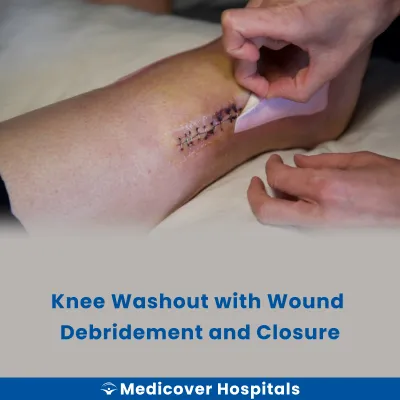
Knee Washout with Wound Debridement and Closure is a surgical procedure involving the knee joint. It includes lavage (washout) of the joint to remove debris, pus, or blood. Wound debridement involves the removal of dead or infected tissue. The procedure concludes with the closure of the wound to promote healing.
This surgery is often needed for conditions like septic arthritis or severe knee infections. It helps prevent further joint damage. If left untreated, these conditions can lead to chronic pain and impaired mobility. Modern surgical approaches include arthroscopic techniques. These methods allow for minimally invasive access to the knee joint. This can lead to quicker recovery and less postoperative pain.
Knee Washout With Wound Debridement and Closure Doctors Near You
Discover skilled orthopedic surgeons for knee washout with wound debridement and closure at Medicover Hospitals across India. Choose your city and book a consultation to address your needs.
Why Choose Medicover Hospitals for Knee Washout With Wound Debridement and Closure?
Get a second opinion from trusted experts and makeconfident, informed decisions.
 Get Second Opinion
Complete Guide To Knee Washout With Wound Debridement And Closure
Everything you need to know about the procedure, preparation, and recovery
Knee Washout with Wound Debridement and Closure Surgery Indications
Knee washout with wound debridement and closure is recommended when there is a need to clean the joint space and remove damaged tissue. This procedure helps in reducing infection and promoting healing.
Septic Arthritis
Patients may experience severe knee pain, swelling, and fever. Doctors find joint fluid with high white blood cell count or bacteria. When antibiotics and aspiration fail, surgery is needed.
Infected Wounds
Signs include redness, warmth, and pus discharge from the knee wound. Examination reveals tissue necrosis and positive bacterial cultures. Persistent infection despite antibiotics necessitates surgical intervention.
Traumatic Knee Injury
Patients report acute pain and swelling after an injury. Imaging shows foreign bodies or extensive tissue damage. Surgery is required when conservative measures do not alleviate symptoms.
Chronic Osteomyelitis
Symptoms include persistent knee pain and swelling. Lab tests show elevated inflammatory markers. When long-term antibiotics do not resolve the infection, surgical debridement is advised.
Non-Healing Ulcers
Patients have ulcers that do not heal with standard wound care. Examination reveals deep tissue involvement. Surgery is considered when ulcers persist and risk joint involvement.
How to Prepare for Knee Washout with Wound Debridement and Closure?
Proper preparation is crucial for a successful knee washout with wound debridement and closure. It helps reduce complications and ensures a smooth recovery.
- Medication Review: Stop NSAIDs, anticoagulants, and herbal supplements as advised by your doctor.
- Fasting Guidelines: Fast for at least 6-8 hours before the procedure if general anaesthesia is used.
- Pre-Surgery Hygiene: Shower with an antiseptic soap on the day of surgery to reduce infection risk.
- Clothing Choice: Wear loose, comfortable clothing to the hospital for easy dressing post-surgery.
- Transportation: Arrange for someone to drive you home after the procedure as you may feel groggy.
- Medication List: Bring a list of your current medications, including dosages, to the hospital.
- Pre-Surgery Consultation: Attend all pre-surgery appointments to discuss any concerns with your surgeon.
- Home Preparation: Prepare your home for easy access and comfort during recovery.
Knee Washout with Wound Debridement and Closure Surgery (Step-by-Step)
This procedure is performed at Medicover Hospitals Orthopedics Department. It typically lasts 1-2 hours and is usually carried out under general or regional anaesthesia.
- Preparation: The patient is positioned comfortably on the operating table. Anaesthesia is administered to ensure no pain during the procedure.
- Incision: A small incision, about 1-2 cm, is made near the knee to access the joint. This allows the surgeon to insert necessary instruments.
- Washout: A saline solution is flushed into the knee joint to clear out debris and infected material. This helps reduce inflammation and infection.
- Debridement: Using instruments like a curette or coblation wand, the surgeon removes damaged tissue and any foreign material from the wound. This promotes healing.
- Inspection: The surgeon inspects the knee joint to ensure all debris is cleared. A laparoscope may be used for better visibility.
- Closure: The incision is closed with sutures or staples. A sterile dressing is applied to protect the wound.
- Recovery: The patient is moved to a recovery area. They are monitored as the anaesthesia wears off, experiencing some soreness and swelling.
Who Performs Knee Washout with Wound Debridement and Closure Surgery?
This surgery is performed by orthopaedic surgeons. They specialise in treating joint and bone conditions. Their expertise ensures the procedure is done safely and effectively.
Recovery After Knee Washout with Wound Debridement and Closure Surgery
Recovery from knee washout with wound debridement and closure surgery involves rest, proper wound care, and gradual resumption of activities. Following your doctor's advice is crucial for a smooth recovery.
Day 1-3:
- Rest and elevate the leg to reduce swelling.
- Use prescribed pain relief medications as needed.
- Begin with a soft diet including curd, dal-rice, and soups to maintain energy levels.
Day 4-7:
- Continue with gentle leg movements as advised by your doctor.
- Introduce light meals like khichdi and moong dal to aid digestion.
- Avoid putting weight on the affected leg.
Day 8-14:
- Gradually increase leg movements and follow physiotherapy exercises.
- Resume normal diet while maintaining hydration.
- Monitor the wound for any signs of infection.
Phase 3 (Week 3-4):
- Begin partial weight-bearing activities as advised.
- Continue physiotherapy to regain strength and mobility.
- Most individuals can return to work or school, depending on the nature of their activities.
When to Seek Urgent Help:
- Increased redness, swelling, or warmth around the wound.
- Pus or unusual discharge from the wound.
- Fever or chills indicating possible infection.
- Severe pain not relieved by medication.
Benefits of Knee Washout with Wound Debridement and Closure Surgery
This procedure helps in cleaning the knee joint and removing damaged tissue, promoting better healing.
- Infection Control: Helps in reducing bacterial load and preventing further infection.
- Pain Relief: Alleviates pain by removing infected or inflamed tissue.
- Improved Mobility: Enhances joint function and movement by clearing obstructions.
- Faster Healing: Facilitates quicker recovery by promoting a healthier environment for tissue regeneration.
Risks and Complications of Knee Washout with Wound Debridement and Closure Surgery
While generally safe, this surgery carries some risks and potential complications.
- Swelling and bruising around the knee area.
- Temporary stiffness or reduced range of motion.
- Infection at the surgical site.
- Blood clots forming in the leg veins.
- Allergic reaction to anaesthesia or medications used.
- Nerve or blood vessel damage around the knee.
Common Side Effects:
Rare Complications:
Cost of Knee Washout with Wound Debridement and Closure Surgery
The cost of Knee Washout with Wound Debridement and Closure Surgery at Medicover Hospitals varies based on the ward category. Prices range from Rs. 40,000 to Rs. 2,50,000. This ensures that patients can choose a suitable option according to their needs and budget.
We offer transparent pricing and support for insurance and TPA, including CGHS, ESI, and major TPAs. A cashless facility is available for added convenience. Please contact the hospital for the latest insurance panel details as these may change periodically.
Frequently Asked Questions
1. How much does Knee Washout with Wound Debridement and Closure surgery cost at Medicover Hospitals?
The cost for Knee Washout with Wound Debridement and Closure surgery ranges from RS.40,000 to RS.2,50,000 across Medicover Hospitals.
2. Is Knee Washout with Wound Debridement and Closure surgery covered under health insurance at Medicover?
Yes, it is often covered by CGHS, ESI, and major TPAs with cashless options. Please contact the hospital for current panel details.
3. Will I need crutches after knee washout?
You may need crutches for a few weeks to aid mobility. Consult your doctor for the exact duration based on your recovery.
4. Can I drive after knee washout surgery?
Driving is usually not recommended for at least 4-6 weeks post-surgery. Ensure your knee is stable and pain-free before resuming driving.
5. Is infection common after knee washout?
Infection is a potential risk, but proper wound care reduces this. Follow your doctor's instructions for wound care to minimise infection risk.
6. What exercises are safe post knee washout?
Gentle exercises like leg raises and ankle pumps are safe initially. Consult your physiotherapist for a tailored exercise plan.
7. Will I need physiotherapy after knee washout?
Physiotherapy is often recommended to restore knee function and strength. Your doctor will advise on the appropriate therapy duration.


