 Call
Call Patient Reports
Best Hospital for Joint Manipulation Procedure with Advanced Orthopedic Care
At Medicover Hospitals, our orthopaedic team, with qualifications like MS and DNB, specialises in open joint manipulation. This approach addresses joint issues effectively. Patients benefit from smaller incisions and reduced blood loss, enhancing recovery and comfort across India.
Expert Specialists
Yearly Treatments
Patient Satisfaction
What is Joint Manipulation?
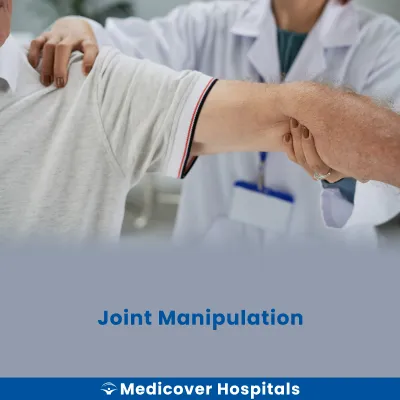
Joint Manipulation is a medical procedure involving the manual movement of a joint to restore its range of motion. It primarily targets the joints, which are the connections between bones. This technique is often used to alleviate stiffness and improve mobility. During the procedure, a healthcare professional applies a controlled force to the joint, helping it move more freely.
This procedure is often needed for conditions like frozen shoulder (adhesive capsulitis), knee stiffness, or post-surgical joint immobility. If left untreated, these conditions can lead to chronic pain and reduced function. Modern approaches to Joint Manipulation include arthroscopic surgery and minimally invasive techniques. These methods aim to improve joint function with reduced recovery time. Early intervention can prevent long-term complications.
Joint Manipulation Doctors Near You
Discover expert orthopedics for joint manipulation at Medicover Hospitals across India. Choose your city and book a consultation to address your joint concerns with our specialists today.
Why Choose Medicover Hospitals for Joint Manipulation?
Get a second opinion from trusted experts and makeconfident, informed decisions.
 Get Second Opinion
Complete Guide To Joint Manipulation
Everything you need to know about the procedure, preparation, and recovery
Joint Manipulation Procedure Indications
Doctors recommend joint manipulation when non-invasive treatments fail to relieve joint pain or improve mobility. It is often considered for patients experiencing persistent discomfort or stiffness affecting daily activities.
Chronic Joint Pain
Patients often report ongoing pain in a specific joint, despite medication and physical therapy. Doctors may find limited joint movement and tenderness during examination. When pain persists and affects quality of life, joint manipulation may be advised.
Reduced Range of Motion
Individuals may experience stiffness and difficulty moving a joint fully. On examination, doctors note restricted movement and possible muscle tightness. If exercises and stretching do not improve flexibility, joint manipulation can be considered.
Joint Stiffness
Patients often feel stiffness, especially after rest or in the morning. Doctors observe decreased joint mobility and possible swelling. When stiffness does not improve with heat therapy or medication, manipulation might be necessary.
Post-Injury Recovery
After an injury, some patients struggle with joint movement despite rehabilitation efforts. Doctors may see lingering inflammation or scar tissue on imaging. If recovery stalls, joint manipulation can aid in restoring function.
Muscle Spasms
Patients may experience painful muscle spasms around a joint. Doctors find muscle tightness and joint misalignment during assessment. When spasms do not respond to massage or muscle relaxants, manipulation may help alleviate symptoms.
How to Prepare for Joint Manipulation?
Proper preparation for joint manipulation is crucial to ensure a smooth procedure and recovery. It helps in reducing risks and enhances the effectiveness of the treatment.
- Medication Review: Stop NSAIDs, anticoagulants, and herbal supplements as advised by your doctor.
- Fasting Guidelines: Follow a fasting period of 6-8 hours before the procedure if general anaesthesia is used.
- Clothing: Wear loose, comfortable clothing to allow easy access to the joint area.
- Transportation: Arrange for someone to drive you home post-procedure due to possible sedation effects.
- Medication List: Bring a list of all medications you take, including dosages, for the medical team.
- Pre-Procedure Instructions: Follow any specific instructions given by your healthcare provider, such as exercises or dietary changes.
- Hydration: Stay hydrated before the fasting period begins, unless advised otherwise.
- Communication: Discuss any allergies or previous reactions to anaesthesia with your doctor.
Joint Manipulation procedure (Step-by-Step)
Joint manipulation is performed by experienced specialists from the Orthopedics department. The procedure usually takes 30 minutes to 1 hour and is commonly carried out under general anaesthesia to ensure patient comfort.
- Preparation: The patient is positioned comfortably on the operating table. Vital signs are monitored. General anaesthesia is administered to ensure the patient is asleep and pain-free.
- Incision: A small incision, about 1-2 cm, may be made if necessary to access the joint. This depends on the specific joint and technique used.
- Joint Access: Instruments like a curette or trocar may be used to access the joint. The surgeon carefully maneuvers these tools to reach the affected area.
- Manipulation: The surgeon applies controlled force to the joint. This helps restore movement and relieve stiffness. The patient remains unconscious and reports no discomfort.
- Closure: If an incision was made, it is closed with sutures or surgical glue. The area is then bandaged to prevent infection.
- Recovery: The patient is moved to a recovery room. As the anaesthesia wears off, they may feel drowsy. Pain management is provided if needed.
- Post-Procedure Care: The patient receives instructions on exercises and movements to aid recovery. Follow-up appointments are scheduled to monitor progress.
Who performs the joint manipulation procedure?
Joint manipulation is performed by orthopedic surgeons. These specialists are trained in diagnosing and treating musculoskeletal issues. They use their expertise to ensure the procedure is done safely and effectively.
Recovery After Joint Manipulation Procedure
Recovery from a joint manipulation procedure is generally quick, but it is important to follow your healthcare provider's instructions to ensure optimal healing. You may experience some soreness or discomfort initially, which should gradually improve.
Day 1-3:
- Rest the affected joint and avoid strenuous activities.
- Apply ice packs to reduce swelling and discomfort.
- Consume light meals like curd rice or moong dal soup to aid digestion and provide nutrients.
Day 4-7:
- Gradually increase gentle movements as advised by your physiotherapist.
- Continue with a balanced diet including dal-rice and khichdi to support recovery.
- Monitor the joint for any unusual pain or swelling.
Week 2:
- You may resume light activities and return to work or school if comfortable.
- Incorporate mild exercises to improve joint mobility as recommended.
- Maintain a diet rich in proteins and vitamins, such as dals and vegetable soups.
When to Seek Urgent Help
- Severe pain that does not subside with medication.
- Sudden swelling or redness around the joint.
- Fever or chills, indicating a possible infection.
- Loss of movement or sensation in the joint.
If you experience any of these symptoms, contact your healthcare provider immediately for further evaluation.
Benefits of the Joint Manipulation procedure
Joint manipulation is a therapeutic technique aimed at improving joint function and alleviating pain.
- Pain Relief: Helps reduce joint pain and discomfort.
- Improved Mobility: Enhances range of motion in the affected joint.
- Increased Flexibility: Aids in loosening tight muscles and tissues around the joint.
- Enhanced Function: Supports better joint function and overall movement.
- Quick Recovery: Often provides immediate relief and faster recovery compared to other treatments.
Risks and Complications of the Joint Manipulation Procedure
While joint manipulation can be beneficial, it is important to be aware of potential risks and complications.
- Common: Temporary soreness or discomfort in the treated area.
- Common: Mild swelling or bruising around the joint.
- Rare: Nerve irritation or damage.
- Rare: Worsening of existing joint conditions.
- Rare: Fractures or dislocations, particularly in individuals with weakened bones.
- Rare: Dizziness or light-headedness during or after the procedure.
Cost of Joint Manipulation Procedure
The cost of the Joint Manipulation procedure at Medicover Hospitals ranges from Rs. 4500 to Rs. 13600. The price varies by ward category, including outpatient, day care, general, and private options.
We offer transparent pricing and support for insurance and TPA services, including CGHS, ESI, and major TPAs. A cashless facility is also available for your convenience. Please contact the hospital for the latest insurance panel details, as these may change periodically.
Frequently Asked Questions
1. How much does Joint Manipulation cost?
The Joint Manipulation procedure costs between Rs.4500 and Rs.13600 at Medicover Hospitals, depending on the specifics of the treatment.
2. Is Joint Manipulation covered under insurance?
Joint Manipulation may be covered by CGHS, ESI, and major TPAs, offering cashless options. Please contact the hospital for current panel details.
3. Will I feel pain during Joint Manipulation?
Some discomfort may be felt during the procedure, but it is generally well-tolerated. Pain relief options are available to manage any discomfort.
4. Can I drive immediately after Joint Manipulation?
It is advised to avoid driving for at least 24 hours post-procedure. This allows time for any sedation effects to wear off completely.
5. Will my joint mobility improve immediately?
Many patients experience improved mobility shortly after the procedure. However, full benefits may take a few weeks as the joint adjusts.
6. Can I exercise after Joint Manipulation?
Light exercises like walking are encouraged after the procedure. Avoid high-impact activities for at least two weeks to ensure proper recovery.
7. What foods aid recovery after Joint Manipulation?
Consuming foods like curd, dal-rice, and khichdi can aid recovery. These are easy to digest and provide essential nutrients for healing.
8. How long is recovery from knee manipulation?
Recovery after manipulation under anesthesia (MUA) is usually 2 to 6 weeks, with immediate physiotherapy starting soon after the procedure to maintain improved range of motion.
9. How painful is manipulation surgery?
The procedure itself is not painful because it is done under anesthesia. Afterward, patients may experience moderate pain and soreness, which is managed with medications and improves over time.
10. How successful is knee manipulation?
Knee manipulation has a good success rate (around 70% to 90%), especially when performed early after stiffness develops, helping improve joint movement and function.


