 Call
Call Patient Reports
Best Hospital for Jejunostomy with Comprehensive Gastro Care
Jejunostomy at Medicover Hospitals is performed using the open surgical approach. Our team of MS, DNB, and MCh-qualified oncologists ensures precision in the procedure. This approach often results in shorter hospital stays, aiding in quicker recovery for patients across India.
Expert Surgeons
Yearly Surgeries
Patient Satisfaction
What is Jejunostomy?
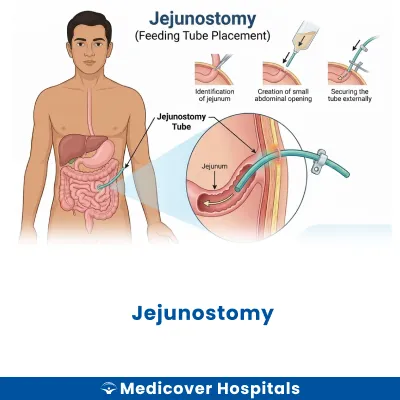
Jejunostomy is a surgical procedure where an opening is created in the jejunum (part of the small intestine). This opening allows for direct feeding or drainage. It is often used when the upper gastrointestinal tract is not functioning properly. The jejunum is crucial for nutrient absorption, making this procedure vital for patients who cannot eat by mouth.
This surgery is needed for conditions like severe malnutrition, gastrointestinal obstructions, or after certain surgeries. If untreated, these conditions can lead to serious health issues. Modern surgical approaches for jejunostomy include laparoscopic and open surgery. These methods aim to minimise recovery time and improve outcomes. Always consult with a healthcare provider for the most suitable option.
Jejunostomy Doctors Near You
Find skilled General Surgeons for Jejunostomy Surgery at Medicover Hospitals across India. Choose your city and book a consultation for expert care tailored to your needs.
Why Choose Medicover Hospitals for Jejunostomy?
Experienced General Surgeons: Our team includes specialists with qualifications such as MS and DNB, with extensive experience in performing jejunostomy procedures and managing a wide range of abdominal and gastrointestinal conditions.
Advanced General Surgery OT: Equipped with modern surgical infrastructure, advanced energy devices, laparoscopic systems, and precision surgical instruments to support safe and effective jejunostomy procedures.
Get a second opinion from trusted experts and makeconfident, informed decisions.
 Get Second Opinion
Complete Guide To Jejunostomy
Everything you need to know about the procedure, preparation, and recovery
Jejunostomy Surgery Indications
Jejunostomy surgery is recommended when patients face severe digestive issues that prevent normal nutrient absorption. Oncologists often suggest this procedure when the small intestine needs direct access for feeding.
Severe Malnutrition
Patients may experience significant weight loss and weakness. Lab tests often reveal low nutrient levels. When dietary adjustments and supplements fail, jejunostomy can provide necessary nutrition.
Gastrointestinal Obstruction
Symptoms include persistent vomiting and abdominal pain. Imaging may show blockages in the digestive tract. If medications and less invasive methods do not resolve the obstruction, surgery is considered.
Post-Surgical Complications
After abdominal surgeries, some patients may have difficulty absorbing nutrients. Symptoms include fatigue and weight loss. If recovery is prolonged and conservative treatments are ineffective, a jejunostomy may be needed.
Severe Crohn's Disease
Patients often suffer from abdominal pain and diarrhea. Endoscopy and imaging can show extensive intestinal inflammation. When medication and diet changes do not control symptoms, surgery might be necessary.
Short Bowel Syndrome
Symptoms include diarrhea and malnutrition. Tests show insufficient bowel length for nutrient absorption. When dietary interventions are inadequate, a jejunostomy can help maintain nutrition.
Please contact the hospital for current details as insurance panels may change.
How to Prepare for Jejunostomy?
Proper preparation for a jejunostomy is crucial to ensure a smooth procedure and recovery. It helps minimize risks and enhances the effectiveness of the surgery.
- Medication Review: Stop NSAIDs, anticoagulants, and herbal supplements at least a week before surgery.
- Fasting Guidelines: Do not eat or drink anything for at least 8 hours before the procedure due to anaesthesia requirements.
- Bowel Preparation: Follow your doctor's instructions for bowel cleansing if advised, to ensure a clear surgical area.
- Clothing: Wear loose, comfortable clothing on the day of the surgery for ease of movement post-procedure.
- Transportation: Arrange for someone to drive you home after the surgery, as you may feel drowsy from anaesthesia.
- Medication List: Bring a list of all medications you are currently taking, including dosages, for the medical team.
- Pre-Surgery Consultation: Attend all pre-surgery appointments to discuss any concerns and confirm all preparations.
- Hydration: Stay well-hydrated in the days leading up to the surgery, unless instructed otherwise by your doctor.
Jejunostomy Surgery (Step-by-Step)
Jejunostomy is performed by surgeons, typically taking 1-2 hours. It is done under general anaesthesia.
- Preparation: The patient is positioned on the operating table. General anaesthesia is administered to ensure the patient is asleep and pain-free.
- Incision: A small incision, about 1-2 cm, is made in the abdominal area. This provides access to the jejunum, part of the small intestine.
- Insertion of Instruments: A trocar is used to create an entry point. A laparoscope is inserted for a clear view of the abdominal cavity.
- Jejunum Identification: The surgeon identifies the jejunum using the laparoscope. A harmonic scalpel may be used to carefully handle tissues.
- Creating the Stoma: The surgeon creates an opening in the jejunum. This is brought to the surface of the abdomen to form a stoma.
- Securing the Stoma: The stoma is secured to the abdominal wall. Sutures are used to ensure it stays in place.
- Closure: The incision is closed with sutures or staples. The patient is moved to recovery to wake up from anaesthesia.
Who Performs Jejunostomy Surgery?
Jejunostomy surgery is performed by general surgeons or gastrointestinal surgeons. These specialists have expertise in abdominal procedures and managing the small intestine. They ensure the surgery is conducted safely and effectively.
Recovery After Jejunostomy Surgery
Recovery from jejunostomy surgery involves gradual healing and adjustment to dietary changes. Patients can expect a period of rest and adaptation to new nutritional methods. Close monitoring by healthcare professionals is essential during this time.
Day 1-3:
- Hospital stay is usually required for monitoring.
- Intravenous fluids and medications are administered.
- Gradual introduction to clear liquids like water and clear soups.
Day 4-7:
- Transition to a soft diet, including foods like curd, dal-rice, and moong dal.
- Small, frequent meals are recommended.
- Limited physical activity; avoid lifting heavy objects.
Week 2-4:
- Introduction of semi-solid foods such as khichdi and mashed vegetables.
- Continue with small, frequent meals to aid digestion.
- Light activities can be resumed, but avoid strenuous exercises.
- Most patients can return to work or school by the end of this phase, depending on individual recovery.
When to Seek Urgent Help:
- Fever or signs of infection at the surgical site.
- Severe abdominal pain or bloating.
- Persistent nausea or vomiting.
- Unusual changes in stoma output or colour.
- Signs of dehydration, such as dry mouth or decreased urination.
Always follow your healthcare provider's advice and attend scheduled follow-up appointments. For any concerns, contact your medical team promptly.
Benefits of Jejunostomy Surgery
Jejunostomy surgery is a procedure that provides nutritional support when oral intake is not possible. It offers several benefits for patients in need.
- Direct Nutritional Support: Allows for direct delivery of nutrients to the small intestine.
- Bypasses Digestive Issues: Helps patients with obstructions or severe digestive problems.
- Improved Nutrient Absorption: Ensures better absorption of nutrients compared to other feeding methods.
- Reduced Risk of Aspiration: Minimises the risk of food entering the lungs, which can occur with oral feeding.
Risks and Complications of Jejunostomy Surgery
While jejunostomy surgery can be beneficial, it also carries certain risks and complications. Understanding these is important for informed decision-making.
- Infection at the insertion site can occur, requiring medical attention.
- Blockage of the feeding tube may happen, necessitating replacement or adjustment.
- Bleeding during or after the procedure might occur, needing intervention.
- Displacement of the tube can lead to feeding issues and require repositioning.
- Peritonitis, an inflammation of the abdominal lining, can develop if the tube leaks.
What is the Cost of Jejunostomy Surgery?
The cost of Jejunostomy Surgery at Medicover Hospitals ranges from Rs. 22,000 to Rs. 74,000. The price varies based on the ward category chosen, such as day care, general, private, or deluxe options. We offer transparent pricing to ensure clarity for our patients.
Insurance and TPA support, including CGHS, ESI, and major TPAs, are accepted, with cashless facility options available. Please contact the hospital for the latest insurance panel details as these may change periodically.
Frequently Asked Questions
1. How much does Jejunostomy surgery cost?
Jejunostomy surgery at Medicover Hospitals ranges from Rs. 22,000 to Rs. 74,000, depending on the facility and care level chosen.
2. Is Jejunostomy surgery covered by insurance?
Jejunostomy surgery may be covered by CGHS, ESI, and major TPAs, offering cashless options. Please contact the hospital for current panel details.
3. Can I eat normally after Jejunostomy?
After Jejunostomy, you may need to follow a liquid or soft diet initially. Foods like dal-rice, khichdi, and curd are recommended.
4. Will I need a feeding tube after Jejunostomy?
A feeding tube may be necessary post-Jejunostomy to ensure proper nutrition. Your doctor will advise on its duration based on recovery.
5. Are there risks of infection after Jejunostomy?
Infection is a possible complication after Jejunostomy surgery. Proper wound care and hygiene can significantly reduce this risk.
6. How long before I can resume activities?
You may gradually resume normal activities within 4-6 weeks post-Jejunostomy. Your doctor will guide you based on your recovery progress.
7. Will Jejunostomy affect my digestion?
Jejunostomy may alter digestion temporarily, requiring dietary adjustments. Your healthcare team will provide specific guidance on managing these changes.


