 Call
Call Patient Reports
Best Hospital for Ivor Lewis Esophagectomy Surgery - Advanced Care
The Ivor Lewis Esophagectomy at Medicover Hospitals is performed using a laparoscopic approach by skilled oncologists with qualifications like MS, DNB, and MCh. This technique allows for smaller incisions and reduced blood loss, contributing to a shorter hospital stay for patients across India.
Expert Surgeons
Yearly Surgeries
Patient Satisfaction
What is Ivor Lewis Esophagectomy?
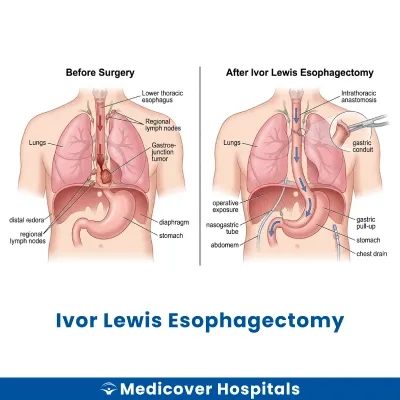
Ivor Lewis Esophagectomy is a surgical procedure involving the removal of a part of the oesophagus (the tube connecting the throat to the stomach) and the upper part of the stomach. This operation is typically performed through an incision in the abdomen and chest. The remaining oesophagus is then connected to the stomach to maintain the digestive tract's continuity.
This surgery is often necessary for treating oesophageal cancer or severe oesophageal damage. If left untreated, these conditions can lead to significant complications, including difficulty swallowing and malnutrition. Modern surgical approaches for Ivor Lewis Esophagectomy include minimally invasive techniques like laparoscopic and robotic-assisted surgery. These methods aim to reduce recovery time and improve outcomes.
Ivor Lewis Esophagectomy Doctors Near You
Find experienced oncologists for Ivor Lewis Esophagectomy at Medicover Hospitals across India. Choose your city and book a consultation to discuss your treatment options with our specialists.
Why Choose Medicover Hospitals for Ivor Lewis Esophagectomy?
Get a second opinion from trusted experts and makeconfident, informed decisions.
 Get Second Opinion
Complete Guide To Ivor Lewis Esophagectomy
Everything you need to know about the procedure, preparation, and recovery
Ivor Lewis Esophagectomy Surgery Indications
Ivor Lewis Esophagectomy is recommended for patients with specific conditions affecting the oesophagus. It is often considered when less invasive treatments are ineffective or when the condition is advanced.
Oesophageal Cancer
Patients may experience difficulty swallowing, weight loss, or chest pain. Imaging and endoscopy often reveal a tumour in the middle or lower oesophagus. Surgery is advised when the cancer is resectable and hasn't responded to chemotherapy or radiation.
Barrett's Oesophagus with High-Grade Dysplasia
Patients might have a history of acid reflux and heartburn. Biopsies show pre-cancerous changes in the oesophageal lining. Surgery is considered when there's a high risk of progression to cancer and endoscopic treatments are insufficient.
Severe Oesophageal Strictures
Patients experience persistent swallowing difficulties and regurgitation. Imaging shows significant narrowing of the oesophagus. Surgery is an option when dilation or stenting fails to provide relief.
Recurrent Oesophageal Tumours
Patients may report a return of swallowing issues after previous cancer treatment. Scans show tumour recurrence in the oesophagus. Surgery is recommended when other treatments are no longer effective.
Failed Anti-Reflux Surgery
Patients suffer from ongoing reflux symptoms despite previous surgical intervention. Tests confirm anatomical failure of the initial procedure. Surgery is considered when symptoms severely impact quality of life.
How to Prepare for Ivor Lewis Esophagectomy?
Proper preparation for Ivor Lewis Esophagectomy is crucial for a smooth surgery and recovery. It helps minimise complications and ensures the best possible outcome.
- Medication Review: Stop NSAIDs, anticoagulants, and herbal supplements as advised by your doctor.
- Fasting Guidelines: Do not eat or drink anything for at least 8 hours before the surgery.
- Pre-surgery Tests: Complete all required blood tests, imaging, and other assessments as scheduled.
- Respiratory Exercises: Practice deep breathing exercises to improve lung function post-surgery.
- Clothing: Wear loose, comfortable clothes on the day of surgery.
- Transport Arrangement: Arrange for someone to drive you home after discharge.
- Medication List: Bring a list of your current medications with dosages to the hospital.
- Smoking Cessation: Stop smoking several weeks before surgery to improve healing.
Ivor Lewis Esophagectomy surgery (Step-by-Step)
The Ivor Lewis Esophagectomy is performed by onco surgeons. It typically takes 4-6 hours and is done under general anaesthesia.
- Preparation: The patient is positioned on the operating table. General anaesthesia is administered to ensure the patient is asleep and pain-free.
- Abdominal Incision: A 10-15 cm incision is made in the abdomen. The surgeon uses a laparoscope to view and access the stomach and lower oesophagus.
- Thoracic Incision: A 10-15 cm incision is made on the right side of the chest. The surgeon uses a harmonic scalpel to carefully separate the oesophagus from surrounding tissues.
- Oesophagus Resection: The affected part of the oesophagus is removed. A curette may be used to ensure all cancerous tissue is excised.
- Stomach Mobilisation: The stomach is partially mobilised and reshaped to form a new oesophagus. This is known as a gastric pull-up.
- Anastomosis: The stomach is connected to the remaining oesophagus. This connection is checked for leaks using a trocar.
- Closure: Incisions are closed with sutures or staples. The patient is moved to recovery for monitoring.
Who Performs Ivor Lewis Esophagectomy surgery?
The surgery is performed by surgical oncologists. These specialists are trained in treating cancers of the oesophagus and stomach. They use advanced surgical techniques to remove tumours and reconstruct the digestive tract.
Recovery After Ivor Lewis Esophagectomy Surgery
Recovery from Ivor Lewis Esophagectomy requires patience and care. Initially, you may experience discomfort and fatigue. Gradually, you will regain strength and adapt to dietary changes.
Day 1-3:
- Hospital stay with monitoring for complications.
- Begin with clear liquids like water and clear soups.
- Pain management and breathing exercises are essential.
Day 4-7:
- Transition to a soft diet, including foods like curd, dal-rice, and moong dal.
- Continue breathing exercises and gentle movements.
- Focus on small, frequent meals to aid digestion.
Day 8-14:
- Gradually introduce semi-solid foods such as khichdi and thicker soups.
- Increase activity levels slowly, but avoid heavy lifting.
- Monitor for any signs of infection or complications.
Phase 3 (Week 3-6):
- Return to a more varied diet, but avoid spicy and oily foods.
- Light activities can be resumed; avoid strenuous exercises.
- Most patients can return to work or school by the end of this phase, depending on their recovery.
Phase 4 (Beyond 6 Weeks):
- Continue to eat small, balanced meals.
- Gradually resume normal activities, including exercise, as advised by your doctor.
- Regular follow-up appointments to monitor recovery progress.
When to Seek Urgent Help:
- Fever or signs of infection.
- Difficulty breathing or swallowing.
- Severe chest or abdominal pain.
- Persistent nausea or vomiting.
- Unexpected weight loss.
Benefits of Ivor Lewis Esophagectomy surgery
Ivor Lewis Esophagectomy is a surgical procedure primarily used to treat esophageal cancer. It offers several benefits for eligible patients.
- Improved Survival Rates: This procedure can significantly increase the chances of survival by removing cancerous tissues.
- Enhanced Quality of Life: Post-surgery, many patients experience relief from symptoms such as difficulty swallowing.
- Comprehensive Cancer Removal: The surgery allows for thorough removal of affected areas, reducing the risk of recurrence.
- Potential for Curative Treatment: In early-stage cancers, it may offer a chance for a cure.
Risks and Complications of Ivor Lewis Esophagectomy surgery
While the procedure has its benefits, it also carries certain risks and complications. Patients should be aware of these before undergoing surgery.
- Common: Infection at the surgical site can occur, requiring additional treatment.
- Common: Respiratory complications may develop post-surgery, necessitating careful monitoring.
- Rare: Anastomotic leak, where the surgical connection between the stomach and esophagus leaks.
- Rare: Stricture formation, leading to narrowing of the esophagus.
- Rare: Chyle leak, involving lymphatic fluid leakage, may occur.
Cost of Ivor Lewis Esophagectomy surgery
The cost of Ivor Lewis Esophagectomy surgery at Medicover Hospitals ranges from Rs. 61,000 to Rs. 590,000. The price varies based on the ward category chosen, such as general, twin sharing, private, or suite. Medicover Hospitals offers transparent pricing, and patients can benefit from insurance and TPA support, including CGHS, ESI, and major TPAs. A cashless facility is also available for added convenience. Please contact the hospital for the latest insurance panel details as these may change periodically.
Frequently Asked Questions
1. How much does Ivor Lewis Esophagectomy surgery cost at Medicover Hospitals?
The cost ranges from Rs. 61,000 to Rs. 590,000 across Medicover Hospitals, depending on the type of accommodation and care required.
2. Is Ivor Lewis Esophagectomy surgery covered under health insurance at Medicover?
Yes, it may be covered under CGHS, ESI, and major TPAs with cashless options. Please contact the hospital for current panel details.
3. What organ is removed during Ivor Lewis Esophagectomy?
The surgery involves removing part of the oesophagus and the upper part of the stomach. This helps treat oesophageal cancer.
4. Will I have difficulty swallowing after Ivor Lewis Esophagectomy?
Swallowing difficulties are common initially after the surgery. Gradual dietary adjustments and therapy can help improve swallowing over time.
5. What lifestyle changes are needed after Ivor Lewis Esophagectomy?
Patients may need to eat smaller, more frequent meals. Avoiding spicy foods and eating slowly can also help manage symptoms.
6. Can I develop acid reflux after Ivor Lewis Esophagectomy?
Yes, acid reflux can occur due to changes in the digestive system. Medications and dietary adjustments may be necessary to manage this condition.
7. What foods should I avoid after Ivor Lewis Esophagectomy?
Avoid spicy foods, carbonated drinks, and large meals. Opt for soft foods like curd, dal-rice, and khichdi to aid digestion.
8. What is the survival rate for Ivor Lewis surgery?
Ivor Lewis esophagectomy has good survival outcomes, especially when performed for early-stage Esophageal cancer. Survival rates vary based on cancer stage, overall health, and response to treatment.
9. What is the difference between Ivor Lewis and 3-hole esophagectomy?
The Ivor Lewis esophagectomy involves abdominal and chest incisions, while the Three-hole esophagectomy includes an additional neck incision. The 3-hole approach allows a higher anastomosis in the neck, which may be preferred in certain cases.
10. What are the three types of esophagectomy?
The main types of Esophagectomy are Ivor Lewis (abdomen and chest), three-hole (abdomen, chest, and neck), and transhiatal esophagectomy (abdomen and neck without chest incision). The choice depends on tumor location, stage, and surgeon expertise.


