 Call
Call Patient Reports
IVC Filter Retrieval Procedure Hospital with Safe & Minimally Invasive Care
IVC Retrieval at Medicover Hospitals is performed using minimally invasive techniques by our skilled interventional radiologists with qualifications like MD, DNB, and DMRE. This approach ensures smaller incisions and reduced blood loss, enhancing patient recovery and comfort across India.
Expert Procedures
Yearly Procedures
Patient Satisfaction
What is IVC Retrieval?
IVC Retrieval refers to the removal of an Inferior Vena Cava (IVC) filter. The IVC is a large vein that carries deoxygenated blood from the lower body to the heart. An IVC filter is a small, metal device placed in the IVC to prevent blood clots from reaching the lungs. This procedure is necessary when the filter is no longer needed or if complications arise.
IVC Retrieval is often needed when the risk of blood clots has decreased or if the filter causes issues like migration or perforation. If left untreated, these complications can lead to serious health problems. Modern surgical approaches for IVC Retrieval include minimally invasive techniques like endovascular retrieval, which uses catheters to safely remove the filter.
IVC Retrieval Doctors Near You
Discover skilled interventional-radiology specialists at Medicover Hospitals across India. Choose your city and book a consultation for IVC retrieval. Experience expert care tailored to your needs.
Why Choose Medicover Hospitals for IVC Retrieval?
Get a second opinion from trusted experts and makeconfident, informed decisions.
 Get Second Opinion
Complete Guide To Ivc Retrieval
Everything you need to know about the procedure, preparation, and recovery
IVC Retrieval Procedure Indications
Doctors recommend IVC retrieval when the temporary filter is no longer needed. This is often after the risk of blood clots has decreased. The procedure helps prevent long-term complications from the filter.
Resolution of Thromboembolic Risk
Patients may initially experience leg swelling or pain due to deep vein thrombosis (DVT). Imaging may show reduced clot size or absence of new clots. When anticoagulation stabilises the condition, IVC retrieval is considered.
Filter-Related Complications
Patients might report abdominal pain or notice changes in bowel habits. Imaging may reveal filter migration or perforation. If these complications arise, retrieval is necessary to prevent further issues.
End of Temporary Protection
After surgery or trauma, patients may have had a filter placed as a precaution. Once mobility improves and clot risk decreases, doctors recommend retrieval to avoid long-term complications.
Recurrent DVT Despite Filter
Patients may continue to experience leg pain or swelling. Imaging might show new clots forming despite the filter. If anticoagulation fails to control symptoms, retrieval is considered.
Patient Preference
Some patients may feel discomfort or anxiety about having a filter. If imaging confirms a stable condition, doctors may proceed with retrieval to address patient concerns.
How to Prepare for IVC Retrieval?
Proper preparation for IVC Retrieval is crucial to ensure a smooth procedure and recovery. Following the guidelines can help minimise risks and enhance the outcome.
- Medication Review: Stop NSAIDs, anticoagulants, and herbal supplements as advised by your doctor to reduce bleeding risks.
- Fasting: Fast for at least 6-8 hours before the procedure to prepare for anaesthesia.
- Clothing: Wear loose, comfortable clothing to the hospital for ease post-procedure.
- Transport: Arrange for someone to drive you home after the procedure due to the effects of anaesthesia.
- Medication List: Bring a list of your current medications with dosages for the medical team to review.
- Hydration: Stay well-hydrated the day before the procedure, unless instructed otherwise.
- Pre-Procedure Tests: Complete any required blood tests or imaging studies as directed by your healthcare provider.
- Communication: Inform your doctor of any recent illnesses or changes in your health condition.
IVC Retrieval Procedure (Step-by-Step)
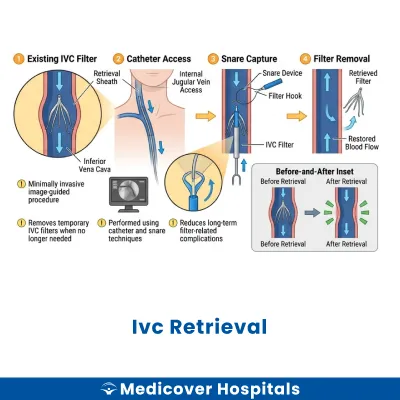
The IVC Retrieval procedure is performed by interventional radiologists. It typically lasts between 30 minutes to 1 hour. It is usually done under local anaesthesia with sedation.
- Preparation: The patient is positioned on the procedure table. Local anaesthesia is administered to numb the area, ensuring comfort.
- Access Site Creation: A small incision, about 1-2 cm, is made in the groin or neck area. A catheter is inserted through this incision to access the inferior vena cava (IVC).
- Guidewire Insertion: A guidewire is carefully threaded through the catheter into the IVC. The patient may feel slight pressure but no pain.
- Filter Retrieval: Using a retrieval snare or forceps, the filter is gently captured and withdrawn into the catheter. This step requires precision to avoid complications.
- Filter Removal: The filter is carefully pulled out through the catheter. The patient may feel a sensation of movement but remains comfortable.
- Closure: The catheter is removed, and the incision site is closed with a small bandage. No stitches are usually required.
- Recovery: The patient is monitored for a short period before being discharged. Instructions for care and follow-up are provided.
Who Performs IVC Retrieval Procedure?
The IVC Retrieval procedure is performed by interventional radiologists. These specialists are trained in minimally invasive techniques using imaging guidance. They ensure the procedure is conducted with precision and care.
Recovery After IVC Retrieval Procedure
After an IVC Retrieval procedure, patients can expect a relatively quick recovery. Most individuals experience minimal discomfort and can resume normal activities within a short period. However, following specific guidelines can help ensure a smooth recovery.
Day 1-2:
- Rest is crucial. Avoid strenuous activities.
- Keep the insertion site clean and dry.
- Consume light meals. Opt for easily digestible foods like curd, dal-rice, and soups.
Day 3-5:
- Gradually increase activity levels. Short walks are encouraged.
- Continue with a balanced diet. Include khichdi and moong dal for protein and energy.
- Monitor the insertion site for any signs of infection.
Day 6-7:
- Most patients can resume work or school, depending on their comfort level.
- Avoid heavy lifting or intense exercise.
- Maintain hydration and a nutritious diet to support healing.
Phase 2 (Week 2 and Beyond):
- Resume normal activities gradually. Listen to your body.
- Continue with a healthy diet. Incorporate a variety of fruits and vegetables.
- Regular follow-up appointments are essential for monitoring recovery.
When to Seek Urgent Help
- Severe pain or swelling at the insertion site.
- Signs of infection such as redness, warmth, or discharge.
- Sudden shortness of breath or chest pain.
- Unusual bleeding or bruising.
Benefits of IVC Retrieval Procedure
The IVC Retrieval procedure is designed to remove an inferior vena cava (IVC) filter when it is no longer needed, helping to restore normal blood flow.
- Restored Blood Flow: Removing the filter allows blood to flow freely, reducing the risk of complications.
- Reduced Risk of Complications: Eliminates potential long-term risks associated with the presence of the filter.
- Minimally Invasive: The procedure is typically performed using minimally invasive techniques, promoting quicker recovery.
- Improved Quality of Life: Patients may experience an improvement in overall health and well-being post-retrieval.
Risks and Complications of IVC Retrieval Procedure
While the IVC Retrieval procedure is generally safe, it carries certain risks and complications that patients should be aware of.
- Minor bleeding or bruising at the insertion site.
- Pain or discomfort during or after the procedure.
- Damage to the blood vessel during retrieval.
- Migration of the filter or parts of it during removal.
- Infection at the site of the procedure.
- Allergic reaction to contrast dye used during the procedure.
Cost of IVC Retrieval Procedure
The cost of the IVC Retrieval procedure at Medicover Hospitals varies depending on the ward category chosen. Prices range from Rs.1,00,000 to Rs.2,50,000. The cost is influenced by the type of accommodation and services provided.
Medicover Hospitals offers transparent pricing with support for insurance and TPA, including CGHS, ESI, and major TPAs. A cashless facility is also available for eligible patients. Please contact the hospital for the latest insurance panel details as these may change periodically.
Frequently Asked Questions
1. How much does IVC Retrieval cost at Medicover?
The cost of IVC Retrieval procedure at Medicover Hospitals ranges from Rs.1,00,000 to Rs.2,50,
2. Prices vary based on the type of room and services. 2. Is IVC Retrieval covered under health insurance?
IVC Retrieval may be covered by CGHS, ESI, and major TPAs. Please contact the hospital for current panel details.
3. Will I feel pain during IVC Retrieval?
IVC Retrieval is performed under anaesthesia, so you should not feel pain during the procedure. Some discomfort may occur post-procedure but is manageable.
4. Can I resume exercise after IVC Retrieval?
Light activities can be resumed within a week after IVC Retrieval. Avoid strenuous exercises for at least two weeks to ensure proper recovery.
5. Is there a risk of blood clot after IVC Retrieval?
There is a minimal risk of blood clot formation after IVC Retrieval. Regular follow-ups and prescribed medications help in managing this risk.
6. Will I need a special diet after IVC Retrieval?
Post-procedure, a light diet including curd, dal-rice, and khichdi is recommended. Avoid heavy and oily foods for a few days to aid recovery.
7. Can the filter be reinserted after IVC Retrieval?
In certain cases, the IVC filter can be reinserted if required. This decision depends on individual medical conditions and doctor's advice.


