 Call
Call Patient Reports
Best Hospital for Intravitreal Anti-VEGF Injection for Macular Degeneration by Expert Ophthalmologists
Intravitreal Anti VEGF for Macular Degeneration at Medicover Hospitals is performed using a minimally invasive approach. Our ophthalmologists, with qualifications like MS and DNB, are skilled in this procedure. This method often results in shorter recovery times for patients across India.
Expert Specialists
Yearly Treatments
Patient Satisfaction
What is Intravitreal Anti Vegf for Macular Degeneration?
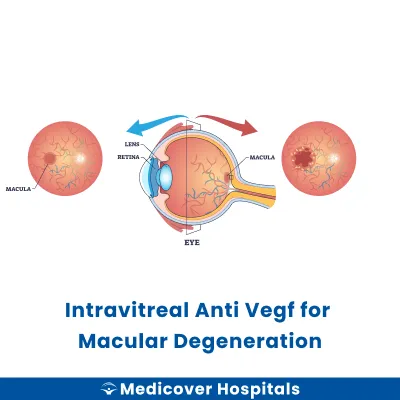
Intravitreal Anti-VEGF is a treatment for macular degeneration, a condition affecting the retina (the light-sensitive layer at the back of the eye). This procedure involves injecting medication directly into the vitreous cavity (the gel-like substance inside the eye). Anti-VEGF (Vascular Endothelial Growth Factor) medications help reduce abnormal blood vessel growth and leakage, which can damage the retina and impair vision.
This treatment is essential for managing age-related macular degeneration (AMD) and diabetic retinopathy. These conditions can lead to severe vision loss if left untreated. Intravitreal Anti-VEGF helps preserve vision and prevent further deterioration. Modern approaches include using fine needles for precise delivery and advanced imaging techniques for accurate targeting. Early intervention is crucial to maintain eye health and quality of life.
Intravitreal Anti Vegf for Macular Degeneration Doctors Near You
Discover experienced ophthalmologists for intravitreal anti-VEGF treatment for macular degeneration at Medicover Hospitals across India. Choose your city and book a consultation to explore your treatment options.
Why Choose Medicover Hospitals for Intravitreal Anti Vegf for Macular Degeneration?
Get a second opinion from trusted experts and makeconfident, informed decisions.
 Get Second Opinion
Complete Guide To Intravitreal Anti Vegf For Macular Degeneration
Everything you need to know about the procedure, preparation, and recovery
Intravitreal Anti VEGF for Macular Degeneration Procedure Indications
Doctors recommend Intravitreal Anti VEGF injections for patients with macular degeneration when vision loss affects daily activities. This procedure is often suggested when other treatments do not halt disease progression.
Sudden Vision Loss
Patients may experience a rapid decline in vision, making it difficult to read or recognize faces. On examination, doctors find fluid or blood under the retina. When vision loss is sudden and severe, this procedure is considered.
Distorted Vision
Patients report seeing straight lines as wavy or distorted. Eye exams reveal swelling in the macula. If distortion persists despite conservative treatments, Intravitreal Anti VEGF is recommended.
Central Vision Blurring
Blurring of central vision can occur, making it hard to perform tasks like driving. Doctors detect abnormal blood vessel growth in the retina. When blurring worsens, this procedure becomes necessary.
Persistent Fluid Accumulation
Patients may not notice symptoms initially, but tests show fluid build-up in the retina. If fluid persists after initial treatments, doctors suggest this injection to prevent further damage.
Hemorrhage in the Retina
Some patients experience sudden spots or floaters in their vision. Examination reveals bleeding in the retina. When bleeding does not resolve with other treatments, this procedure is advised.
How to Prepare for Intravitreal Anti VEGF for Macular Degeneration?
Proper preparation is crucial for a smooth intravitreal anti-VEGF procedure. It helps minimise risks and ensures optimal outcomes for macular degeneration treatment.
- Medication Review: Inform your doctor about all medications. You may need to stop NSAIDs, anticoagulants, and herbal supplements.
- Fasting Instructions: No fasting required as local anaesthesia is used. Eat normally unless advised otherwise by your doctor.
- Eye Hygiene: Clean your eyes gently with a mild cleanser to reduce infection risk.
- Clothing: Wear loose, comfortable clothing. It makes the procedure more comfortable.
- Transportation: Arrange for someone to drive you home. Vision may be temporarily affected post-procedure.
- Medication List: Bring a list of your current medications, including dosages, for reference.
- Pre-Procedure Instructions: Follow any specific instructions given by your healthcare provider.
- Relaxation: Try to stay calm and relaxed before the procedure. It helps in reducing anxiety.
Intravitreal Anti VEGF for Macular Degeneration procedure (Step-by-Step)
Intravitreal Anti-VEGF injections for macular degeneration are performed by experienced specialists from the Ophthalmology department. The procedure usually takes 15-30 minutes and is carried out under local anaesthesia using numbing eye drops.
- Preparation: The patient is seated comfortably. The eye is numbed with local anaesthetic drops. The area around the eye is cleaned to prevent infection.
- Eye Speculum Placement: An eye speculum is gently placed to keep the eyelids open. This ensures easy access to the eye.
- Antiseptic Application: An antiseptic solution is applied to the eye to further reduce the risk of infection.
- Injection Preparation: The ophthalmologist prepares the anti-VEGF medication. A fine needle is attached to a syringe for the injection.
- Injection: The needle is carefully inserted into the vitreous cavity of the eye. The medication is slowly injected. The patient may feel slight pressure but no pain.
- Needle Removal: The needle is gently withdrawn. The eye is checked for any immediate reactions or complications.
- Post-Procedure Care: An antibiotic ointment may be applied to prevent infection. The patient is advised to avoid rubbing the eye and to follow up as directed.
Who performs the Intravitreal Anti-VEGF for Macular Degeneration procedure?
This procedure is performed by experienced ophthalmologists. They specialise in eye and vision care. Their expertise ensures precise delivery of the medication into the eye. They are trained to handle any complications that may arise during the procedure.
Recovery After Intravitreal Anti-VEGF for Macular Degeneration Procedure
After receiving an intravitreal anti-VEGF injection for macular degeneration, you may experience mild discomfort or blurred vision. Recovery is generally quick, but it's important to follow your doctor's advice for the best outcome.
Day 1:
- Rest your eyes as much as possible. Avoid reading or screen time.
- Use prescribed eye drops to prevent infection.
- Consume light meals like curd rice or moong dal to keep digestion easy.
Day 2-3:
- Some redness and irritation are normal. Continue using eye drops.
- Begin gentle activities but avoid strenuous exercise.
- Include soft foods like khichdi or dal soup in your diet.
Day 4-7:
- Vision should start to stabilize. Blurred vision may persist slightly.
- You can resume light work or school activities if comfortable.
- Maintain a balanced diet with foods like vegetable soup and dal-rice.
Phase 2 (Week 2):
- Most discomfort should subside. Vision clarity improves.
- Gradually return to normal activities, but avoid heavy lifting or intense workouts.
- Continue a nutritious diet to support recovery.
When to Seek Urgent Help
- Severe eye pain or sudden vision loss.
- Increased redness or swelling around the eye.
- Flashing lights or a significant increase in floaters.
If you experience any of these symptoms, contact your healthcare provider immediately.
Benefits of Intravitreal Anti-VEGF for Macular Degeneration procedure
Intravitreal anti-VEGF injections are a common treatment for macular degeneration, aimed at slowing vision loss.
- Vision Stabilization: Helps in maintaining current vision levels, preventing further deterioration.
- Improved Vision: Some patients report improved clarity of vision.
- Non-Surgical: Minimally invasive, reducing recovery time compared to surgical options.
- Targeted Treatment: Directly addresses the underlying cause of vision loss in macular degeneration.
Risks and Complications of Intravitreal Anti-VEGF for Macular Degeneration procedure
While generally safe, intravitreal injections carry some risks. It is important to be aware of these potential complications.
- Common: Eye discomfort or redness at the injection site.
- Common: Temporary increase in eye pressure.
- Rare: Infection inside the eye (endophthalmitis disease).
- Rare: Retinal detachment, which may require further treatment.
- Rare: Bleeding inside the eye (vitreous hemorrhage).
- Rare: Allergic reactions to the medication.
Cost of Intravitreal Anti VEGF for Macular Degeneration procedure
The cost of the Intravitreal Anti VEGF procedure for Macular Degeneration at Medicover Hospitals ranges from Rs.500 to Rs.160000, depending on the ward category. Prices vary across different ward types, ensuring transparency in pricing. We offer insurance and TPA support, including CGHS, ESI, and major TPAs, with a cashless facility available for your convenience. Please contact the hospital for the latest insurance panel details as these may change periodically.
Frequently Asked Questions
1. How much does Intravitreal Anti VEGF cost?
The cost of Intravitreal Anti VEGF for Macular Degeneration at Medicover Hospitals ranges from Rs. 500 to Rs. 160,
2. 2. Is Intravitreal Anti VEGF covered by insurance?
Intravitreal Anti VEGF may be covered by CGHS, ESI, and major TPAs. Please contact the hospital for current panel details.
3. Can vision improve after Intravitreal Anti VEGF?
Intravitreal Anti VEGF can help stabilise vision in macular degeneration. Some patients may experience slight improvement in vision clarity.
4. Will I need multiple Intravitreal injections?
Yes, multiple injections are often required for macular degeneration. The frequency depends on individual response and disease progression.
5. What are the side effects of Intravitreal Anti VEGF?
Common side effects include eye redness and discomfort. Rarely, patients may experience increased eye pressure or infection.
6. Can I drive after Intravitreal Anti VEGF injection?
It is advised to avoid driving immediately after the injection. Vision may be temporarily blurred, affecting driving safety.
7. Will I need to change my diet post-procedure?
No specific diet is required after the injection. However, maintaining a balanced diet with foods like curd, dal-rice, and vegetables is beneficial.
8. How do you give intravitreal anti-VEGF?
Intravitreal anti-VEGF injections are given by an eye specialist under strict sterile conditions. The eye is numbed with anesthetic drops, cleaned with antiseptic, and a very fine needle is used to inject the medication into the vitreous (gel inside the eye). The procedure is quick and usually done as an outpatient treatment.
9. Which is better, Eylea or Avastin?
Both are effective anti-VEGF medications. Eylea (aflibercept) is specifically approved for eye conditions and may require fewer injections in some cases, while Avastin (bevacizumab) is widely used off-label and is more cost-effective. The choice depends on the condition, response to treatment, and doctor's recommendation.
10. How painful are intravitreal injections?
Intravitreal injections are usually not very painful because numbing drops are used. Patients may feel slight pressure or mild discomfort, but the procedure is generally well tolerated and lasts only a few seconds.


