 Call
Call Patient Reports
Intradural Extramedullary Spinal Tumor Excision with IONM Surgery Hospital by Expert Neurosurgeons
Intradural Extramedullary Spinal Tumor Excision with Intraoperative Neurophysiological Monitoring (IONM) is performed using an open surgical approach at Medicover Hospitals. Our neurosurgeons, with qualifications like MS and MCh, ensure precise excision. This method often results in reduced blood loss and shorter hospital stays.
Expert Surgeons
Yearly Surgeries
Patient Satisfaction
What is Intradural Extramedullary Spinal Tumor Excision With Ionm?
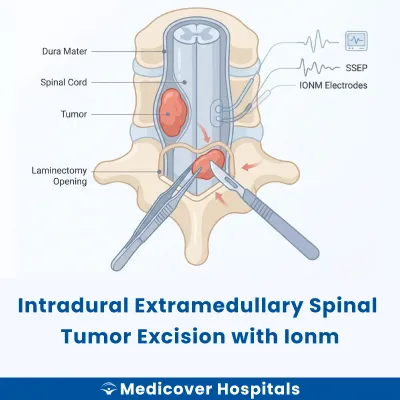
Intradural Extramedullary Spinal Tumor Excision with IONM is a surgical procedure to remove tumors located within the dura mater (outer membrane) but outside the spinal cord itself. The surgery involves the spine, specifically targeting tumors that compress or affect the spinal cord and nerves. IONM stands for Intraoperative Neurophysiological Monitoring, a technique used during surgery to monitor the nervous system's function and enhance safety.
This surgery is necessary to alleviate symptoms caused by these tumors, such as pain, weakness, or numbness. Conditions like meningiomas or schwannomas may require this procedure. If untreated, these tumors can lead to severe neurological deficits or paralysis. Modern surgical approaches include microsurgery and minimally invasive techniques, which aim to reduce recovery time and improve outcomes.
Intradural Extramedullary Spinal Tumor Excision With Ionm Doctors Near You
Discover skilled neurosurgeons for intradural extramedullary spinal tumor excision with IONM at Medicover Hospitals across India. Choose your city and book a consultation today for expert care.
Why Choose Medicover Hospitals for Intradural Extramedullary Spinal Tumor Excision With Ionm?
Get a second opinion from trusted experts and makeconfident, informed decisions.
 Get Second Opinion
Complete Guide To Intradural Extramedullary Spinal Tumor Excision With Ionm
Everything you need to know about the procedure, preparation, and recovery
Intradural Extramedullary Spinal Tumor Excision with IONM Surgery Indications
Doctors recommend Intradural Extramedullary Spinal Tumor Excision with Intraoperative Neurophysiological Monitoring (IONM) when non-surgical treatments fail to alleviate symptoms. This procedure is considered when the tumor affects spinal cord function or causes significant discomfort.
Progressive Neurological Deficits
Patients may experience worsening weakness, numbness, or tingling in the limbs. Imaging tests like MRI may show tumor growth compressing the spinal cord. Surgery is advised when these deficits progress despite conservative management.
Severe Back Pain
Persistent and severe back pain that does not respond to medication or physical therapy can indicate a spinal tumor. MRI or CT scans often reveal the tumor's location and size. Surgery is considered when pain significantly affects daily activities.
Bladder or Bowel Dysfunction
Patients might report difficulty controlling bladder or bowel functions. Neurological exams and imaging can show tumor-induced spinal cord pressure. Surgery is recommended when these symptoms worsen or do not improve with other treatments.
Spinal Instability
Some patients experience spinal instability, leading to abnormal movements or posture. Imaging may reveal a tumor causing structural changes. Surgery becomes necessary when instability risks spinal cord damage.
Failure of Non-Surgical Treatments
When conservative treatments like medication, physiotherapy, or radiation do not reduce symptoms or tumor size, surgery is considered. Imaging confirms the tumor's persistence or growth, prompting surgical intervention.
How to Prepare for Intradural Extramedullary Spinal Tumor Excision with IONM?
Preparation is crucial for a successful Intradural Extramedullary Spinal Tumor Excision with IONM. Proper planning helps reduce risks and ensures a smooth recovery.
- Medication Review: Stop NSAIDs, anticoagulants, and herbal supplements at least a week before surgery.
- Fasting Guidelines: Do not eat or drink anything for 8 hours before the procedure to ensure safety during anaesthesia.
- Pre-Surgical Tests: Complete all required blood tests, imaging, and any other tests as advised by your doctor.
- Clothing: Wear loose, comfortable clothing on the day of surgery for easy movement post-procedure.
- Transportation: Arrange for someone to drive you home after the surgery, as you will not be able to drive yourself.
- Medication List: Bring a list of all medications you are taking, including dosages, to share with the medical team.
- Personal Items: Leave valuables at home and bring only essentials to the hospital.
- Smoking and Alcohol: Avoid smoking and alcohol for at least 24 hours before surgery to aid recovery.
Intradural Extramedullary Spinal Tumor Excision with IONM Surgery (Step-by-Step)
Overview: This procedure is performed by neurosurgeons and typically lasts 3-5 hours. It is done under general anaesthesia to ensure the patient is unconscious and pain-free.
- Preparation: The patient is positioned on the operating table. Monitoring devices are attached to track vital signs. Intraoperative neurophysiological monitoring (IONM) is set up to observe nerve function.
- Incision: A midline incision of about 3-5 cm is made over the affected spinal segment. The skin and underlying tissues are carefully retracted to expose the spine.
- Laminectomy: Using a high-speed drill, the surgeon removes a portion of the vertebral bone (lamina) to access the spinal canal. This step provides a clear view of the tumor.
- Tumor Excision: The tumor is gently dissected using instruments like a curette and bipolar cautery. The surgeon carefully separates the tumor from the spinal cord and nerves, guided by IONM to prevent nerve damage.
- Closure: Once the tumor is removed, the dura mater (protective membrane) is sutured. The incision is closed in layers with sutures or staples.
- Recovery: The patient is moved to the recovery room. Vital signs are monitored as they wake up from anaesthesia. Pain management and neurological assessments are conducted.
Who Performs Intradural Extramedullary Spinal Tumor Excision with IONM Surgery?
This surgery is performed by neurosurgeons who specialise in spinal procedures. They are trained to use advanced techniques and equipment to ensure precise tumor removal while preserving nerve function.
Recovery After Intradural Extramedullary Spinal Tumor Excision with IONM Surgery
Recovery from Intradural Extramedullary Spinal Tumor Excision with IONM Surgery involves gradual healing and rehabilitation. Patients can expect a structured recovery plan, focusing on rest, nutrition, and gradual return to daily activities.
Day 1-3:
- Hospital stay is common. Pain management and monitoring are priorities.
- Start with a liquid diet. Gradually introduce soft foods like soups and moong dal.
- Minimal movement. Assistance required for basic activities.
Day 4-7:
- Transition to semi-solid foods like khichdi and dal-rice.
- Begin gentle physiotherapy as advised by the healthcare team.
- Walking short distances with support may be encouraged.
Week 2-4:
- Introduce regular Indian meals, including curd and soft vegetables.
- Increase physical activity gradually. Avoid heavy lifting or strenuous activities.
- Most patients can resume light work or school activities by the end of this phase.
Phase 2 (Month 2-3):
- Continue balanced diet with adequate protein and fibre.
- Engage in regular physiotherapy to improve mobility and strength.
- Full return to normal activities, including work, is possible for many.
When to Seek Urgent Help:
- Severe headache or neck pain not relieved by medication.
- Sudden weakness or numbness in limbs.
- Difficulty in urination or bowel movements.
- Signs of infection like fever or redness at the incision site.
Benefits of Intradural Extramedullary Spinal Tumor Excision with IONM Surgery
Intradural Extramedullary Spinal Tumor Excision with Intraoperative Neuromonitoring (IONM) offers several advantages for patients.
- Enhanced Safety: IONM helps in monitoring nerve function during surgery, reducing the risk of nerve damage.
- Improved Precision: The use of IONM allows for precise excision of the tumor, minimizing impact on surrounding tissues.
- Better Outcomes: This procedure can lead to improved neurological outcomes by preserving spinal cord function.
- Reduced Recurrence: Complete removal of the tumor decreases the likelihood of recurrence.
Risks and Complications of Intradural Extramedullary Spinal Tumor Excision with IONM Surgery
While this surgery is generally safe, there are potential risks and complications.
- Common: Infection at the surgical site can occur, requiring further treatment.
- Common: Bleeding during or after surgery may necessitate additional interventions.
- Rare: Nerve damage, despite IONM, may lead to temporary or permanent neurological deficits.
- Rare: Cerebrospinal fluid leakage might occur, potentially requiring further surgical repair.
- Rare: An adverse reaction to anaesthesia could happen, though it is uncommon.
Cost of Intradural Extramedullary Spinal Tumor Excision with IONM Surgery
The cost of Intradural Extramedullary Spinal Tumor Excision with IONM Surgery can vary based on the surgical approach starting from ₹2,50,000 - ₹6,00,000, duration of hospital stay, room category, diagnostics, and post-operative care.
At Medicover Hospitals, we ensure transparent pricing. We support insurance and TPA services, including CGHS, ESI, and major TPAs, with a cashless facility available. Please contact the hospital for the latest insurance panel details as these may change periodically.
Frequently Asked Questions
1. How much does Intradural Extramedullary Spinal Tumor Excision with IONM surgery cost at Medicover Hospitals?
The cost of Intradural Extramedullary Spinal Tumor Excision with IONM surgery varies starting from ₹2,50,000 - ₹6,00,
2. Please contact Medicover Hospitals for detailed pricing information. 2. Is Intradural Extramedullary Spinal Tumor Excision with IONM surgery covered under health insurance at Medicover?
This surgery may be covered by CGHS, ESI, and major TPAs. Please contact the hospital for current panel details.
3. Will I experience back pain after the surgery?
Some patients may experience temporary back pain post-surgery. It usually subsides as the healing progresses.
4. Can I lift heavy objects after surgery?
Avoid lifting heavy objects for at least 6 weeks post-surgery. Consult your doctor for a personalised recovery plan.
5. Will I need physiotherapy after the surgery?
Physiotherapy may be recommended to aid recovery and improve mobility. Your doctor will guide you based on your specific condition.
6. Can I travel by plane after the surgery?
Air travel is generally advised against for at least 4 weeks post-surgery. Consult your doctor for personalised travel advice.
7. What foods should I eat after the surgery?
Consume soft, easily digestible foods like dal-rice, khichdi, and curd. These help in maintaining nutrition and easing digestion during recovery.


