 Call
Call Patient Reports
Hospital for Intracranial Balloon Angioplasty with Stenting Procedure
Intracranial balloon angioplasty with stenting at Medicover Hospitals is performed using advanced endoscopic techniques. Our team includes specialists with qualifications such as MD, DNB, and DM. This approach can lead to shorter hospital stays and reduced recovery times for patients across India.
Expert Experts
Yearly Procedures
Patient Satisfaction
What is Intracranial Balloon Angioplasty With Stenting?
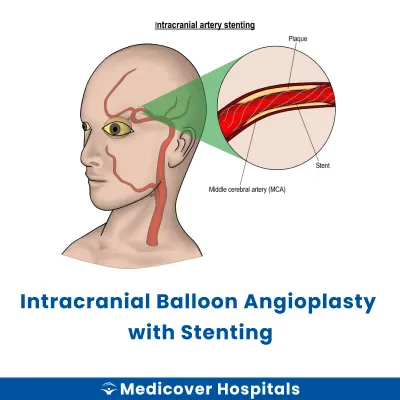
Intracranial balloon angioplasty with stenting is a medical procedure used to treat narrowed or blocked blood vessels in the brain. It involves the use of a balloon to widen the artery and a stent (a small mesh tube) to keep it open. This procedure helps improve blood flow to the brain, reducing the risk of stroke.
This surgery is needed for conditions like intracranial atherosclerosis, where plaque builds up in the brain's arteries. If left untreated, it can lead to a stroke or transient ischemic attack (TIA). Modern surgical approaches include minimally invasive techniques, which allow for quicker recovery and less risk of complications. These methods are vital for restoring proper blood circulation in the brain.
This surgery is needed for conditions like intracranial atherosclerosis, where plaque builds up in the brain's arteries. If left untreated, it can lead to a stroke or transient ischemic attack (TIA). Modern surgical approaches include minimally invasive techniques, which allow for quicker recovery and less risk of complications. These methods are vital for restoring proper blood circulation in the brain.
Intracranial Balloon Angioplasty With Stenting Doctors Near You
Discover expert Neurosurgery for intracranial balloon angioplasty with stenting at Medicover Hospitals across India. Choose your city and book a consultation for advanced care today.
Why Choose Medicover Hospitals for Intracranial Balloon Angioplasty With Stenting?
Advanced Neurosurgeons OT: Equipped with C-arm fluoroscopy and neuronavigation for precise intracranial interventions.
Get a second opinion from trusted experts and makeconfident, informed decisions.
 Get Second Opinion
Complete Guide To Intracranial Balloon Angioplasty With Stenting
Everything you need to know about the procedure, preparation, and recovery
Intracranial Balloon Angioplasty with Stenting Procedure Indications
Doctors recommend intracranial balloon angioplasty with stenting when blood flow to the brain is compromised due to narrowed or blocked arteries. This procedure is often considered when non-invasive treatments have not improved the patient's condition.
Severe Intracranial Stenosis
Patients may experience recurrent transient ischemic attacks or minor strokes. Imaging tests like MRI or CT angiography reveal significant narrowing of the intracranial arteries. When medications and lifestyle changes do not alleviate symptoms, this procedure may be advised.
Recurrent Ischemic Events
Individuals may suffer from repeated episodes of weakness, speech difficulties, or vision problems. Diagnostic imaging shows persistent arterial blockages despite medical therapy. When these symptoms persist, angioplasty with stenting can be a viable option.
Failed Medical Management
Patients often report persistent headaches, dizziness, or confusion. Despite optimal medical treatment, imaging studies show no improvement in arterial narrowing. In such cases, intervention becomes necessary to restore adequate blood flow.
High-Risk Atherosclerotic Plaques
Some patients experience neurological deficits due to unstable plaques in the arteries. Imaging techniques like Doppler ultrasound or angiography reveal high-risk plaques. When these plaques pose a significant risk, surgical intervention is considered.
Symptomatic Intracranial Aneurysm
Symptoms such as sudden severe headache or neurological deficits may occur. Imaging tests confirm the presence of an aneurysm with a risk of rupture. When conservative measures fail to manage the condition, angioplasty with stenting is recommended.
How to Prepare for Intracranial Balloon Angioplasty with Stenting?
Proper preparation is crucial for the success and safety of intracranial balloon angioplasty with stenting. It helps in reducing complications and ensures a smoother recovery.
- Medication Review: Inform your doctor about all medications you take, including prescriptions, over-the-counter drugs, and supplements.
- Stop Certain Medications: Discontinue NSAIDs, anticoagulants, and herbal supplements as advised by your doctor, usually a week before the procedure.
- Fasting Guidelines: Fast for at least 6-8 hours before the procedure as anaesthesia will be used.
- Pre-Procedure Tests: Complete any blood tests or imaging studies as ordered by your healthcare provider.
- Clothing and Personal Items: Wear loose, comfortable clothing and avoid bringing valuables to the hospital.
- Transportation Arrangements: Arrange for someone to drive you home post-procedure, as you will not be able to drive yourself.
- Medication List: Bring a list of your current medications, including dosages, to the hospital.
- Follow Specific Instructions: Adhere to any additional instructions provided by your healthcare team for optimal results.
Intracranial Balloon Angioplasty with Stenting Procedure (Step-by-Step)
This procedure is performed by advanced neurosurgical experts. It typically lasts 1 to 3 hours and is done under general anaesthesia.
- Preparation: The patient is positioned on the operating table. General anaesthesia is administered to ensure comfort and immobility.
- Access: A small incision, about 1-2 cm, is made in the groin area to access the femoral artery. A catheter is inserted through this incision.
- Navigation: Using fluoroscopy, the catheter is guided through the blood vessels to reach the affected intracranial artery.
- Balloon Angioplasty: A balloon catheter is inserted through the guide catheter. The balloon is inflated at the site of narrowing to widen the artery.
- Stent Placement: A stent is positioned at the site of the blockage. It is expanded with the help of the balloon to keep the artery open.
- Verification: Imaging techniques confirm the stent placement and restored blood flow. The balloon and catheter are carefully removed.
- Closure: The incision site is closed with sutures or a closure device. A bandage is applied to prevent bleeding.
Who Performs Intracranial Balloon Angioplasty with Stenting Procedure?
This procedure is performed by an neurosurgeons. They are specialists trained in minimally invasive techniques using imaging guidance. Their expertise ensures precise navigation and placement of instruments within the blood vessels.
Recovery After Intracranial Balloon Angioplasty with Stenting Procedure
Recovery from intracranial balloon angioplasty with stenting involves gradual healing and lifestyle adjustments. Patients can expect to stay in the hospital for a short period for observation. Follow-up appointments are crucial to monitor progress.
Day 1-3:
- Rest is essential. Avoid strenuous activities.
- Hospital stay for monitoring vital signs and neurological status.
- Start with light, easily digestible foods like curd, dal-rice, and soups.
Day 4-7:
- Gradual increase in physical activity, like short walks.
- Continue with a soft diet, including khichdi and moong dal.
- Avoid lifting heavy objects or bending over.
Week 2-4:
- Resume light household activities. Avoid intense exercise.
- Return to work or school may be possible, depending on recovery.
- Maintain a balanced diet with plenty of fruits and vegetables.
Phase 2 (1-3 Months):
- Gradually return to normal activities, following medical advice.
- Regular follow-up appointments to assess stent function.
- Continue a heart-healthy diet to support recovery.
When to Seek Urgent Help:
- Sudden severe headache or dizziness.
- Weakness or numbness on one side of the body.
- Difficulty speaking or understanding speech.
- Vision changes or loss of balance.
If any of these symptoms occur, contact your healthcare provider immediately.
Benefits of Intracranial Balloon Angioplasty with Stenting Procedure
This procedure helps in widening narrowed blood vessels in the brain, improving blood flow and reducing the risk of stroke.
- Improved Blood Flow: Enhances circulation to the brain, reducing symptoms of ischemia.
- Stroke Prevention: Lowers the risk of future strokes by stabilising the blood vessel.
- Minimally Invasive: Less invasive than open surgery, leading to quicker recovery.
- Symptom Relief: Alleviates symptoms such as headaches and dizziness caused by restricted blood flow.
Risks and Complications of Intracranial Balloon Angioplasty with Stenting Procedure
While generally safe, this procedure carries certain risks and potential complications.
- Bleeding at the catheter insertion site.
- Blood vessel damage during the procedure.
- Stroke or transient ischemic attack during or after the procedure.
- Allergic reaction to contrast dye used in the procedure.
- Restenosis, or re-narrowing of the treated artery over time.
- Infection at the catheter insertion site.
Cost of Intracranial Balloon Angioplasty with Stenting Procedure
The cost of Intracranial balloon angioplasty with stenting procedure at Medicover Hospitals varies based on the ward category chosen. Prices range from Rs. 1,00,000 to Rs. 4,50,000 across different ward types. We offer transparent pricing and support for insurance and TPA, including CGHS, ESI, and major TPAs. A cashless facility is also available for your convenience. Please contact the hospital for the latest insurance panel details as these may change periodically.
Frequently Asked Questions
1. How much does Intracranial balloon angioplasty with stenting procedure cost at Medicover Hospitals?
The cost ranges from Rs. 1,00,000 to Rs. 4,50,000 across Medicover Hospitals, depending on the facility and care level.
2. Is Intracranial balloon angioplasty with stenting procedure covered under health insurance at Medicover?
Coverage is available under CGHS, ESI, and major TPAs, with cashless options. Please contact the hospital for current panel details.
3. Can I experience headaches after the procedure?
Some patients may experience headaches due to changes in blood flow. Consult your doctor if headaches persist or worsen.
4. Will I need to avoid strenuous activities?
Yes, avoid strenuous activities for a few weeks to ensure proper recovery. Consult your doctor for a tailored activity plan.
5. Can I drive immediately after the procedure?
Driving is not recommended immediately after the procedure. Wait for your doctor's approval, usually a few weeks post-procedure.
6. What dietary changes are needed post-procedure?
Consume a balanced diet with plenty of fruits, vegetables, and whole grains. Include Indian foods like dal-rice and khichdi for easy digestion.
7. Are there risks of blood clots after the procedure?
Blood clots are a potential risk, but medications can help prevent them. Follow your doctor's instructions to minimise this risk.


