 Call
Call Patient Reports
Intracerebral Hemorrhage or Hemorrhagic Stroke Surgery by Expert Neurologists
Intracerebral hemorrhage, a type of hemorrhagic stroke, is managed by skilled neurologists with DM and DNB qualifications at Medicover Hospitals. The open surgical approach is often used. This method can lead to reduced blood loss and shorter hospital stays for patients.
Expert Surgeons
Yearly Surgeries
Patient Satisfaction
What is Intracerebral Hemorrhage or Hemorrhagic Stroke?
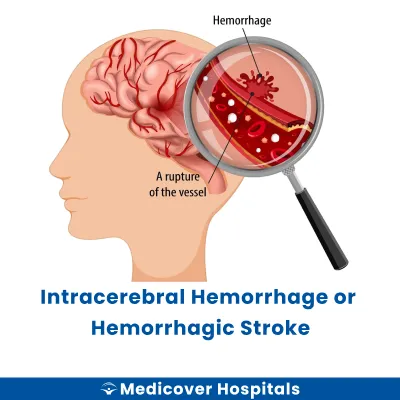
Intracerebral hemorrhage, also known as a hemorrhagic stroke, occurs when a blood vessel bursts within the brain. This leads to bleeding inside the brain tissue. The brain (central nervous system) is affected, causing damage to brain cells. This condition can result in sudden neurological symptoms and requires immediate medical attention.
Surgery is often needed to relieve pressure on the brain and prevent further damage. Conditions like high blood pressure, head trauma, or aneurysms can lead to an intracerebral hemorrhage. If left untreated, it can cause severe disability or even be life-threatening. Modern surgical approaches include craniotomy surgery (removal of part of the skull) and minimally invasive techniques to remove the clot and stop the bleeding.
Intracerebral Hemorrhage or Hemorrhagic Stroke Doctors Near You
Discover experienced neurosurgeons for intracerebral hemorrhage care at Medicover Hospitals across India. Choose your city and book a consultation to receive expert guidance and support for your health needs.
Why Choose Medicover Hospitals for Intracerebral Hemorrhage or Hemorrhagic Stroke?
Get a second opinion from trusted experts and makeconfident, informed decisions.
 Get Second Opinion
Complete Guide To Intracerebral Hemorrhage Or Hemorrhagic Stroke
Everything you need to know about the procedure, preparation, and recovery
Intracerebral hemorrhage or Hemorrhagic stroke Surgery Indications
Doctors recommend surgery for intracerebral hemorrhage or hemorrhagic stroke when immediate intervention is necessary to prevent further brain damage. This procedure is considered when symptoms are severe, and imaging shows significant bleeding.
Severe Neurological Deficits
Patients may experience sudden weakness, numbness, or paralysis, often on one side of the body. Imaging, like a CT scan, reveals large areas of bleeding. Surgery is advised when these deficits do not improve with medical management.
Increased Intracranial Pressure
Symptoms include severe headache, vomiting, and altered consciousness. Doctors find elevated pressure inside the skull through clinical examination and imaging. Surgery is needed when pressure does not decrease with medication.
Large Hematoma Volume
Patients may present with confusion, loss of balance, or speech difficulties. A CT scan shows a large blood clot in the brain. Surgery is considered when the clot size exceeds a critical threshold and medical treatment is ineffective.
Brainstem Compression
Signs include difficulty breathing, irregular heartbeat, and loss of consciousness. Imaging reveals the brainstem is compressed by the hemorrhage. Surgical intervention is required when these symptoms are life-threatening.
Recurrent Bleeding
Patients might experience repeated episodes of neurological decline. Imaging shows new or expanding areas of bleeding. Surgery becomes necessary when bleeding persists despite conservative measures.
How to Prepare for Intracerebral Hemorrhage or Hemorrhagic Stroke?
Preparation is crucial for managing an intracerebral hemorrhage or hemorrhagic stroke. It helps ensure the procedure goes smoothly and reduces potential complications.
- Medication Review: Stop NSAIDs, anticoagulants, and herbal supplements as advised by your doctor.
- Fasting Guidelines: Follow a fasting period of 6-8 hours before the procedure, as general anaesthesia is typically used.
- Medical History: Bring a list of all medications, including dosages, to the hospital.
- Clothing: Wear loose, comfortable clothing on the day of the procedure for ease of movement.
- Transportation: Arrange for someone to drive you home post-procedure, as you may feel drowsy.
- Pre-Procedure Tests: Complete any blood tests or imaging studies as instructed by your healthcare provider.
- Hydration: Stay well-hydrated unless advised otherwise, but stop drinking fluids as per fasting guidelines.
- Personal Items: Bring only essential items to the hospital to avoid any loss.
Intracerebral hemorrhage or Hemorrhagic stroke Surgery (Step-by-Step)
This surgery is performed by neurosurgeons. It typically lasts between 2 to 4 hours. General anaesthesia is used to ensure the patient is unconscious and pain-free.
- Preparation: The patient is placed under general anaesthesia. Vital signs are monitored continuously.
- Incision: A small incision, usually 1-2 cm, is made in the scalp. The surgeon carefully accesses the skull.
- Craniotomy: A section of the skull is temporarily removed using a surgical drill to access the brain.
- Hematoma Evacuation: The surgeon uses instruments like suction devices and curettes to remove the blood clot and relieve pressure on the brain.
- Bleeding Control: Bipolar cautery is used to seal any bleeding vessels and prevent further hemorrhage.
- Closure: The skull piece is replaced and secured. The incision is stitched, and a sterile dressing is applied.
- Recovery: The patient is moved to the recovery room. Vital signs are monitored as the patient awakens from anaesthesia.
Who Performs Intracerebral hemorrhage or Hemorrhagic stroke Surgery?
This surgery is performed by neurosurgeons. They are specialists trained to handle complex brain conditions. Their expertise ensures the procedure is conducted with precision. They work closely with a team of healthcare professionals to provide comprehensive care during and after the surgery.
Recovery After Intracerebral Hemorrhage or Hemorrhagic Stroke Surgery
Recovery from intracerebral hemorrhage or hemorrhagic stroke surgery can be a gradual process. It involves careful monitoring and rehabilitation to regain strength and function. Patients may experience fatigue and require assistance with daily activities initially.
Day 1-3:
- Close monitoring in the hospital. Vital signs and neurological status are checked frequently.
- Rest is crucial. Minimal physical activity is advised.
- Start with a liquid diet, progressing to soft foods like curd, dal-rice, and soups as tolerated.
Day 4-7:
- Gradual increase in physical activity under supervision. Simple exercises may be introduced.
- Continue with a soft diet. Include easily digestible foods like khichdi and moong dal.
- Focus on hydration and balanced nutrition to aid recovery.
Week 2-4:
- Begin rehabilitation therapies such as physiotherapy and occupational therapy.
- Slowly resume light activities at home. Avoid strenuous tasks.
- Diet can include more variety, but should remain low in salt and fat.
Phase 1-3 Months:
- Continue rehabilitation exercises to improve mobility and strength.
- Gradually return to work or school, depending on recovery progress and doctor's advice.
- Maintain a healthy diet with plenty of fruits, vegetables, and whole grains.
When to Seek Urgent Help:
- Sudden weakness or numbness in the face, arm, or leg.
- Severe headache, confusion, or difficulty speaking.
- Loss of balance or coordination.
- Any signs of infection like fever or redness at the surgical site.
Benefits of Intracerebral hemorrhage or Hemorrhagic stroke Surgery
Intracerebral hemorrhage surgery aims to alleviate pressure on the brain and prevent further damage.
- Pressure Relief: Helps reduce intracranial pressure, potentially improving neurological function.
- Prevention of Further Bleeding: Surgical intervention can help control bleeding and prevent additional hemorrhage.
- Improved Survival Rates: Timely surgery may increase the chances of survival in severe cases.
- Enhanced Recovery: Surgery may facilitate a better recovery process by addressing the source of bleeding.
Risks and Complications of Intracerebral hemorrhage or Hemorrhagic stroke Surgery
While surgery can be beneficial, it carries certain risks and complications that patients should be aware of.
- Common: Infection at the surgical site can occur, requiring further treatment.
- Common: Bleeding during or after surgery may necessitate additional interventions.
- Rare: Neurological deficits may arise, affecting speech or movement.
- Rare: Seizures could develop post-surgery, needing medical management.
- Rare: Blood clots may form, posing a risk of stroke or other complications.
Cost of Intracerebral Hemorrhage or Hemorrhagic Stroke Surgery
The cost for intracerebral hemorrhage or hemorrhagic stroke surgery at Medicover Hospitals ranges from Rs. 15000 to Rs. 24000. The price varies depending on the ward category chosen, such as general, twin sharing, private, ICU, deluxe, or suite.
We offer transparent pricing and support for insurance and TPAs, including CGHS, ESI, and major TPAs. Cashless facilities are available for your convenience. Please contact the hospital for the latest insurance panel details as these may change periodically.
Frequently Asked Questions
1. How much does Intracerebral hemorrhage or Hemorrhagic stroke surgery cost at Medicover Hospitals?
The cost for Intracerebral hemorrhage or Hemorrhagic stroke surgery at Medicover Hospitals ranges from Rs.15000 to Rs.24000, depending on the room category.
2. Is Intracerebral hemorrhage or Hemorrhagic stroke surgery covered under health insurance at Medicover?
Many health insurance plans, including CGHS and ESI, cover this surgery. Please contact the hospital for current panel details.
3. Will I experience memory loss after hemorrhagic stroke?
Memory loss can occur after a hemorrhagic stroke due to brain damage. Rehabilitation therapy may help improve memory function over time.
4. Can I drive after recovering from a hemorrhagic stroke?
Driving is usually restricted post-stroke until cleared by a doctor. This ensures safety due to potential cognitive or motor impairments.
5. What foods should I avoid after a hemorrhagic stroke?
Avoid high-sodium and high-fat foods to prevent further complications. Opt for healthier options like fruits, vegetables, and dal-rice.
6. Will I need speech therapy after a hemorrhagic stroke?
Speech therapy may be necessary if the stroke affects speech areas in the brain. It helps regain communication skills and improve quality of life.
7. Can a hemorrhagic stroke cause permanent paralysis?
Permanent paralysis is a possible complication if the stroke damages motor control areas. Rehabilitation can aid in regaining some movement.
8. What is the surgery for a hemorrhagic stroke?
Surgery for a hemorrhagic stroke may involve procedures like craniotomy to remove the blood clot or repair a ruptured blood vessel, or minimally invasive techniques such as endoscopic evacuation. In some cases, procedures like aneurysm clipping or coiling are performed to stop further bleeding.
9. What is the recovery time for hemorrhagic stroke?
Recovery time after a hemorrhagic stroke varies widely, ranging from a few weeks to several months depending on the severity and treatment. Rehabilitation, including physiotherapy and speech therapy, often plays a key role in improving long-term outcomes.


