 Call
Call Patient Reports
Intra Aortic Balloon Pump Procedure With Expert Cardiologists
The Intra aortic balloon pump procedure at Medicover Hospitals is performed using an open surgical approach. Our team of cardiologists, with qualifications such as DM and DNB, ensure precise care. This procedure often results in shorter hospital stays for patients across India.
Expert Surgeons
Yearly Surgeries
Patient Satisfaction
What is Intra Aortic Balloon Pump?
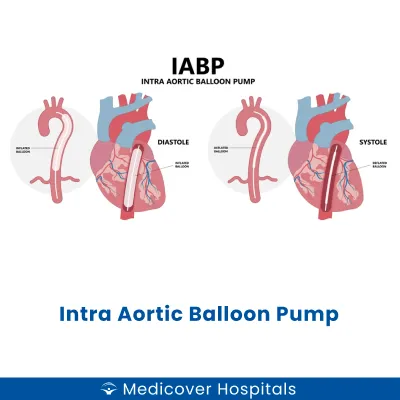
An Intra aortic balloon pump (IABP) is a mechanical device used to support the heart. It involves the aorta, the main artery that carries blood from the heart to the rest of the body. The device consists of a balloon inserted into the aorta. It inflates and deflates in sync with the heartbeat. This helps improve blood flow and reduce the heart's workload.
IABP is often needed for patients with severe heart conditions. These include heart failure, cardiogenic shock, or complications after a heart attack. Without intervention, these conditions can worsen, leading to life-threatening situations. Modern approaches for IABP placement include minimally invasive techniques. These methods aim to reduce recovery time and improve outcomes.
Intra Aortic Balloon Pump Doctors Near You
Find experienced cardiologists for intra-aortic balloon pump procedures at Medicover Hospitals across India. Choose your city and book a consultation to discuss your heart health needs today.
Why Choose Medicover Hospitals for Intra Aortic Balloon Pump?
Get a second opinion from trusted experts and makeconfident, informed decisions.
 Get Second Opinion
Complete Guide To Intra Aortic Balloon Pump
Everything you need to know about the procedure, preparation, and recovery
Intra aortic balloon pump procedure Indications
The intra aortic balloon pump (IABP) procedure is recommended by cardiologists when patients experience severe heart conditions that require mechanical support. It is often considered when other treatments are not effective in improving heart function.
Cardiogenic Shock
Patients may experience extreme fatigue, shortness of breath, and confusion. Doctors find low blood pressure and poor organ perfusion. When medications fail to stabilize the patient's condition, IABP is considered.
Severe Heart Failure
Symptoms include persistent breathlessness and swelling in the legs. Diagnostic tests show reduced ejection fraction and fluid overload. If medical management does not improve symptoms, IABP may be used.
Acute Myocardial Infarction
Patients often report chest pain and sweating. ECG and blood tests reveal significant heart damage. When standard treatments do not alleviate symptoms, IABP can provide temporary support.
Complications Post-Heart Surgery
Signs include low cardiac output and difficulty in weaning from cardiopulmonary bypass. Monitoring shows inadequate heart function. IABP is used when other interventions are insufficient.
Unstable Angina
Patients experience chest pain that occurs at rest. Tests show significant coronary artery blockages. If medications and angioplasty are not effective, IABP may be considered to stabilize the patient.
How to Prepare for Intra aortic balloon pump?
Proper preparation for an intra aortic balloon pump (IABP) procedure is crucial to ensure safety and effectiveness. It helps in reducing risks and improving recovery.
- Medication Review: Inform your doctor about all medications. Stop NSAIDs, anticoagulants, and herbal supplements as advised.
- Fasting: Do not eat or drink anything for at least 6-8 hours before the procedure to prepare for anaesthesia.
- Medical History: Share your complete medical history, including allergies and previous surgeries, with your healthcare team.
- Clothing: Wear loose, comfortable clothing on the day of the procedure for ease of movement post-procedure.
- Transportation: Arrange for someone to drive you home after the procedure, as you may feel drowsy from anaesthesia.
- Medication List: Bring a list of your current medications, including dosages, for the medical team to review.
- Pre-procedure Tests: Complete any required blood tests, ECG, or imaging studies as instructed by your doctor.
- Consent Form: Read and sign the consent form after discussing the procedure and its risks with your doctor.
Intra aortic balloon pump procedure (Step-by-Step)
Overview: The intra aortic balloon pump (IABP) procedure is performed by cardiologists. It typically takes about 1-2 hours. Local anaesthesia is commonly used to numb the insertion area.
- Preparation: The patient is positioned comfortably. Local anaesthesia is administered to numb the groin area.
- Insertion: A small incision of about 1-2 cm is made in the groin. A catheter with a deflated balloon at its tip is inserted into the femoral artery using a guidewire.
- Positioning: The catheter is carefully guided through the blood vessels to the aorta. Imaging techniques, like fluoroscopy, help ensure correct placement.
- Balloon Inflation: Once in place, the balloon is connected to a console. It inflates and deflates in sync with the heartbeat, aiding blood flow.
- Monitoring: The patient's vital signs are closely monitored. Adjustments are made to the balloon's timing and volume as needed.
- Completion: After the procedure, the catheter is secured in place. The incision site is dressed to prevent infection.
- Recovery: The patient is observed in a recovery area. They may feel mild discomfort at the incision site.
Who Performs Intra aortic balloon pump procedure?
The intra aortic balloon pump procedure is performed by Cardiac specialists, often with the assistance of a cardiac surgeon. These specialists have expertise in managing heart conditions and are trained in using devices like the IABP. They ensure the procedure is conducted safely and effectively.
Recovery After Intra aortic balloon pump procedure
Recovery from an intra aortic balloon pump (IABP) procedure involves careful monitoring and gradual return to normal activities. Patients can expect a hospital stay for a few days post-procedure, followed by a period of rest and gradual activity increase at home.
Day 1-3:
- Hospital stay for monitoring vital signs and heart function.
- Bed rest is recommended to ensure proper healing.
- Diet includes light meals like curd, dal-rice, and soups.
Day 4-7:
- Gradual increase in light activities, such as short walks.
- Continue with a soft diet including khichdi and moong dal.
- Avoid lifting heavy objects or strenuous activities.
Week 2:
- Further increase in activity level, but avoid exertion.
- Return to normal diet, focusing on balanced meals.
- Discuss with your doctor about resuming work or school.
When to Seek Urgent Help
- Severe chest pain or shortness of breath.
- Signs of infection at the insertion site, such as redness or swelling.
- Sudden weakness or numbness in limbs.
Benefits of Intra aortic balloon pump procedure
The intra aortic balloon pump (IABP) is a mechanical device used to support the heart in critical conditions. It offers several benefits for patients with heart issues.
- Improved Blood Flow: Enhances blood circulation to the heart and other vital organs.
- Reduced Heart Workload: Decreases the heart's effort by reducing afterload.
- Stabilisation: Provides temporary support during acute heart failure or post-surgery.
- Bridge to Recovery: Serves as a temporary solution while awaiting further treatment or recovery.
Risks and Complications of Intra aortic balloon pump procedure
While the IABP procedure is beneficial, it carries certain risks and potential complications. It is important to be aware of these risks.
- Common: Bleeding at the insertion site.
- Common: Infection risk due to catheter insertion.
- Rare: Limb ischemia due to reduced blood flow.
- Rare: Balloon rupture or malfunction.
- Rare: Vascular injury during insertion.
- Rare: Thrombosis or clot formation.
Cost of Intra aortic balloon pump procedure
The cost of the Intra aortic balloon pump procedure at Medicover Hospitals ranges from Rs. 17000 to Rs. 34000 for intra operative TEE, depending on the ward category. Prices vary based on the type of accommodation chosen, ensuring transparent pricing for all patients.
We offer insurance and TPA support, including CGHS, ESI, and major TPAs, with a cashless facility available. Please contact the hospital for the latest insurance panel details as these may change periodically.
Frequently Asked Questions
1. How much does Intra aortic balloon pump procedure cost at Medicover Hospitals?
The cost ranges from Rs. 17000 to Rs. 34000 across Medicover Hospitals, depending on the type of care and room selection.
2. Is Intra aortic balloon pump procedure covered under health insurance at Medicover?
This procedure is often covered by CGHS, ESI, and major TPAs with cashless options. Please contact the hospital for current panel details.
3. Can I resume exercise after an Intra aortic balloon pump?
Light activities may resume after a few weeks, but avoid strenuous exercise. Consult your doctor for a personalised recovery plan.
4. Will I experience chest pain after an Intra aortic balloon pump?
Some patients may experience mild chest discomfort initially. If pain persists, contact your healthcare provider for further evaluation.
5. Can I eat spicy food after an Intra aortic balloon pump?
Initially, stick to a bland diet like curd, dal-rice, or khichdi. Gradually reintroduce spices as advised by your doctor.
6. Will I need blood thinners after an Intra aortic balloon pump?
Blood thinners are often prescribed to prevent clots. Your doctor will guide you on the duration and type of medication needed.
7. Is there a risk of infection with an Intra aortic balloon pump?
Infection is a potential risk, but precautions are taken to minimise it. Follow your doctor's advice on wound care and hygiene.


