 Call
Call Patient Reports
Instantaneous Wave Free Ratio Procedure by Expert Cardiologists
At Medicover Hospitals, our cardiologists, with qualifications like DM and DNB, utilise the Instantaneous Wave Free Ratio (iFR) technique to assess coronary artery disease. This minimally invasive procedure helps in accurate diagnosis, leading to shorter hospital stays for patients across India.
Expert Experts
Yearly Procedures
Patient Satisfaction
What is Instantaneous Wave Free Ratio?
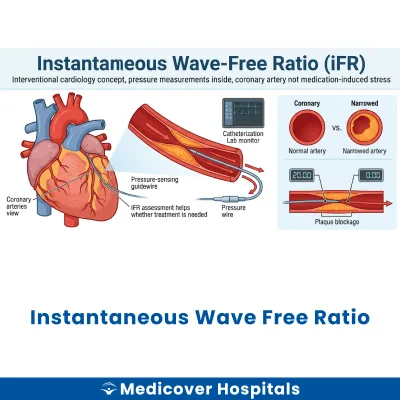
The Instantaneous Wave Free Ratio (iFR) is a medical measurement used to assess the severity of coronary artery disease. It focuses on the coronary arteries, which supply blood to the heart. iFR is a non-invasive method that evaluates blood flow and pressure in the arteries during a specific part of the heartbeat cycle. This helps in determining if there is a significant blockage that might require treatment.
iFR is needed when there is suspicion of coronary artery disease, which can lead to chest pain or heart attacks. If left untreated, blocked arteries can cause serious heart conditions. Modern approaches like angioplasty and stenting are available to address issues identified by iFR. These procedures help restore proper blood flow and prevent further complications.
Instantaneous Wave Free Ratio Doctors Near You
Discover expert cardiologists for Instantaneous Wave Free Ratio assessments across Medicover locations in India. Choose your city and book a consultation to explore your heart health options today.
Why Choose Medicover Hospitals for Instantaneous Wave Free Ratio?
Get a second opinion from trusted experts and makeconfident, informed decisions.
 Get Second Opinion
Complete Guide To Instantaneous Wave Free Ratio
Everything you need to know about the procedure, preparation, and recovery
Instantaneous Wave Free Ratio procedure Indications
The Instantaneous Wave Free Ratio (iFR) procedure is recommended by cardiologists to assess the severity of coronary artery disease. It is used when there is a need to determine the necessity for interventions like stenting or bypass surgery.
Chest Pain
Patients experiencing recurrent chest pain, especially during physical activity, may be considered for iFR. Doctors often find that stress tests or imaging show potential blockages. When medications fail to relieve symptoms, iFR helps decide further treatment.
Shortness of Breath
Shortness of breath during exertion can indicate coronary artery issues. If initial tests like ECG or echocardiograms suggest reduced blood flow, iFR can provide more clarity. This is particularly useful when symptoms persist despite medication.
Abnormal Stress Test Results
When a stress test reveals abnormal results, indicating possible heart blood flow issues, iFR helps in further evaluation. It is chosen when non-invasive tests do not clearly show the need for surgical intervention.
Intermediate Coronary Lesions
For patients with coronary lesions that are not clearly severe or mild, iFR aids in decision-making. Angiograms may show these ambiguous lesions, and iFR helps determine if they significantly affect blood flow.
Multiple Vessel Disease
In cases where multiple coronary arteries are affected, symptoms like chest pain and fatigue are common. iFR is used to assess which vessels require immediate attention when imaging shows widespread disease.
Post-Intervention Assessment
After procedures like angioplasty, patients may still experience symptoms. iFR is useful in evaluating the success of the intervention. It helps identify if further treatment is needed when symptoms persist.
How to Prepare for Instantaneous Wave Free Ratio?
Proper preparation for an Instantaneous Wave Free Ratio (iFR) test ensures accurate results and a smooth procedure. Following the guidelines helps minimise risks and complications.
- Medication Review: Consult your doctor about stopping NSAIDs, anticoagulants, and herbal supplements before the test.
- Fasting Requirements: Fast for at least 4-6 hours before the procedure if sedation is planned.
- Hydration: Drink clear fluids up to 2 hours before the procedure unless instructed otherwise.
- Clothing: Wear loose, comfortable clothing to the hospital for ease during the procedure.
- Transportation: Arrange for someone to drive you home post-procedure as you might feel drowsy.
- Medication List: Bring a list of all medications you are currently taking, including dosages.
- Health Conditions: Inform your doctor about any existing health conditions or allergies.
- Relaxation: Practice relaxation techniques to stay calm before the procedure.
Instantaneous Wave Free Ratio procedure (Step-by-Step)
Overview: The Instantaneous Wave Free Ratio (iFR) procedure is performed by cardiologists. It typically takes about 30-60 minutes and is done under local anaesthesia.
- Preparation: The patient is positioned comfortably on the procedure table. A local anaesthetic is applied to numb the area where the catheter will be inserted.
- Access Site: A small incision, about 1-2 cm, is made in the groin or wrist to access the artery. A catheter is then inserted through this incision.
- Catheter Insertion: A guide wire is threaded through the catheter to reach the coronary arteries. The patient may feel slight pressure but should not experience pain.
- Pressure Measurement: A pressure sensor on the catheter measures blood flow and pressure in the coronary arteries. The patient remains still during this process.
- Data Analysis: The cardiologist analyses the pressure readings to assess the severity of any blockages. The patient may feel some movement as the catheter is adjusted.
- Catheter Removal: Once the measurements are complete, the catheter and guide wire are carefully removed. The incision site is then bandaged.
- Recovery: The patient is monitored for a short period to ensure there are no complications. They may feel a bit drowsy from the anaesthesia.
Who Performs Instantaneous Wave Free Ratio procedure?
The iFR procedure is performed by interventional cardiologists. These specialists have expertise in diagnosing and treating heart conditions using catheter-based techniques. They ensure the procedure is done safely and effectively.
Recovery After Instantaneous Wave Free Ratio procedure
After undergoing an Instantaneous Wave Free Ratio (iFR) procedure, recovery is generally quick and uncomplicated. Most patients can expect to resume normal activities soon, but it's important to follow medical advice for a smooth recovery.
Day 1:
- Rest is crucial. Avoid strenuous activities.
- Light meals are recommended. Opt for easily digestible foods like curd, dal-rice, or khichdi.
Day 2-3:
- Gradually increase activity levels, but avoid heavy lifting or intense exercise.
- Continue with a light diet. Include moong dal and soups for nutrition.
Day 4-7:
- Most patients can return to work or school if they feel comfortable.
- Maintain a balanced diet. Incorporate fruits and vegetables for added vitamins.
Phase 2 (Week 2):
- Resume normal activities, including moderate exercise, as advised by your doctor.
- Continue to eat a heart-healthy diet. Focus on whole grains, lean proteins, and plenty of fluids.
When to Seek Urgent Help
Contact your healthcare provider if you experience any of the following:
- Severe chest pain or discomfort
- Shortness of breath
- Excessive bleeding or swelling at the catheter site
- Fever or signs of infection
These symptoms may indicate complications and require immediate medical attention.
Benefits of Instantaneous Wave Free Ratio procedure
The Instantaneous Wave Free Ratio (iFR) procedure is a non-invasive method used to assess the severity of coronary artery disease. It offers several advantages for patients.
- Reduced Discomfort: iFR does not require the use of adenosine, minimizing patient discomfort during the procedure.
- Quick Results: The procedure provides immediate results, aiding in faster decision-making for treatment.
- Cost-Effective: By avoiding adenosine, iFR can be more cost-effective compared to other methods.
- Improved Safety: The absence of adenosine reduces the risk of potential side effects associated with its use.
Risks and Complications of Instantaneous Wave Free Ratio procedure
While the iFR procedure is generally safe, it is important to be aware of potential risks and complications.
- Common: Minor bleeding or bruising at the catheter insertion site.
- Common: Temporary discomfort or pain during catheter insertion.
- Rare: Allergic reaction to contrast dye used during the procedure.
- Rare: Infection at the catheter insertion site.
- Rare: Damage to the blood vessel where the catheter is inserted.
Cost of Instantaneous Wave Free Ratio procedure
The cost of the Instantaneous Wave Free Ratio procedure at Medicover Hospitals ranges starting from ₹25,000 - ₹80,000., depending on the ward category. This transparent pricing ensures that patients are aware of the costs involved. Medicover Hospitals offers support for insurance and TPA, including CGHS, ESI, and major TPAs, with a cashless facility available for added convenience. Please contact the hospital for the latest insurance panel details as these may change periodically.
Frequently Asked Questions
1. How much does Instantaneous Wave Free Ratio procedure cost at Medicover Hospitals?
The Instantaneous Wave Free Ratio procedure costs starting from ₹25,000 - ₹80,
2. for outpatient registration across Medicover Hospitals. Other categories have no additional charges. 2. Is Instantaneous Wave Free Ratio procedure covered under health insurance at Medicover?
Most health insurance plans, including CGHS, ESI, and major TPAs, may cover this procedure. Please contact the hospital for current panel details.
3. What organ is assessed in Instantaneous Wave Free Ratio?
The Instantaneous Wave Free Ratio procedure assesses the coronary arteries. It helps determine the severity of blockages in these heart vessels.
4. Will I need to avoid physical activity after Instantaneous Wave Free Ratio?
Light activities can be resumed after a day. Avoid strenuous exercises for at least a week to ensure proper recovery.
5. Can I experience chest pain after Instantaneous Wave Free Ratio?
Some patients may experience mild chest discomfort post-procedure. This usually resolves quickly and should be discussed with your doctor if persistent.
6. Are there dietary restrictions after Instantaneous Wave Free Ratio?
No specific dietary restrictions are needed. However, a heart-healthy diet including fruits, vegetables, and whole grains is recommended.
7. Will I need medication after Instantaneous Wave Free Ratio?
Your doctor may prescribe medications to manage heart health. It's important to follow the prescribed regimen for optimal recovery.


