 Call
Call Patient Reports
Insertion of Levonorgestrel Releasing Intrauterine System Procedure at Medicover Hospitals
At Medicover Hospitals, our gynecologists, with qualifications such as MS, DNB, and FMAS, perform the insertion of the Levonorgestrel Releasing Intrauterine System using a minimally invasive approach. This method ensures smaller incisions and reduced recovery time, enhancing patient comfort and care.
Expert Experts
Yearly Procedures
Patient Satisfaction
What is Insertion of Levonorgestrel Releasing Intrauterine System?
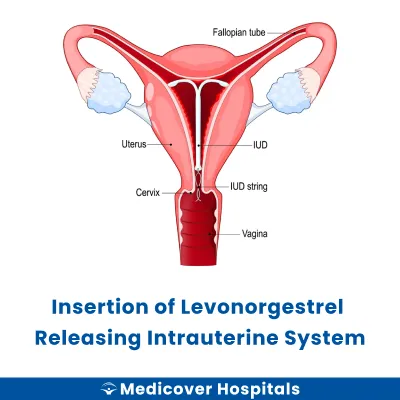
The insertion of a Levonorgestrel Releasing Intrauterine System (LNG-IUS) involves placing a small, T-shaped device into the uterus (womb). This device releases a hormone called levonorgestrel, which helps in preventing pregnancy. The procedure is typically performed by a healthcare professional and is minimally invasive, often completed in a short time.
This procedure is needed for various reasons, including contraception and managing heavy menstrual bleeding. Conditions like endometriosis or fibroids may also lead to its use. If left untreated, these conditions can cause significant discomfort and health issues. Modern surgical approaches for LNG-IUS insertion include outpatient procedures that are quick and require minimal recovery time.
Insertion of Levonorgestrel Releasing Intrauterine System Doctors Near You
Find expert gynecologists for levonorgestrel releasing intrauterine system insertion at Medicover Hospitals across India. Choose your city and book a consultation today for professional guidance.
Why Choose Medicover Hospitals for Insertion of Levonorgestrel Releasing Intrauterine System?
Get a second opinion from trusted experts and makeconfident, informed decisions.
 Get Second Opinion
Complete Guide To Insertion Of Levonorgestrel Releasing Intrauterine System
Everything you need to know about the procedure, preparation, and recovery
Insertion of Levonorgestrel Releasing Intrauterine System procedure Indications
Doctors recommend the insertion of a Levonorgestrel Releasing Intrauterine System (LNG-IUS) for various gynecological conditions. It is often suggested when other treatments have not provided relief or when specific symptoms are present.
Heavy Menstrual Bleeding
Patients may experience prolonged or heavy menstrual bleeding, leading to fatigue and anemia. Doctors find that blood tests show low hemoglobin levels. When medications and lifestyle changes do not reduce bleeding, LNG-IUS insertion is considered.
Endometriosis
Women suffering from endometriosis often report severe pelvic pain and irregular periods. Imaging may show endometrial tissue outside the uterus. If pain relief medications and hormonal treatments fail, LNG-IUS may be recommended.
Contraception
Patients seeking long-term contraception may choose LNG-IUS. They prefer a low-maintenance option without daily pills. After discussing contraceptive needs and ruling out contraindications, doctors suggest LNG-IUS.
Endometrial Hyperplasia
Symptoms include abnormal uterine bleeding and pelvic discomfort. Biopsy results may show thickened endometrial lining. When oral progestins are ineffective, LNG-IUS is considered to manage the condition.
Dysmenorrhea
Severe menstrual cramps that disrupt daily activities are common symptoms. Physical exams may not reveal abnormalities, but pain persists despite NSAIDs. LNG-IUS can be an option when other treatments do not alleviate pain.
How to Prepare for Insertion of Levonorgestrel Releasing Intrauterine System?
Proper preparation ensures a smooth and successful insertion of the Levonorgestrel Releasing Intrauterine System. It helps in minimizing discomfort and potential complications during the procedure.
- Consult Your Doctor: Discuss your medical history and any current medications with your doctor.
- Medication Review: Stop NSAIDs, anticoagulants, and herbal supplements as advised by your doctor.
- Fasting Guidelines: No fasting is typically required as the procedure usually does not involve general anaesthesia.
- Pelvic Floor Exercises: Practice pelvic floor exercises to ease the insertion process.
- Comfortable Clothing: Wear loose-fitting clothes for comfort during and after the procedure.
- Transportation Arrangement: Arrange for someone to drive you home post-procedure.
- Medication List: Bring a list of your current medications, including dosages, for reference.
- Menstrual Cycle Timing: Schedule the insertion during the first few days of your menstrual cycle for easier placement.
Insertion of Levonorgestrel Releasing Intrauterine System procedure (Step-by-Step)
This procedure is performed by gynecologists. It typically takes about 10-15 minutes. Local anaesthesia is usually used to minimize discomfort.
- Preparation: The patient lies on an examination table. A speculum is inserted into the vagina to allow access to the cervix.
- Cervical Cleaning: The cervix is cleaned with an antiseptic solution to prevent infection.
- Cervical Measurement: A uterine sound, a thin rod, is gently inserted to measure the depth of the uterus. This ensures correct placement of the device.
- Insertion: The levonorgestrel-releasing intrauterine system is loaded into an inserter tube. The tube is carefully inserted through the cervix into the uterus.
- Release and Positioning: The device is released from the tube. The arms of the device open to secure it in place.
- Trimming Strings: The strings attached to the device are trimmed to about 2-3 cm. This allows for easy removal later.
- Final Check: The speculum is removed. The patient may rest for a few minutes before leaving.
Who Performs Insertion of Levonorgestrel Releasing Intrauterine System procedure?
This procedure is performed by gynecology doctors. They specialize in women's reproductive health. Their expertise ensures the device is placed correctly and safely.
Recovery After Insertion of Levonorgestrel Releasing Intrauterine System procedure
Recovery after the insertion of a Levonorgestrel Releasing Intrauterine System (LNG-IUS) is generally quick. Most women can resume normal activities within a few days. However, it's essential to follow specific guidelines to ensure a smooth recovery.
Day 1-2:
- Mild cramping and spotting are common. Rest and avoid strenuous activities.
- Consume light meals like curd, dal-rice, or khichdi to avoid discomfort.
Day 3-5:
- Cramping should reduce. Continue to avoid heavy lifting or intense exercise.
- Introduce soft foods like moong dal and soups to your diet for easy digestion.
Day 6-7:
- Most women feel comfortable resuming work or school. Listen to your body and take breaks if needed.
- Maintain a balanced diet to support recovery.
Week 2:
- By now, any discomfort should be minimal. You can gradually return to regular activities.
- Continue to eat nutritious meals and stay hydrated.
When to Seek Urgent Help:
- Severe abdominal pain or heavy bleeding.
- Fever or chills, which may indicate an infection.
- Unusual vaginal discharge with a foul smell.
- If you suspect the device has moved or been expelled.
If you experience any of these symptoms, contact your healthcare provider immediately. Please contact the hospital for current details as insurance panels may change.
Benefits of Insertion of Levonorgestrel Releasing Intrauterine System procedure
The Levonorgestrel Releasing Intrauterine System (LNG-IUS) offers several advantages for women seeking long-term contraception.
- Effective Contraception: Provides reliable birth control for up to five years.
- Reduced Menstrual Bleeding: Many women experience lighter periods or even stop menstruating.
- Convenience: Once inserted, it requires minimal maintenance and no daily attention.
- Reversible: Fertility typically returns quickly after removal.
- Non-contraceptive Benefits: May help in managing heavy menstrual bleeding and endometriosis.
Risks and Complications of Insertion of Levonorgestrel Releasing Intrauterine System procedure
While generally safe, the LNG-IUS procedure carries some risks and potential complications.
Common Risks
- Irregular bleeding or spotting, especially in the first few months.
- Cramping or discomfort during and shortly after insertion.
Rare Risks
- Expulsion, where the device may partially or completely come out.
- Perforation of the uterine wall during insertion.
- Infection following insertion, though this is uncommon.
- Ovarian cysts, which usually resolve on their own.
Cost of Insertion of Levonorgestrel Releasing Intrauterine System procedure
The cost for the insertion of a Levonorgestrel Releasing Intrauterine System at Medicover Hospitals ranges from ₹3,500 to ₹5000. The price varies depending on the ward category chosen, such as outpatient, day care, or different room types.
We offer transparent pricing and support for insurance and TPA services, including CGHS, ESI, and major TPAs. A cashless facility is also available. Please contact the hospital for the latest insurance panel details as these may change periodically.
Frequently Asked Questions
1. How much does Insertion of Levonorgestrel Releasing Intrauterine System procedure cost at Medicover Hospitals?
The cost for the insertion of a Levonorgestrel Releasing Intrauterine System ranges from ₹3,500 to ₹5000, across Medicover Hospitals.
2. Is Insertion of Levonorgestrel Releasing Intrauterine System procedure covered under health insurance at Medicover?
Yes, it is often covered by CGHS, ESI, and major TPAs. Please contact the hospital for current panel details.
3. Will I experience changes in menstrual bleeding?
Yes, changes in menstrual bleeding patterns are common after insertion. You may experience lighter periods or spotting initially.
4. Can I use tampons after the procedure?
You should avoid using tampons for at least a week after insertion. This helps reduce the risk of infection and allows healing.
5. Will the device affect my fertility?
The Levonorgestrel Releasing Intrauterine System is reversible. Fertility typically returns to normal once the device is removed.
6. Can I feel the device during physical activity?
Most women do not feel the device during daily activities. If discomfort occurs, consult your doctor to ensure proper placement.
7. What should I do if I experience pelvic pain?
If you experience persistent pelvic pain, contact your healthcare provider. It may indicate a complication such as device displacement.


