 Call
Call Patient Reports
Inferior Vena Cava Filter Placement Procedure at Medicover Hospitals
Inferior Vena Cava (IVC) Filter Placement at Medicover Hospitals is performed using minimally invasive techniques by interventional radiologists with qualifications like MD, DNB, and DMRE. This laparoscopic procedure helps in reducing blood clots effectively, leading to shorter hospital stays for patients.
Expert Specialists
Yearly Procedures
Patient Satisfaction
What is Inferior Vena Cava Filter Placement?
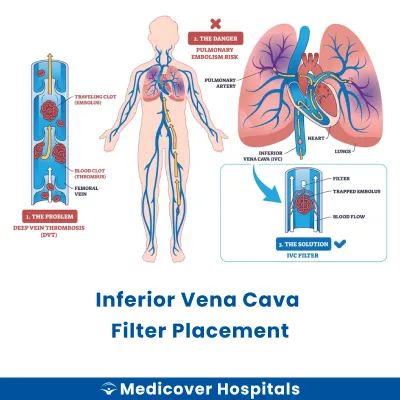
Inferior Vena Cava (IVC) Filter Placement is a medical procedure where a small device is inserted into the inferior vena cava. The inferior vena cava is a large vein that carries blood from the lower body to the heart. The filter is designed to trap blood clots and prevent them from reaching the lungs, where they could cause a pulmonary embolism (a blockage in the lung arteries).
This procedure is often needed for individuals at risk of developing blood clots, especially those who cannot take blood-thinning medications. Conditions like deep vein thrombosis (DVT) can lead to the need for an IVC filter. If left untreated, these clots can travel to the lungs and become life-threatening. Modern surgical approaches for IVC filter placement include minimally invasive techniques using catheters.
Inferior Vena Cava Filter Placement Doctors Near You
Discover skilled interventional-radiology specialists for inferior vena cava filter placement at Medicover Hospitals across India. Choose your city and book a consultation to discuss your treatment options today.
Why Choose Medicover Hospitals for Inferior Vena Cava Filter Placement?
Get a second opinion from trusted experts and makeconfident, informed decisions.
 Get Second Opinion
Complete Guide To Inferior Vena Cava Filter Placement
Everything you need to know about the procedure, preparation, and recovery
Inferior Vena Cava Filter Placement Procedure Indications
Doctors recommend Inferior Vena Cava (IVC) filter placement when patients are at high risk of pulmonary embolism and cannot undergo anticoagulation therapy. This procedure helps prevent blood clots from reaching the lungs.
Recurrent Pulmonary Embolism
Patients may experience sudden shortness of breath, chest pain, or coughing up blood. Imaging tests like CT scans reveal repeated episodes of pulmonary embolism. When anticoagulants fail or are contraindicated, IVC filter placement is considered.
Deep Vein Thrombosis with Contraindications to Anticoagulation
Symptoms include leg swelling, pain, and redness. Ultrasound may show blood clots in deep veins. If anticoagulation is not possible due to bleeding risks, an IVC filter may be recommended.
High Risk of Bleeding
Patients with conditions like recent surgery or bleeding disorders may show signs of internal bleeding or low blood counts. When anticoagulants pose a bleeding risk, IVC filter placement is an alternative.
Failed Anticoagulation Therapy
Despite anticoagulant use, patients may still experience symptoms like leg pain or swelling. Blood tests and imaging confirm persistent clotting. In such cases, an IVC filter may be necessary.
Prophylactic Use in High-Risk Patients
Patients undergoing major surgeries or with severe trauma may be at risk of clot formation. Preemptive imaging and risk assessment guide the decision for IVC filter placement to prevent embolism.
How to Prepare for Inferior Vena Cava Filter Placement?
Proper preparation is crucial for a smooth and successful Inferior Vena Cava Filter Placement. It ensures safety and reduces the risk of complications during and after the procedure.
- Medication Review: Inform your doctor about all medications you take, including over-the-counter drugs and supplements.
- Stop Certain Medications: Discontinue NSAIDs, anticoagulants, and herbal supplements as advised by your doctor to reduce bleeding risk.
- Fasting Guidelines: Do not eat or drink anything for at least 6-8 hours before the procedure due to anaesthesia requirements.
- Clothing: Wear loose, comfortable clothing on the day of the procedure for ease and comfort.
- Transportation: Arrange for someone to drive you home post-procedure as you may feel drowsy from anaesthesia.
- Medication List: Bring a list of your current medications, including dosages, for reference during hospital admission.
- Pre-Procedure Instructions: Follow any additional instructions provided by your healthcare team specific to your health condition.
- Hydration: Stay well-hydrated the day before the procedure unless instructed otherwise by your doctor.
Inferior Vena Cava Filter Placement procedure (Step-by-Step)
Overview: This procedure is performed by interventional radiology. It typically takes about 1 to 2 hours. Local anaesthesia is commonly used.
- Preparation: The patient lies on their back. The skin around the insertion site is cleaned and sterilised. Local anaesthesia is administered to numb the area.
- Access Site: A small incision, about 1-2 cm, is made in the groin or neck. A catheter is inserted into a large vein using a guide wire.
- Positioning the Filter: Using fluoroscopy (live X-ray), the catheter is guided to the inferior vena cava. The filter is positioned at the desired location.
- Deploying the Filter: The filter is released from the catheter. It expands and attaches to the walls of the vena cava, capturing blood clots.
- Verification: The placement is confirmed with imaging. The catheter and guide wire are carefully removed.
- Closing the Incision: The incision is closed with sutures or adhesive strips. A small bandage is applied.
- Recovery: The patient is monitored for a short period. They may feel slight pressure or discomfort at the incision site.
Who Performs Inferior Vena Cava Filter Placement procedure?
This procedure is performed by an interventional radiologist. They are specialists trained in minimally invasive techniques using imaging guidance. They ensure precise placement of the filter to prevent complications.
Recovery After Inferior Vena Cava Filter Placement procedure
After an Inferior Vena Cava (IVC) filter placement, recovery is usually swift. Most patients can return to their normal routine within a few days. However, it's important to follow specific guidelines to ensure a smooth recovery.
Day 1-2:
- Rest is crucial. Avoid strenuous activities.
- Keep the insertion site clean and dry.
- Consume light meals. Opt for easily digestible foods like khichdi or moong dal.
Day 3-5:
- Gradually increase activity levels. Short walks are encouraged.
- Continue with a balanced diet. Include curd and dal-rice for better digestion.
- Monitor the insertion site for any signs of infection.
Day 6-7:
- Most patients can resume work or school if they feel comfortable.
- Engage in light activities but avoid heavy lifting.
- Include soups and fresh fruits in your diet for added nutrition.
Phase 2 (Week 2 and Beyond):
- Resume normal activities gradually. Consult your doctor before engaging in strenuous exercise.
- Maintain a healthy diet. Incorporate a variety of Indian foods to ensure balanced nutrition.
- Regular follow-ups with your healthcare provider are essential.
When to Seek Urgent Help:
- Severe pain or swelling at the insertion site.
- Signs of infection, such as redness, warmth, or discharge.
- Sudden shortness of breath or chest pain.
- Unusual leg pain or swelling.
Benefits of Inferior Vena Cava Filter Placement procedure
Inferior Vena Cava (IVC) filter placement is a procedure designed to prevent life-threatening pulmonary embolisms.
- Prevention of Pulmonary Embolism: Helps block blood clots from reaching the lungs.
- Non-Surgical Option: Offers a minimally invasive alternative to surgery for clot prevention.
- Quick Recovery: Patients often experience a shorter recovery time compared to surgical interventions.
- Temporary or Permanent: Can be used as a temporary or permanent solution based on patient needs.
Risks and Complications of Inferior Vena Cava Filter Placement procedure
While generally safe, IVC filter placement carries some risks and potential complications.
- Common: Bleeding or bruising at the insertion site.
- Common: Infection at the insertion site.
- Rare: Migration of the filter to another part of the body.
- Rare: Damage to the blood vessel during insertion.
- Rare: Blockage of the IVC by the filter itself.
- Rare: Difficulty in removing a temporary filter.
Cost of Inferior Vena Cava Filter Placement procedure
The cost of the Inferior Vena Cava Filter Placement procedure at Medicover Hospitals varies depending on the ward category chosen. Prices range from ₹1,00,000 to ₹2,80,000. The cost is influenced by the type of accommodation and services provided.
Medicover Hospitals offers transparent pricing and supports insurance and TPA services, including CGHS, ESI, and major TPAs. Cashless facilities are available for a hassle-free experience. Please contact the hospital for the latest insurance panel details as these may change periodically.
Frequently Asked Questions
1. How much does Inferior Vena Cava Filter Placement procedure cost at Medicover Hospitals?
The cost for Inferior Vena Cava Filter Placement at Medicover Hospitals ranges from ₹1,00,000 to ₹2,80,
2. Prices vary based on the facility and care level. 2. Is Inferior Vena Cava Filter Placement procedure covered under health insurance at Medicover?
Inferior Vena Cava Filter Placement may be covered by CGHS, ESI, and major TPAs with cashless options. Please contact the hospital for current panel details.
3. Will I feel the filter in my body?
Most patients do not feel the filter once it is placed in the inferior vena cava. It is designed to function without causing discomfort.
4. Can I fly after getting an IVC filter?
Patients can usually fly after an IVC filter placement, but it's best to consult your doctor. Follow-up care is important to ensure proper function.
5. Is there a risk of the IVC filter moving?
Though rare, there is a risk of the IVC filter migrating. Regular check-ups help monitor its position and function.
6. Will I need to modify my diet post-procedure?
No specific diet is required after IVC filter placement. Maintain a balanced diet with foods like curd and dal-rice for overall health.
7. Can I exercise after IVC filter placement?
Light activities are usually safe after IVC filter placement. Avoid heavy lifting and strenuous exercises until your doctor advises otherwise.


