 Call
Call Patient Reports
Inferior Turbinate Reduction Surgery Hospital by Expert Ent Care
Inferior Turbinate Reduction at Medicover Hospitals is performed using advanced endoscopic techniques by skilled ENT surgeons with qualifications like MS and DNB. This procedure helps alleviate nasal congestion and breathing difficulties. The endoscopic approach ensures smaller incisions and reduced blood loss, promoting quicker recovery.
Expert Surgeons
Yearly Surgeries
Patient Satisfaction
What is Inferior Turbinate Reduction?
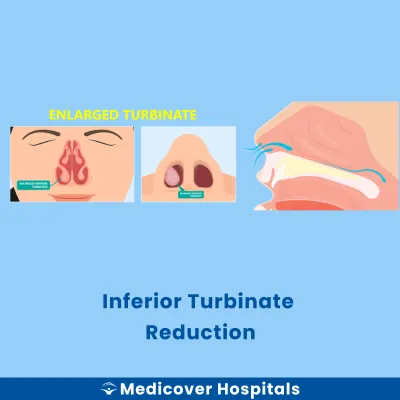
Inferior Turbinate Reduction is a surgical procedure focused on the inferior turbinates, which are structures inside the nose. These turbinates help filter and humidify the air we breathe. The procedure aims to reduce the size of these turbinates when they become enlarged, improving airflow through the nasal passages.
This surgery is often needed for individuals with chronic nasal congestion or breathing difficulties. Conditions like allergic rhinitis or chronic sinusitis can lead to turbinate enlargement. If left untreated, it can result in persistent nasal blockage and discomfort. Modern surgical approaches for this procedure include radiofrequency ablation and microdebrider techniques, which are minimally invasive and aim to preserve normal nasal function.
Inferior Turbinate Reduction Doctors Near You
Discover expert ENT specialists for inferior turbinate reduction at Medicover Hospitals across India. Choose your city and book a consultation to address your nasal concerns effectively.
Why Choose Medicover Hospitals for Inferior Turbinate Reduction?
Get a second opinion from trusted experts and makeconfident, informed decisions.
 Get Second Opinion
Complete Guide To Inferior Turbinate Reduction
Everything you need to know about the procedure, preparation, and recovery
Inferior Turbinate Reduction Surgery Indications
Doctors recommend inferior turbinate reduction surgery when patients experience persistent nasal obstruction. This procedure is considered when conservative treatments like medications or nasal sprays do not provide relief.
Chronic Nasal Congestion
Patients often report a constant stuffy nose, making it difficult to breathe. Examination reveals enlarged turbinates obstructing airflow. When decongestants and antihistamines fail, surgery is advised.
Allergic Rhinitis
Individuals suffer from sneezing, itching, and nasal blockage due to allergies. Swollen turbinates are noted during examination. If allergy medications do not alleviate symptoms, surgical intervention may be necessary.
Deviated Nasal Septum
Patients experience breathing difficulties and nasal blockage. A physical exam shows a deviated septum with compensatory turbinate hypertrophy. When septoplasty alone does not resolve symptoms, turbinate reduction is considered.
Snoring and Sleep Apnoea
Patients complain of loud snoring or interrupted sleep. Sleep studies may show obstructive patterns. If CPAP or lifestyle changes are ineffective, reducing turbinate size can help improve airflow.
Recurrent Sinus Infections
Frequent sinusitis episodes cause facial pain and pressure. Imaging may reveal blocked sinus drainage due to enlarged turbinates. Surgery is suggested when antibiotics and nasal sprays do not prevent infections.
How to Prepare for Inferior Turbinate Reduction?
Proper preparation is crucial for a smooth Inferior Turbinate Reduction procedure. It helps reduce risks and ensures a quicker recovery.
- Medication Review: Stop NSAIDs, anticoagulants, and herbal supplements 1-2 weeks prior. Consult your doctor for guidance.
- Fasting Guidelines: If under general anaesthesia, fast for at least 6-8 hours before the procedure.
- Nasal Preparations: Use prescribed nasal sprays or saline rinses as directed to reduce inflammation and clear nasal passages.
- Clothing Choice: Wear loose, comfortable clothing on the day of the procedure to ease movement and comfort.
- Transportation Arrangements: Arrange for someone to drive you home post-procedure, as you may feel drowsy from anaesthesia.
- Medication List: Bring a list of all medications you are currently taking, including dosages, for the medical team.
- Pre-Surgery Consultation: Attend all pre-surgery appointments to discuss any concerns and confirm all instructions.
- Rest and Relaxation: Ensure you get adequate rest the night before to help your body prepare for surgery.
Inferior Turbinate Reduction Surgery (Step-by-Step)
Overview: This procedure is performed by an ENT specialist. It typically lasts between 30 minutes to 1 hour. It can be done under local or general anaesthesia, depending on the case.
- Preparation: The patient is positioned comfortably. Anaesthesia is administered to ensure no pain during the procedure.
- Access: A small speculum is used to gently open the nasal passage. This allows the surgeon to see the inferior turbinate clearly.
- Reduction: The surgeon uses a coblation wand or a microdebrider to reduce the size of the turbinate. This is done carefully to preserve the surrounding tissue.
- Incision: If necessary, a small incision (1-2 cm) is made to access the turbinate. This is usually minimal and heals quickly.
- Reshaping: The turbinate is reshaped to improve airflow. Instruments like a curette or bipolar cautery may be used to achieve the desired outcome.
- Closure: If an incision was made, it is closed with dissolvable stitches. The nasal passage is checked for any bleeding.
- Recovery: The patient is monitored as they wake up from anaesthesia. They may experience mild discomfort or congestion, which subsides in a few days.
Who Performs Inferior Turbinate Reduction Surgery?
An ENT (Ear, Nose, and Throat) specialist, also known as an otolaryngologist, performs this surgery. They are trained to handle conditions affecting the nasal passages and ensure improved breathing for patients.
Recovery After Inferior Turbinate Reduction Surgery
Recovery from Inferior Turbinate Reduction Surgery is generally smooth, but it's essential to follow post-operative care instructions for optimal healing. Expect some nasal congestion and mild discomfort initially.
Day 1-3:
- Rest at home. Avoid strenuous activities.
- Keep your head elevated to reduce swelling.
- Stick to a soft diet. Opt for curd, dal-rice, and soups.
- Use prescribed nasal sprays or saline rinses as directed.
Day 4-7:
- Gradually resume light activities. Avoid bending or lifting heavy objects.
- Continue with a soft diet. Include khichdi and moong dal for easy digestion.
- You may notice some nasal crusting. Do not pick or blow your nose forcefully.
Day 8-14:
- Most swelling should subside. Breathing may improve.
- Resume normal diet but avoid spicy or hot foods.
- Return to work or school if you feel comfortable.
Phase 3 (Week 3-4):
- Engage in regular activities but avoid contact sports.
- Follow up with your doctor to assess healing progress.
When to Seek Urgent Help
Contact your doctor if you experience:
- Severe or increasing pain not relieved by medication.
- Persistent bleeding from the nose.
- High fever or signs of infection.
- Difficulty breathing or significant swelling.
Benefits of Inferior Turbinate Reduction Surgery
Inferior turbinate reduction surgery helps improve nasal airflow and alleviate breathing difficulties. It can significantly enhance the quality of life for individuals with chronic nasal obstruction.
- Improved Breathing: Reduces nasal blockage, allowing for easier breathing.
- Reduced Snoring: May decrease snoring by improving airflow during sleep.
- Enhanced Sleep Quality: Better nasal airflow can lead to more restful sleep.
- Decreased Nasal Congestion: Helps alleviate chronic nasal congestion and related discomfort.
Risks and Complications of Inferior Turbinate Reduction Surgery
While generally safe, inferior turbinate reduction surgery carries some risks and potential complications. It is essential to be informed and discuss these with your healthcare provider.
- Common: Temporary nasal crusting or dryness.
- Common: Mild bleeding post-surgery.
- Rare: Infection at the surgical site.
- Rare: Persistent nasal obstruction despite surgery.
- Rare: Altered sense of smell.
- Rare: Adhesion formation inside the nose.
Cost of Inferior Turbinate Reduction Surgery
The cost of Inferior Turbinate Reduction Surgery at Medicover Hospitals ranges from Rs. 52,000 to Rs. 83,000. The price varies depending on the ward category chosen, such as day care, general, or private rooms. We offer transparent pricing to ensure clarity for our patients.
Insurance and TPA support, including CGHS, ESI, and major TPAs, are accepted. Cashless facility is available for a hassle-free experience. Please contact the hospital for the latest insurance panel details as these may change periodically.
Frequently Asked Questions
1. How much does Inferior Turbinate Reduction surgery cost at Medicover Hospitals?
The cost ranges from Rs. 52000 to Rs. 83000 across Medicover Hospitals, depending on the type of accommodation chosen.
2. Is Inferior Turbinate Reduction surgery covered under health insurance at Medicover?
Many health insurance plans, including CGHS and ESI, may cover this surgery. Please contact the hospital for current panel details.
3. Will my sense of smell change after surgery?
Some patients may experience temporary changes in smell. This usually improves as the nasal passages heal over a few weeks.
4. How soon can I return to work after surgery?
Most patients can return to work within a week. However, it is advised to avoid strenuous activities for at least two weeks.
5. Can I eat spicy food after turbinate reduction?
It's best to avoid spicy foods like curries and chillies for a week. Opt for soft foods like dal-rice and khichdi initially.
6. Will I experience nasal congestion post-surgery?
Mild nasal congestion is common in the first few days. This typically resolves as swelling decreases and healing progresses.
7. Is there a risk of excessive bleeding after surgery?
Excessive bleeding is rare but possible. Follow post-operative care instructions to minimise this risk and contact your doctor if it occurs.


