 Call
Call Patient Reports
Best Hospital for Incision and Drainage Surgery with Safe Infection Care
Incision and Drainage at Medicover Hospitals is performed using the open surgical approach by skilled general surgeons with qualifications such as MS and DNB. This procedure effectively treats abscesses and infections, leading to shorter hospital stays and quicker recovery for patients across India.
Expert Surgeons
Yearly Surgeries
Patient Satisfaction
What is Incision and Drainage?
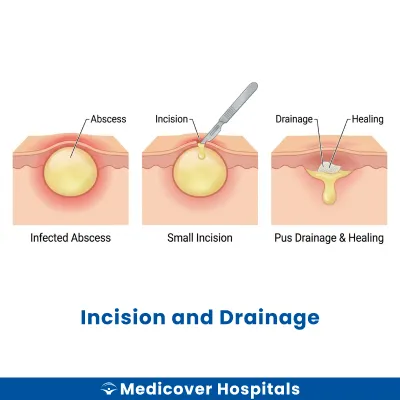
Incision and Drainage is a surgical procedure used to treat abscesses. An abscess is a collection of pus that can form in various body parts, such as the skin, gums, or internal organs. The procedure involves making a small cut (incision) to release the pus and relieve pressure. This helps in reducing infection and promoting healing.
This surgery is needed when an abscess becomes painful or infected. Conditions like skin infections, dental abscesses, or boils often require Incision and Drainage. If left untreated, abscesses can lead to severe infections or complications. Modern surgical approaches include ultrasound-guided drainage and minimally invasive techniques. These methods help in precise targeting and faster recovery.
Incision and Drainage Doctors Near You
Find experienced general-surgeons for incision and drainage at Medicover Hospitals across India. Choose your city and book a consultation to receive expert care tailored to your needs.
Why Choose Medicover Hospitals for Incision and Drainage?
Get a second opinion from trusted experts and makeconfident, informed decisions.
 Get Second Opinion
Complete Guide To Incision And Drainage
Everything you need to know about the procedure, preparation, and recovery
Incision and Drainage Surgery Indications
Doctors recommend incision and drainage surgery when an abscess or fluid collection does not resolve with medication alone. This procedure helps relieve symptoms and prevent further complications.
Abscess
Patients often experience localized pain, swelling, and redness. On examination, doctors may find a fluctuant mass. When antibiotics fail to reduce the abscess, surgery is necessary to drain the pus.
Boils
Boils cause painful, pus-filled lumps on the skin. Patients report tenderness and warmth in the affected area. If warm compresses and antibiotics do not lead to improvement, incision and drainage are required.
Pilonidal Cyst
Patients with pilonidal cysts experience pain and swelling near the tailbone. Doctors may notice drainage or a sinus tract. When conservative measures like sitz baths do not work, surgical intervention is needed.
Infected Sebaceous Cyst
These cysts cause a noticeable lump under the skin, often with redness and tenderness. If the cyst becomes infected and antibiotics are ineffective, drainage is the next step.
Paronychia
Patients present with pain, swelling, and redness around the nail. Examination may reveal pus accumulation. When warm soaks and topical treatments fail, incision and drainage are performed.
How to Prepare for Incision and Drainage?
Proper preparation for incision and drainage is crucial to ensure a smooth procedure and recovery. It helps minimize complications and enhances the healing process.
- Medication Review: Stop NSAIDs, anticoagulants, and herbal supplements as advised by your doctor.
- Fasting: If general anaesthesia is used, fast for at least 6-8 hours before the procedure.
- Hygiene: Clean the affected area gently with soap and water the night before.
- Clothing: Wear loose, comfortable clothing to the hospital for ease of movement post-procedure.
- Transportation: Arrange for someone to drive you home after the procedure, as you may feel drowsy.
- Medication List: Bring a list of all medications you are currently taking, including dosages.
- Allergy Information: Inform your healthcare provider about any allergies to medications or anaesthesia.
- Consent Form: Read and sign the consent form after discussing the procedure with your doctor.
Incision and Drainage Surgery (Step-by-Step)
Incision and drainage are performed by general surgeons. The procedure typically lasts 15-30 minutes. It is usually done under local anaesthesia.
- Preparation: The patient is positioned comfortably. The area is cleaned with an antiseptic solution to prevent infection.
- Local Anaesthesia: The surgeon administers local anaesthesia to numb the area. The patient may feel a slight sting or pressure.
- Incision: A small incision, usually 1-2 cm, is made using a scalpel. The patient may feel pressure but no pain.
- Drainage: The surgeon gently presses around the incision to drain the pus. A curette may be used to remove any remaining debris.
- Irrigation: The area is flushed with a saline solution to clean out any remaining pus or debris.
- Packing: A sterile gauze is placed in the incision to absorb any further discharge. This helps in healing.
- Dressing: The incision is covered with a sterile dressing. The patient is advised on how to care for the wound at home.
Who Performs Incision and Drainage Surgery?
Incision and drainage procedures are performed by general surgeons. These specialists are trained to handle various surgical interventions, including minor procedures like incision and drainage. They ensure the procedure is done safely and effectively.
Recovery After Incision and Drainage Surgery
Recovery from incision and drainage surgery is usually swift, but it requires careful attention to wound care and hygiene. Patients can expect some discomfort and swelling initially, which should gradually subside.
Day 1-3:
- Rest is crucial. Avoid any strenuous activities.
- Keep the wound clean and dry. Follow the doctor's instructions for dressing changes.
- Consume a light diet. Include foods like curd, dal-rice, and soups to aid digestion.
Day 4-7:
- Swelling and pain should start to decrease. Continue taking prescribed medications.
- Maintain a balanced diet. Incorporate khichdi and moong dal for easy digestion and nutrition.
- Light activities can be resumed, but avoid heavy lifting or intense exercise.
Day 8-14:
- Most patients can return to work or school, depending on the nature of their activities.
- Continue with a nutritious diet to support healing. Hydration is important.
- Regular follow-up with the doctor is recommended to monitor healing.
When to Seek Urgent Help:
- Increased redness, swelling, or warmth around the incision site.
- Fever or chills, which may indicate an infection.
- Pus or unusual discharge from the wound.
- Severe pain that does not improve with medication.
Benefits of Incision and Drainage Surgery
Incision and drainage is a procedure used to treat abscesses by releasing pus and relieving pressure. It offers several benefits for patients.
- Immediate Relief: Quickly alleviates pain and discomfort caused by abscesses.
- Prevents Spread: Helps stop the infection from spreading to surrounding tissues.
- Promotes Healing: Facilitates faster healing by removing infected material.
- Minimally Invasive: Typically involves a small incision, reducing recovery time.
Risks and Complications of Incision and Drainage Surgery
While generally safe, incision and drainage surgery carries some risks. It's important to be aware of potential complications.
- Infection at the incision site, which may require further treatment.
- Bleeding during or after the procedure.
- Scarring at the site of the incision.
- Damage to surrounding tissues or structures.
- Recurrence of the abscess, necessitating additional treatment.
Cost of Incision and Drainage Surgery
The cost of Incision and Drainage Surgery at Medicover Hospitals ranges from Rs. 5000 to Rs. 10250, depending on the ward category chosen. Prices vary based on the type of accommodation, ensuring transparency in pricing. We offer support for insurance and TPA, including CGHS, ESI, and major TPAs, with a cashless facility available. Please contact the hospital for the latest insurance panel details as these may change periodically.
Frequently Asked Questions
1. How much does Incision and Drainage surgery cost?
The cost for Incision and Drainage surgery at Medicover Hospitals ranges from Rs. 5000 to Rs. 10250, depending on the room type.
2. Is Incision and Drainage surgery covered under insurance?
Incision and Drainage surgery may be covered under CGHS, ESI, and major TPAs. Please contact the hospital for current panel details.
3. Can an abscess return after Incision and Drainage?
Yes, an abscess can recur if the underlying infection is not fully resolved. Follow-up care is crucial to prevent recurrence.
4. Will I need antibiotics after the procedure?
Antibiotics are often prescribed to prevent infection after Incision and Drainage. It's important to complete the full course as directed by your doctor.
5. Can I shower immediately after the surgery?
You should avoid getting the incision site wet for at least 48 hours post-surgery. Follow your doctor's instructions for wound care and hygiene.
6. What foods should I avoid after the surgery?
Avoid spicy and oily foods; opt for light meals like dal-rice or khichdi. Curd can be included to aid digestion and promote healing.
7. How soon can I resume normal activities?
Most patients can resume light activities within a few days. Avoid strenuous activities until your doctor advises it's safe.


