 Call
Call Patient Reports
Implant Removal of Spine Surgery Hospital with Advanced Spine Care
At Medicover Hospitals, implant removal of the spine is performed using open surgical techniques. Our orthopaedic team, with qualifications such as MS and DNB, ensures precise removal. This approach often results in shorter hospital stays and reduced recovery time for patients across India.
Expert Surgeons
Yearly Surgeries
Patient Satisfaction
What is Implant Removal of Spine?
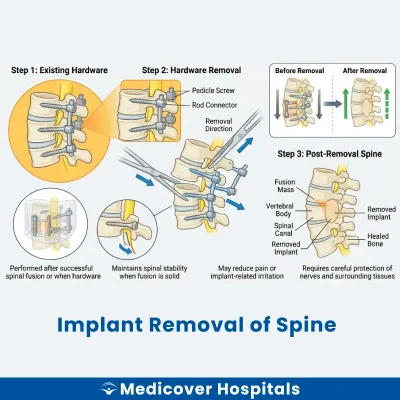
Implant removal of the spine is a surgical procedure to take out previously inserted hardware from the vertebral column (spine). These implants, often screws, rods, or plates, are initially placed to stabilize the spine after fractures, deformities, or other spine conditions. The removal process involves careful extraction to ensure the spine's integrity and function.
This surgery is needed when implants cause pain, infection, or complications. Conditions like implant failure or non-union of bones may necessitate removal. If untreated, these issues can lead to chronic pain or further spinal damage. Modern surgical approaches for implant removal include minimally invasive techniques and endoscopic methods. These help reduce recovery time and minimize tissue damage.
Implant Removal of Spine Doctors Near You
Discover experienced orthopedics for spine implant removal at Medicover Hospitals across India. Choose your city and book a consultation to discuss your needs with our specialists today.
Why Choose Medicover Hospitals for Implant Removal of Spine?
Get a second opinion from trusted experts and makeconfident, informed decisions.
 Get Second Opinion
Complete Guide To Implant Removal Of Spine
Everything you need to know about the procedure, preparation, and recovery
Implant Removal of Spine Surgery Indications
Doctors recommend implant removal of the spine when the hardware causes complications or is no longer needed. This procedure is considered when symptoms persist despite non-surgical treatments.
Persistent Pain
Patients may experience ongoing pain at the implant site. This pain can be due to irritation or hardware failure. If imaging shows implant loosening or misalignment, and pain persists despite medication and physical therapy, removal may be necessary.
Infection
Signs of infection include redness, swelling, and fever. Blood tests may show elevated white blood cell counts. If antibiotics fail to resolve the infection, removing the implant might be required to prevent further complications.
Implant Failure
Patients might feel instability or discomfort. X-rays or CT scans can reveal broken or shifted hardware. When conservative measures like bracing don't help, surgery to remove the failed implant is often advised.
Allergic Reaction
Symptoms can include skin rashes or systemic reactions. Allergy tests may confirm sensitivity to implant materials. If symptoms persist and affect quality of life, removal of the implant is considered.
Growth in Children
In growing children, implants may restrict natural growth. Regular imaging can show growth disturbances. If the implant hinders development, removal is recommended to allow normal growth.
How to Prepare for Implant Removal of Spine?
Proper preparation is crucial for a successful implant removal of the spine. It helps minimise complications and ensures a smoother recovery process.
- Medication Review: Stop NSAIDs, anticoagulants, and herbal supplements as advised by your doctor.
- Fasting: Do not eat or drink anything for at least 8 hours before the surgery to prepare for anaesthesia.
- Medical History: Bring a list of all medications with dosages and any allergies to the hospital.
- Clothing: Wear loose, comfortable clothing on the day of the procedure for ease of movement post-surgery.
- Transportation: Arrange for someone to drive you home after the procedure, as you may feel drowsy from anaesthesia.
- Pre-Surgery Tests: Complete any required blood tests or imaging studies as instructed by your healthcare provider.
- Smoking and Alcohol: Avoid smoking and alcohol at least 24 hours before surgery to reduce risks.
- Home Preparation: Set up a comfortable recovery area at home with easy access to essentials.
Implant Removal of Spine Surgery (Step-by-Step)
This procedure is performed by orthopedic surgeons. It typically lasts 1-3 hours and is done under general anaesthesia.
- Preparation: The patient is positioned on the operating table. General anaesthesia is administered to ensure comfort and pain-free surgery.
- Incision: A small incision, usually 1-2 cm, is made over the previous surgical site. This allows access to the spine and the implanted hardware.
- Exposure: The surgeon carefully retracts the surrounding tissues to expose the spine. Instruments like retractors are used to hold the incision open.
- Hardware Removal: Using tools such as screwdrivers and pliers, the surgeon removes the screws, rods, or plates. Care is taken to avoid damage to the spine or surrounding nerves.
- Closure: Once the hardware is removed, the incision is closed with sutures or staples. The area is cleaned and dressed to prevent infection.
- Recovery: The patient is moved to the recovery room. Vital signs are monitored as they wake from anaesthesia. Pain management is provided as needed.
Who Performs Implant Removal of Spine Surgery?
Orthopedic surgeons, specialising in spine procedures, perform this surgery. They have expertise in handling spinal hardware and ensuring safe removal. Please contact the hospital for current details as insurance panels may change.
Recovery After Implant Removal of Spine Surgery
Recovery from implant removal of spine surgery varies for each person. It involves managing pain, following dietary guidelines, and gradually resuming daily activities. Adhering to your doctor's advice is crucial for a smooth recovery.
Day 1-3:
- Rest is essential. Avoid strenuous activities.
- Pain and swelling are common. Follow prescribed medications.
- Start with light meals. Include soft foods like curd and dal-rice.
Day 4-7:
- Gradually increase mobility. Short walks are encouraged.
- Continue with a balanced diet. Include khichdi and moong dal for easy digestion.
- Monitor the surgical site for any unusual changes.
Day 8-14:
- Most patients can return to light work or school activities.
- Include soups and fresh fruits in your diet for nutrition.
- Avoid lifting heavy objects or bending excessively.
Phase 3 (Week 3-6):
- Resume normal activities gradually. Follow your doctor's advice on physical therapy.
- Maintain a nutritious diet to aid healing.
- Regular follow-up appointments are important to monitor progress.
When to Seek Urgent Help
- Severe pain unrelieved by medication.
- Redness, swelling, or discharge from the incision site.
- Fever or chills indicating possible infection.
- Numbness or weakness in the limbs.
If you experience any of these symptoms, contact your healthcare provider immediately.
Benefits of Implant Removal of Spine Surgery
Implant removal of the spine can offer several advantages for patients experiencing issues with their spinal hardware.
- Pain Relief: Removing implants can alleviate discomfort caused by irritation or pressure on surrounding tissues.
- Improved Mobility: Some patients experience better movement and flexibility after the removal of spinal hardware.
- Infection Resolution: If an infection is present, removing the implant can help in resolving it and promoting healing.
- Reduced Risk of Future Complications: Eliminating the hardware can decrease the chance of future complications related to the implants.
Risks and Complications of Implant removal of spine Surgery
Like any surgical procedure, implant removal of the spine carries certain risks. It's important to be aware of these potential complications.
- Infection at the surgical site.
- Bleeding during or after the procedure.
- Nerve damage leading to numbness or weakness.
- Spinal instability if the spine does not heal properly after removal.
- Recurrence of pain if the underlying issue is not resolved.
Cost of Implant Removal of Spine Surgery
The cost for implant removal of spine surgery at Medicover Hospitals ranges from Rs. 73,000 to Rs. 11,7000. The price varies depending on the ward category chosen, such as general, twin sharing, or deluxe. We offer transparent pricing and support for insurance and TPA, including CGHS, ESI, and major TPAs. Cashless facilities are also available for your convenience. Please contact the hospital for the latest insurance panel details as these may change periodically.
Frequently Asked Questions
1. How much does Implant removal of spine surgery cost at Medicover Hospitals?
The cost ranges from Rs. 73,000 to Rs. 11,7000 across Medicover Hospitals, depending on the type of room and care required.
2. Is Implant removal of spine surgery covered under health insurance at Medicover?
It may be covered under CGHS, ESI, and major TPAs, offering cashless options. Please contact the hospital for current panel details.
3. Will I need physiotherapy after spine implant removal?
Yes, physiotherapy is often recommended to regain strength and mobility. It helps improve posture and reduce discomfort post-surgery.
4. Can I drive after having my spine implant removed?
Driving is usually not advised for at least 4-6 weeks post-surgery. Consult your doctor to assess your recovery before resuming driving.
5. Will I feel any sensation changes after spine implant removal?
Some patients experience temporary numbness or tingling. These sensations often improve over time with proper rehabilitation.
6. Can I lift heavy objects after spine implant removal?
Avoid lifting heavy objects for at least 6 weeks post-surgery. Gradual increase in activity should be guided by your healthcare provider.
7. What diet should I follow after spine implant removal?
Consume a balanced diet with foods like curd, dal-rice, and khichdi. These help in recovery and provide necessary nutrients.


