 Call
Call Patient Reports
Best Hospital for Ilizarov Fixator Adjustment Procedure with Expert Care
The Ilizarov Fixator Adjustment at Medicover Hospitals is performed using an open surgical approach by skilled orthopaedic surgeons with qualifications like MS and DNB. This procedure helps in correcting bone deformities and fractures, often resulting in improved functional outcomes and enhanced mobility for patients.
Expert Surgeons
Yearly Surgeries
Patient Satisfaction
What is Ilizarov Fixator Adjustment?
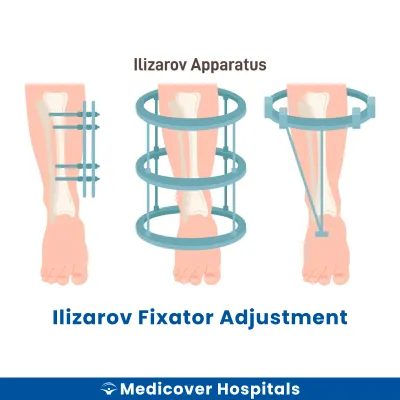
Ilizarov Fixator Adjustment involves modifying an external fixator device used on the limbs, particularly the legs. This device, known as the Ilizarov apparatus, consists of rings and wires that stabilize bone fragments. It helps in correcting deformities, lengthening bones, or treating fractures. The adjustment process involves altering the tension and position of the wires and rings to ensure proper alignment and healing of the bone.
This adjustment is necessary for conditions like limb length discrepancies, complex fractures, or bone deformities. If left untreated, these conditions can lead to impaired mobility or chronic pain. Modern surgical approaches for Ilizarov Fixator Adjustment include minimally invasive techniques and computer-assisted methods. These advancements aim to enhance precision and reduce recovery time.
Ilizarov Fixator Adjustment Doctors Near You
Find experienced orthopedics for Ilizarov fixator adjustments at Medicover Hospitals across India. Choose your city and book a consultation to discuss your treatment options today.
Why Choose Medicover Hospitals for Ilizarov Fixator Adjustment?
Get a second opinion from trusted experts and makeconfident, informed decisions.
 Get Second Opinion
Complete Guide To Ilizarov Fixator Adjustment
Everything you need to know about the procedure, preparation, and recovery
Ilizarov Fixator Adjustment Procedure Indications
Doctors recommend Ilizarov Fixator Adjustment when patients experience complications or require modifications in the alignment of bones. This procedure is essential for ensuring proper healing and function in various orthopedic conditions.
Non-Union of Fractures
Patients may experience persistent pain and instability at the fracture site. X-rays or CT scans show incomplete bone healing. When immobilization and bone stimulation fail, adjustment of the fixator is needed.
Bone Deformity Correction
Visible limb deformities and functional limitations are common symptoms. Imaging reveals angular or rotational misalignment. If braces or physical therapy do not improve alignment, fixator adjustment is advised.
Leg Length Discrepancy
Patients often report uneven gait and discomfort. Measurement discrepancies are confirmed through imaging. When shoe lifts or orthotics are insufficient, adjustments to the fixator help achieve equal leg lengths.
Soft Tissue Complications
Signs include swelling, redness, or infection around the fixator pins. Clinical examination and lab tests confirm soft tissue issues. If antibiotics and wound care do not resolve the problem, adjustments are necessary.
Joint Contractures
Patients may have restricted joint movement and stiffness. Physical examination and imaging show joint misalignment. When physiotherapy fails to restore motion, fixator adjustment is performed.
How to Prepare for Ilizarov Fixator Adjustment?
Proper preparation for an Ilizarov Fixator Adjustment is crucial for a smooth procedure and recovery. It ensures safety and effectiveness, minimising complications.
- Medication Review: Stop NSAIDs, anticoagulants, and herbal supplements as advised by your doctor to reduce bleeding risk.
- Fasting Guidelines: Fast for at least 8 hours before the procedure if general anaesthesia is planned.
- Clothing Choice: Wear loose, comfortable clothing to easily accommodate the fixator and avoid discomfort.
- Transport Arrangement: Arrange for someone to drive you home post-procedure due to anaesthesia effects.
- Medication List: Bring a list of your current medications, including dosages, for the healthcare team.
- Hygiene: Clean the area around the fixator as instructed to prevent infection.
- Communication: Inform your doctor about any recent illnesses or changes in health.
- Support System: Have a family member or friend available to assist you at home during recovery.
Ilizarov Fixator Adjustment Procedure (Step-by-Step)
The Ilizarov Fixator Adjustment is performed by orthopaedic specialists. The procedure typically lasts 30-60 minutes and is usually done under local anaesthesia.
- Preparation: The patient is positioned comfortably. The area around the fixator is cleaned and sterilised. Local anaesthesia is administered to numb the area.
- Assessment: The orthopaedic specialist examines the fixator and the limb. They assess the alignment and tension of the fixator rings and rods.
- Loosening Bolts: Using a wrench, the specialist carefully loosens the bolts on the fixator. This allows for adjustments without causing discomfort to the patient.
- Adjustment: The specialist adjusts the rods and rings to correct alignment or promote bone growth. This may involve turning the rods to lengthen or shorten the limb. The patient may feel slight pressure but should not experience pain.
- Tightening Bolts: Once adjustments are made, the bolts are tightened securely. This ensures the fixator remains stable and effective.
- Verification: The specialist checks the alignment and stability of the fixator. They ensure that the desired adjustments have been achieved.
- Post-Procedure Care: The area is cleaned again. The patient is advised on how to care for the fixator at home. Instructions on movement and hygiene are provided.
Who Performs Ilizarov Fixator Adjustment Procedure?
Orthopaedic surgeons perform the Ilizarov Fixator Adjustment. They are trained in managing complex bone and joint conditions. Their expertise ensures precise adjustments to the fixator for optimal outcomes.
Recovery After Ilizarov Fixator Adjustment Procedure
Recovery after an Ilizarov Fixator Adjustment involves gradual healing and adaptation. Patients may experience discomfort and require assistance initially. Following medical advice is crucial for a smooth recovery.
Day 1-3:
- Rest is essential. Keep the limb elevated to reduce swelling.
- Follow pain management as prescribed by the doctor.
- Consume soft foods like curd, dal-rice, and soups to maintain energy levels.
Day 4-7:
- Begin gentle movements as advised to prevent stiffness.
- Continue with a nutritious diet including khichdi and moong dal for protein.
- Monitor the fixator site for any signs of infection.
Week 2-4:
- Gradually increase activity levels under guidance.
- Incorporate more solid foods while maintaining a balanced diet.
- Attend follow-up appointments for adjustments and monitoring.
Phase 1 (Month 1-2):
- Resume light activities and work/school if comfortable.
- Engage in physiotherapy exercises to improve mobility.
- Ensure adequate calcium intake for bone health.
Phase 2 (Month 3 and beyond):
- Continue with regular check-ups and adjustments.
- Participate in strengthening exercises as recommended.
- Maintain a balanced diet to support overall recovery.
When to Seek Urgent Help:
- Severe pain unrelieved by medication.
- Signs of infection: redness, swelling, or discharge at the fixator site.
- Sudden fever or chills.
- Difficulty in moving the limb or unusual sensations.
Benefits of Ilizarov Fixator Adjustment Procedure
The Ilizarov Fixator Adjustment is a crucial step in bone lengthening and deformity correction. It offers several benefits for patients undergoing this procedure.
- Precise Correction: Allows for accurate alignment and correction of bone deformities.
- Gradual Adjustment: Facilitates slow and controlled bone lengthening, reducing the risk of complications.
- Enhanced Mobility: Supports early movement and weight-bearing, promoting faster recovery.
- Customizable Treatment: Adjustments can be tailored to the patient's specific needs and progress.
Risks and Complications of Ilizarov Fixator Adjustment Procedure
While the Ilizarov Fixator Adjustment is generally safe, it does carry some risks and potential complications.
- Infection: Risk of infection at the pin sites, requiring careful monitoring and hygiene.
- Pain and Discomfort: Patients may experience pain during adjustments or due to the presence of the fixator.
- Nerve Damage: Potential for nerve irritation or damage during the adjustment process.
- Joint Stiffness: Possible stiffness in adjacent joints due to prolonged immobilization.
- Bone Healing Issues: Delayed or improper bone healing may occur, necessitating further intervention.
Cost of Ilizarov Fixator Adjustment Procedure
The cost of the Ilizarov Fixator Adjustment procedure at Medicover Hospitals varies depending on the ward category. Prices range from Rs.7,500 to Rs.11,500. This ensures that patients can choose the option that best suits their needs and budget.
We offer transparent pricing and support for insurance and TPA, including CGHS, ESI, and major TPAs. A cashless facility is also available for added convenience. Please contact the hospital for the latest insurance panel details as these may change periodically.
Frequently Asked Questions
1. How much does Ilizarov Fixator Adjustment procedure cost at Medicover Hospitals?
The cost for Ilizarov Fixator Adjustment procedure at Medicover Hospitals ranges from Rs.7,500 to Rs.11,500, depending on the facility and care level.
2. Is Ilizarov Fixator Adjustment procedure covered under health insurance at Medicover?
Ilizarov Fixator Adjustment may be covered by CGHS, ESI, and major TPAs. Please contact the hospital for current panel details.
3. Can I walk immediately after Ilizarov Fixator Adjustment?
Walking is usually possible with the Ilizarov fixator, but it depends on your condition. Consult your doctor for personalised advice.
4. Will I experience pain during Ilizarov Fixator Adjustment?
Some discomfort is common during adjustments. Pain management options will be discussed with your doctor to ensure comfort.
5. Can I shower with an Ilizarov fixator?
Showering is possible, but you must keep the fixator dry. Use protective coverings and follow your doctor's instructions.
6. What foods should I avoid with an Ilizarov fixator?
Avoid foods high in sugar and fat to promote healing. Opt for nutritious options like dal-rice, curd, and vegetables.
7. Will the Ilizarov fixator affect my daily activities?
The fixator may limit certain activities, but most daily tasks can be adapted. Consult your doctor for guidance on specific activities.


