 Call
Call Patient Reports
Best Ilizarov External Fixation or Ilizarov Frame Application Surgery Hospital
Ilizarov External Fixation, an open surgical technique, is expertly performed by our team of MS and DNB-qualified orthopaedic surgeons at Medicover Hospitals. This approach aids in correcting bone deformities and fractures, often resulting in shorter hospital stays for patients across India.
Expert Surgeons
Yearly Surgeries
Patient Satisfaction
What is Ilizarov External Fixation or Ilizarov Frame Application?
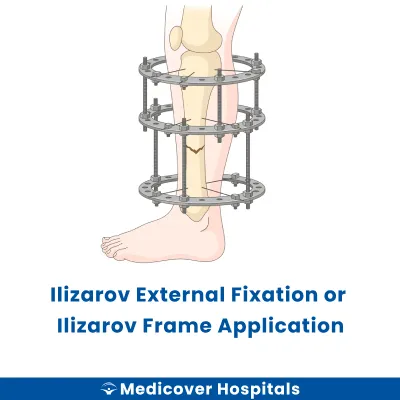
Ilizarov External Fixation, also known as Ilizarov Frame Application, is a surgical procedure used to treat complex fractures and deformities of the bones, particularly in the limbs. This technique involves the use of a circular metal frame that is attached to the bone with wires and pins. It helps in stabilising and gradually correcting bone alignment, allowing for proper healing and growth.
This surgery is often needed for conditions like non-union fractures (bones that fail to heal), limb length discrepancies, and severe bone deformities. If left untreated, these conditions can lead to chronic pain, impaired mobility, and further complications. Modern surgical approaches for Ilizarov External Fixation include computer-assisted techniques and minimally invasive methods. These advancements aim to improve precision and reduce recovery time.
Ilizarov External Fixation or Ilizarov Frame Application Doctors Near You
Discover skilled orthopedics for Ilizarov external fixation at Medicover Hospitals across India. Choose your city and book a consultation to explore effective treatment options tailored to your needs.
Why Choose Medicover Hospitals for Ilizarov External Fixation or Ilizarov Frame Application?
Get a second opinion from trusted experts and makeconfident, informed decisions.
 Get Second Opinion
Complete Guide To Ilizarov External Fixation Or Ilizarov Frame Application
Everything you need to know about the procedure, preparation, and recovery
Ilizarov External Fixation or Ilizarov Frame Application Surgery Indications
Doctors recommend Ilizarov External Fixation when traditional treatments do not resolve bone-related issues. This procedure helps in complex fractures, deformities, and length discrepancies.
Complex Fractures
Patients may experience severe pain and inability to move the affected limb. X-rays or CT scans show multiple fracture lines or bone fragments. When casts or internal fixation fail to stabilize the fracture, an Ilizarov frame is considered.
Bone Deformities
Visible limb deformities can cause pain and difficulty in movement. Physical examination reveals abnormal bone angles. If braces or physiotherapy do not correct the deformity, surgery is suggested.
Limb Length Discrepancy
Patients might notice one leg shorter than the other, causing a limp. Measurement differences are confirmed through imaging. When shoe lifts or orthotics are ineffective, Ilizarov application is recommended.
Non-Union of Fractures
Persistent pain and swelling may indicate a fracture not healing. X-rays show a gap at the fracture site. If bone grafts or electrical stimulation fail, the Ilizarov method is used.
Infected Fractures
Symptoms include redness, warmth, and pus at the fracture site. Lab tests reveal infection. When antibiotics and debridement do not clear the infection, external fixation is necessary.
How to Prepare for Ilizarov External Fixation or Ilizarov Frame Application?
Proper preparation is crucial for a successful Ilizarov External Fixation procedure. It helps minimise complications and ensures a smoother recovery.
- Medication Review: Stop NSAIDs, anticoagulants, and herbal supplements as advised by your doctor.
- Fasting: Fast for at least 8 hours before the procedure if general anaesthesia is used.
- Pre-Surgery Hygiene: Bathe with antiseptic soap the night before and the morning of the surgery.
- Comfortable Clothing: Wear loose-fitting clothes to the hospital for comfort post-surgery.
- Transportation: Arrange for someone to drive you home after the procedure.
- Medication List: Bring a list of current medications with dosages to the hospital.
- Home Preparation: Set up a comfortable recovery area at home with essentials within reach.
- Follow Instructions: Adhere to all pre-operative instructions given by your healthcare provider.
Ilizarov External Fixation or Ilizarov Frame Application Surgery (Step-by-Step)
This procedure is performed by orthopaedic surgeons. It typically lasts 2-3 hours. General or regional anaesthesia is used to ensure the patient is comfortable and pain-free.
- Preparation: The patient is positioned on the operating table. The surgical area is cleaned and sterilised. Anaesthesia is administered.
- Incision: Small incisions, about 1-2 cm, are made around the limb. These allow access for the insertion of wires and pins.
- Wire and Pin Insertion: Using a drill, wires and pins are inserted through the bone. These are placed with precision to ensure proper alignment.
- Frame Assembly: The Ilizarov frame, consisting of rings and rods, is assembled around the limb. It is connected to the wires and pins to stabilise the bone.
- Adjustment: The frame is adjusted to correct deformities or lengthen the bone. This is done gradually over time, as per the treatment plan.
- Closure: Incisions are closed with sutures or staples. Dressings are applied to protect the surgical site.
- Recovery: The patient is moved to a recovery area. Vital signs are monitored as the anaesthesia wears off. Instructions for care and follow-up are provided.
Who Performs Ilizarov External Fixation or Ilizarov Frame Application Surgery?
This surgery is performed by orthopaedic surgeons. They specialise in treating bone and joint conditions. Their expertise ensures the procedure is carried out safely and effectively.
Recovery After Ilizarov External Fixation or Ilizarov Frame Application Surgery
Recovery from Ilizarov External Fixation or Ilizarov Frame Application Surgery involves gradual healing and adjustment. Patients should expect to follow specific guidelines to ensure proper recovery and avoid complications.
Day 1-3:
- Rest and elevate the limb to reduce swelling.
- Pain management with prescribed medications.
- Begin gentle movements as advised by the physiotherapist.
Day 4-7:
- Continue with gentle exercises to maintain mobility.
- Start a light diet including curd, dal-rice, and soups to aid digestion and provide nutrition.
- Monitor pin sites for any signs of infection.
Day 8-14:
- Gradually increase activity levels as tolerated.
- Include nutrient-rich foods like khichdi and moong dal in your diet for energy and healing.
- Attend follow-up appointments for adjustments and assessments.
Phase 3 (Week 3-6):
- Engage in more active rehabilitation exercises.
- Resume light work or school activities if comfortable.
- Continue a balanced diet to support bone healing.
Phase 4 (Week 7 and beyond):
- Progress to normal activities with caution.
- Regular check-ups to monitor healing progress.
- Maintain a healthy diet and hydration.
When to Seek Urgent Help
- Severe pain not relieved by medication.
- Redness, warmth, or pus at pin sites.
- Fever or chills indicating possible infection.
- Sudden inability to move the limb.
Benefits of Ilizarov External Fixation or Ilizarov Frame Application Surgery
The Ilizarov External Fixation technique offers several advantages for bone lengthening and deformity correction.
- Versatility: It can be used for a wide range of bone deformities and fractures.
- Minimally Invasive: The procedure involves minimal surgical intervention, reducing recovery time.
- Adjustable: The frame allows for gradual adjustments, improving precision in bone alignment.
- Promotes Healing: It encourages natural bone growth and healing through controlled tension.
Risks and Complications of Ilizarov External Fixation or Ilizarov Frame Application Surgery
While generally safe, the Ilizarov technique carries certain risks and complications that patients should be aware of.
- Common: Infection at the pin sites can occur, requiring careful monitoring and hygiene.
- Common: Pain and discomfort are often experienced during the treatment period.
- Rare: Nerve or blood vessel damage may occur, leading to numbness or circulation issues.
- Rare: Joint stiffness can develop due to prolonged immobilization.
- Rare: Bone non-union or delayed healing may happen, requiring additional intervention.
Cost of Ilizarov External Fixation or Ilizarov Frame Application Surgery
The cost for Ilizarov External Fixation or Ilizarov Frame Application Surgery at Medicover Hospitals ranges from Rs. 28,000 to Rs. 2,40,000. The price varies based on the ward category chosen, such as general, twin sharing, private, or deluxe options.
We offer transparent pricing with support for insurance and TPA, including CGHS, ESI, and major TPAs. Cashless facilities are available to ease the financial process. Please contact the hospital for the latest insurance panel details as these may change periodically.
Frequently Asked Questions
1. How much does Ilizarov External Fixation or Ilizarov Frame Application surgery cost at Medicover Hospitals?
The cost ranges from Rs. 28,000 to Rs. 2,40,000 across Medicover Hospitals, depending on the type of room and care required.
2. Is Ilizarov External Fixation or Ilizarov Frame Application surgery covered under health insurance at Medicover?
Ilizarov surgery may be covered by CGHS, ESI, and major TPAs. Please contact the hospital for current panel details.
3. Will I be able to walk with the Ilizarov frame?
Yes, you can walk with the Ilizarov frame, but weight-bearing may be limited initially. Follow your doctor's advice for gradual mobility improvement.
4. How do I care for pin sites after Ilizarov surgery?
Clean pin sites daily with antiseptic and keep them dry to prevent infection. Report any redness or discharge to your doctor immediately.
5. Can I shower with the Ilizarov frame on?
You can shower with the frame, but protect the pin sites with waterproof coverings. Avoid soaking the frame to prevent rust and infection.
6. Will the Ilizarov frame affect my sleep?
The frame may cause discomfort initially, affecting sleep. Use pillows for support and adjust your sleeping position for better rest.
7. What type of diet should I follow after Ilizarov surgery?
Consume a balanced diet with proteins like dal and curd, and carbs like rice or khichdi. Adequate nutrition aids in bone healing and recovery.
8. What is the application of Ilizarov external fixator?
It is used to treat complex bone problems like fractures, deformities, limb length differences, and non-healing bones. The device helps gradually correct and stabilize bones while they heal.
9. Is the Ilizarov surgery painful?
The surgery is done under anesthesia, so you won’t feel pain during the procedure. Afterward, some pain and discomfort are common but can be managed with medications and care.


