 Call
Call Patient Reports
Hysteroscopic Guided Removal of Retained Intrauterine Device Procedure by Expert Gynecologists
At Medicover Hospitals, our gynecologists, with qualifications like MS, DNB, and FMAS, perform hysteroscopic-guided removal of retained intrauterine devices. This endoscopic approach ensures minimal invasiveness, leading to shorter hospital stays and reduced recovery time for patients across India.
Expert Surgeons
Yearly Surgeries
Patient Satisfaction
What is Hysteroscopic Guided Removal of Retained Intrauterine Device?
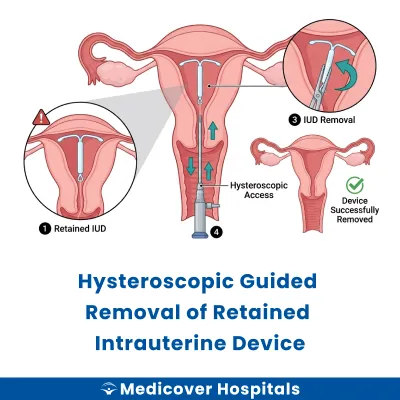
Hysteroscopic guided Removal of Retained Intrauterine Device is a procedure to extract an intrauterine device (IUD) that has become stuck inside the uterus (womb). A hysteroscope, a thin tube with a camera, is used to view the inside of the uterus and guide the removal process. This minimally invasive technique allows for precise extraction of the IUD without major incisions.
This surgery is needed when an IUD is dislodged, embedded, or cannot be removed through standard methods. If left untreated, a retained IUD can cause pain, bleeding, or infection. Modern surgical approaches include hysteroscopic removal, which offers a safer and more effective solution. It reduces the risk of complications and ensures quicker recovery.
Hysteroscopic Guided Removal of Retained Intrauterine Device Doctors Near You
Find experienced gynecologists for hysteroscopic removal of retained intrauterine devices at Medicover Hospitals across India. Choose your city and book a consultation today for expert care.
Why Choose Medicover Hospitals for Hysteroscopic Guided Removal of Retained Intrauterine Device?
Get a second opinion from trusted experts and makeconfident, informed decisions.
 Get Second Opinion
Complete Guide To Hysteroscopic Guided Removal Of Retained Intrauterine Device
Everything you need to know about the procedure, preparation, and recovery
Hysteroscopic guided Removal of Retained Intrauterine Device procedure Indications
Doctors recommend hysteroscopic guided removal of a retained intrauterine device (IUD) when non-surgical methods fail. This procedure is advised when there are complications or symptoms indicating the IUD is not in its proper position.
Pelvic Pain
Patients may experience persistent pelvic pain after IUD insertion. If imaging shows the IUD is misplaced or embedded in the uterine wall, removal is necessary. When pain does not resolve with medication, hysteroscopic removal is considered.
Abnormal Uterine Bleeding
Heavy or irregular bleeding can occur if the IUD is dislocated. Ultrasound or hysteroscopy may reveal the IUD's abnormal position. If bleeding persists despite hormonal treatment, surgical removal is recommended.
Missing IUD Strings
When a patient cannot feel the IUD strings, it may indicate displacement. An ultrasound or X-ray might show the IUD is embedded or perforated. If retrieval with simple tools fails, hysteroscopic removal is advised.
Infection
Signs of infection, such as fever or unusual discharge, may occur if the IUD is retained. Lab tests may show elevated white blood cell counts. If antibiotics do not resolve the infection, removal is necessary.
Perforation
Severe pain or bleeding may suggest uterine perforation by the IUD. Imaging confirms the diagnosis. Immediate hysteroscopic removal is required to prevent further complications.
How to Prepare for Hysteroscopic guided Removal of Retained Intrauterine Device?
Proper preparation is crucial for a smooth hysteroscopic procedure. It helps reduce risks and ensures a quicker recovery.
- Medication Review: Stop NSAIDs, anticoagulants, and herbal supplements a week before surgery.
- Fasting: Do not eat or drink anything for at least 6 hours before the procedure.
- Clothing: Wear loose, comfortable clothing on the day of the procedure.
- Transportation: Arrange for someone to drive you home post-procedure, as you may feel drowsy.
- Medication List: Bring a list of all medications you are currently taking, including dosages.
- Health Conditions: Inform your doctor about any existing health conditions or allergies.
- Pre-procedure Tests: Complete any blood tests or imaging studies as advised by your doctor.
- Personal Items: Leave valuables at home and bring only essentials to the hospital.
Hysteroscopic guided Removal of Retained Intrauterine Device procedure (Step-by-Step)
Overview: This procedure is performed by gynecologists. It typically takes about 30 to 60 minutes. It is usually done under local or general anaesthesia.
- Preparation: The patient is positioned comfortably. Anaesthesia is administered to ensure no pain during the procedure.
- Insertion of Hysteroscope: A hysteroscope, a thin, lighted tube, is gently inserted through the vagina and cervix into the uterus. This allows the doctor to view the uterine cavity.
- Visualisation: The uterine cavity is expanded using a saline solution. This helps the doctor clearly see the retained intrauterine device (IUD).
- Identification of IUD: The doctor identifies the location of the retained IUD using the hysteroscope.
- Removal of IUD: Special instruments, such as graspers or forceps, are used to carefully remove the IUD. The hysteroscope guides the instruments to ensure precision.
- Inspection: After removal, the doctor inspects the uterine cavity to ensure no fragments are left behind.
- Completion: The hysteroscope is gently withdrawn. The patient is monitored for a short period before being allowed to go home.
Who Performs Hysteroscopic guided Removal of Retained Intrauterine Device procedure?
This procedure is performed by gynec specialists. They are specialists trained in diagnosing and treating conditions related to the female reproductive system. Their expertise ensures the procedure is done safely and effectively.
Recovery After Hysteroscopic guided Removal of Retained Intrauterine Device procedure
Recovery after a hysteroscopic guided removal of a retained intrauterine device (IUD) is usually smooth. Most patients can return to their normal routine within a few days. However, it's important to follow your doctor's advice for a swift recovery.
Day 1-2:
- Rest is crucial. Avoid strenuous activities and heavy lifting.
- Some cramping and spotting are normal. Use sanitary pads instead of tampons.
- Stick to a light diet. Include curd, dal-rice, and soups to aid digestion.
Day 3-5:
- Gradually resume light activities. Walking is encouraged.
- Continue with a balanced diet. Incorporate moong dal and khichdi for easy digestion.
- Monitor for any unusual symptoms like heavy bleeding or severe pain.
Day 6-7:
- Most can return to work or school unless advised otherwise by the doctor.
- Avoid swimming and sexual intercourse until cleared by your healthcare provider.
- Ensure proper hydration and maintain a nutritious diet.
When to Seek Urgent Help:
- Heavy bleeding soaking more than one pad per hour.
- Severe abdominal pain not relieved by medication.
- Fever or chills indicating possible infection.
- Foul-smelling discharge.
Always follow your doctor's instructions and attend follow-up appointments for optimal recovery. If you have any concerns, contact your healthcare provider promptly.
Benefits of Hysteroscopic guided Removal of Retained Intrauterine Device procedure
This procedure offers a precise method to remove a retained intrauterine device (IUD), ensuring minimal discomfort.
- Minimally Invasive: The procedure involves no large incisions, reducing recovery time.
- Improved Visualization: Hysteroscopy provides a clear view of the uterine cavity, enhancing accuracy.
- Quick Recovery: Most patients can resume normal activities shortly after the procedure.
- Reduced Risk of Infection: The controlled environment minimizes infection risk compared to traditional methods.
Risks and Complications of Hysteroscopic guided Removal of Retained Intrauterine Device procedure
While generally safe, this procedure carries some risks, as with any medical intervention.
Common Risks
- Mild cramping or discomfort during and after the procedure.
- Light vaginal bleeding post-procedure.
Rare Risks
- Infection, which may require antibiotics.
- Uterine perforation, which might need further treatment.
- Adverse reaction to anaesthesia.
Cost of Hysteroscopic guided Removal of Retained Intrauterine Device procedure
The cost of a Hysteroscopic guided Removal of Retained Intrauterine Device procedure at Medicover Hospitals ranges from ₹15,000 to ₹50,000, depending on the ward category chosen. Prices vary across different ward types, ensuring transparent pricing for all patients.
We offer insurance and TPA support, accepting CGHS, ESI, and major TPAs, along with a cashless facility for added convenience. Please contact the hospital for the latest insurance panel details as these may change periodically.
Frequently Asked Questions
1. How much does Hysteroscopic guided Removal of Retained Intrauterine Device procedure cost at Medicover Hospitals?
The cost ranges from ₹15,000 to ₹50,000 across Medicover Hospitals. Prices vary based on the type of room and care required.
2. Is Hysteroscopic guided Removal of Retained Intrauterine Device procedure covered under health insurance at Medicover?
This procedure may be covered by CGHS, ESI, and major TPAs. Please contact the hospital for current panel details.
3. Can uterine damage occur during the procedure?
There is a minimal risk of uterine perforation during the procedure. Your doctor will discuss all potential risks before surgery.
4. Will I experience changes in menstrual cycle post-procedure?
Some women may notice temporary changes in their menstrual cycle. These usually resolve within a few months after the procedure.
5. Is there a risk of infection after the procedure?
Infection is a rare complication, but it can occur. Following post-operative care instructions will help minimise this risk.
6. Can I resume normal activities immediately after?
Most patients can return to normal activities within a day or two. Avoid strenuous activities for at least a week.
7. Will I need a special diet after the procedure?
No special diet is required, but a balanced diet with foods like curd, dal-rice, and khichdi is recommended for recovery.


