 Call
Call Patient Reports
Hospital for Hybrid Total Hip Arthroplasty Surgery with Advanced Joint Care
Hybrid Total Hip Arthroplasty at Medicover Hospitals utilises a combination of open and minimally invasive techniques. Our orthopaedic surgeons, with qualifications like MS and DNB, specialise in joint replacement. This approach often results in smaller incisions and reduced recovery time for patients.
Expert Surgeons
Yearly Surgeries
Patient Satisfaction
What is Hybrid Total Hip Arthroplasty?
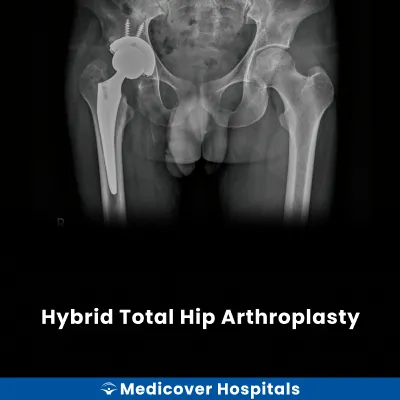
Hybrid Total Hip Arthroplasty is a surgical procedure involving the hip joint. It combines cemented and uncemented techniques to replace the damaged hip joint (where the thigh bone meets the pelvis). The femoral component is typically cemented, while the acetabular component is uncemented. This approach aims to provide stability and long-term durability.
This surgery is often needed for conditions like osteoarthritis, rheumatoid arthritis, or hip fractures. These conditions cause pain and limit mobility. If left untreated, they can lead to severe disability and decreased quality of life. Modern surgical approaches for Hybrid Total Hip Arthroplasty include minimally invasive techniques and computer-assisted surgery. These methods aim to enhance precision and recovery.
Hybrid Total Hip Arthroplasty Doctors Near You
Find experienced orthopedics for hybrid total hip arthroplasty at Medicover Hospitals across India. Choose your city and book a consultation to explore effective treatment options tailored to your needs.
Why Choose Medicover Hospitals for Hybrid Total Hip Arthroplasty?
Get a second opinion from trusted experts and makeconfident, informed decisions.
 Get Second Opinion
Complete Guide To Hybrid Total Hip Arthroplasty
Everything you need to know about the procedure, preparation, and recovery
Hybrid Total Hip Arthroplasty Surgery Indications
Doctors recommend Hybrid Total Hip Arthroplasty when patients experience severe hip joint issues that affect daily activities and quality of life. This procedure is often suggested when conservative treatments no longer provide relief.
Severe Osteoarthritis
Patients experience persistent hip pain, stiffness, and reduced mobility. X-rays show significant joint space narrowing and bone spurs. When pain medications and physical therapy fail, surgery is considered.
Rheumatoid Arthritis
Chronic inflammation leads to hip pain, swelling, and joint deformity. Blood tests reveal elevated inflammatory markers. When disease-modifying drugs and steroids do not control symptoms, surgery may be necessary.
Hip Fractures
Patients suffer from acute pain and inability to bear weight after a fall. X-rays confirm a fracture in the hip joint. If the fracture does not heal with conservative methods, surgery is recommended.
Avascular Necrosis
Patients report hip pain and limited range of motion. MRI scans show bone death due to lack of blood supply. When core decompression and other treatments fail, surgery is advised.
Developmental Dysplasia of the Hip
Patients experience hip instability and pain from childhood. Imaging reveals abnormal hip joint formation. When bracing and physiotherapy do not improve function, surgery becomes an option.
How to Prepare for Hybrid Total Hip Arthroplasty?
Proper preparation for Hybrid Total Hip Arthroplasty can enhance recovery and reduce complications. Following these steps ensures a smoother surgical experience.
- Medication Review: Stop NSAIDs, anticoagulants, and herbal supplements as advised by your doctor.
- Fasting: Do not eat or drink anything for at least 8 hours before the surgery.
- Pre-Surgery Exercises: Engage in pelvic floor exercises to strengthen muscles around the hip.
- Clothing: Wear loose, comfortable clothing on the day of surgery for ease of movement post-operation.
- Transportation: Arrange for someone to drive you home after the procedure.
- Medication List: Bring a list of all medications with dosages to the hospital.
- Home Preparation: Set up a recovery area at home with essentials within easy reach.
- Hospital Communication: Inform the hospital of any changes in health or medications.
Hybrid Total Hip Arthroplasty Surgery (Step-by-Step)
This procedure is performed at Medicover Hospitals Orthopedics Department. It typically lasts between 1.5 to 3 hours and may be performed under general or regional anaesthesia depending on the patient's condition.
- Preparation: The patient is positioned on the operating table. Anaesthesia is administered to ensure comfort and pain-free surgery.
- Incision: A 10-15 cm incision is made over the hip joint. This allows access to the hip joint for the surgery.
- Dislocation and Removal: The femoral head is dislocated from the acetabulum. A curette is used to remove any damaged cartilage and bone.
- Acetabular Component Placement: The acetabulum is prepared and a new socket is placed. A harmonic scalpel may be used for precision cutting.
- Femoral Component Placement: The femur is prepared to fit the new stem. The femoral component is inserted and secured. A bipolar cautery may be used to control bleeding.
- Repositioning and Closure: The new joint is tested for stability. The incision is closed with sutures or staples. A sterile dressing is applied.
- Recovery: The patient is moved to the recovery room. Vital signs are monitored as the anaesthesia wears off.
Who Performs Hybrid Total Hip Arthroplasty Surgery?
Orthopaedic surgeons perform this surgery. They specialise in musculoskeletal system surgeries. Their expertise ensures precise execution of the procedure.
Recovery After Hybrid Total Hip Arthroplasty Surgery
Recovery from Hybrid Total Hip Arthroplasty Surgery involves gradual healing and rehabilitation. Patients can expect to regain mobility and strength over time with proper care and adherence to medical advice.
Day 1-3:
- Hospital stay for monitoring and initial recovery.
- Pain management with prescribed medications.
- Begin gentle physiotherapy exercises as advised.
- Start with a light diet including curd, dal-rice, and soups.
Day 4-7:
- Gradual increase in mobility with assistance.
- Continue physiotherapy to improve joint movement.
- Include soft foods like khichdi and moong dal in meals.
- Focus on hydration and balanced nutrition.
Day 8-14:
- Transition to using a cane or walker as needed.
- Increase walking duration under guidance.
- Resume light household activities.
- Maintain a diet rich in proteins and vitamins.
Phase 3 (Week 3-6):
- Gradual return to normal activities.
- Continue strengthening exercises.
- Consult your doctor about resuming work or school.
- Regular follow-up appointments to monitor progress.
When to Seek Urgent Help:
- Severe pain or swelling in the operated leg.
- Fever or chills indicating possible infection.
- Sudden shortness of breath or chest pain.
- Redness or discharge from the surgical site.
Benefits of Hybrid Total Hip Arthroplasty Surgery
Hybrid Total Hip Arthroplasty combines cemented and uncemented techniques for effective joint replacement.
- Improved Stability: The hybrid approach enhances joint stability by using cemented components.
- Longer Implant Life: Uncemented components may promote bone growth, potentially extending the implant's lifespan.
- Quicker Recovery: Patients often experience a faster recovery due to the stability provided by the cemented parts.
- Reduced Pain: Many patients report significant pain reduction post-surgery.
Risks and Complications of Hybrid Total Hip Arthroplasty Surgery
While generally safe, Hybrid Total Hip Arthroplasty carries some risks and potential complications.
- Infection at the surgical site can occur, requiring prompt treatment.
- Blood clots may form, necessitating preventive measures.
- Dislocation of the hip joint might happen, needing further intervention.
- Nerve damage could result in temporary or permanent numbness.
- Fractures around the implant might occur, requiring additional surgery.
- Allergic reactions to materials used in the implant are possible.
Cost of Hybrid Total Hip Arthroplasty Surgery
The cost of Hybrid Total Hip Arthroplasty Surgery at Medicover Hospitals varies based on the ward category chosen. Prices range from Rs. 3,50,000 to Rs. 4,40,000. This ensures that patients can select a suitable option according to their preferences and budget.
We offer transparent pricing and support for insurance and TPA, including CGHS, ESI, and major TPAs. A cashless facility is also available for added convenience. Please contact the hospital for the latest insurance panel details as these may change periodically.
Frequently Asked Questions
1. How much does Hybrid Total Hip Arthroplasty surgery cost at Medicover Hospitals?
The cost for Hybrid Total Hip Arthroplasty surgery at Medicover Hospitals ranges from Rs. 3,50,000 to Rs. 4,40,000, depending on the room category.
2. Is Hybrid Total Hip Arthroplasty surgery covered under health insurance at Medicover?
Hybrid Total Hip Arthroplasty surgery may be covered by CGHS, ESI, and major TPAs, offering cashless options. Please contact the hospital for current panel details.
3. Will I need crutches after Hybrid Total Hip Arthroplasty?
Yes, crutches are often needed for a few weeks post-surgery to aid mobility. Your doctor will guide you on the duration based on recovery.
4. Can I sit cross-legged after hip arthroplasty?
Sitting cross-legged is generally discouraged after hip arthroplasty to prevent dislocation. Follow your surgeon's advice on safe sitting positions.
5. Will I feel pain in my hip after surgery?
Some pain and discomfort are normal after surgery, but it should gradually decrease. Pain management options will be provided by your healthcare team.
6. What exercises are recommended post-surgery?
Gentle exercises like walking and specific physiotherapy routines are recommended. Avoid strenuous activities until your doctor advises otherwise.
7. Can I eat spicy food after hip surgery?
It's best to start with a bland diet like dal-rice or khichdi. Gradually reintroduce spicy foods as your digestive system stabilizes.


