 Call
Call Patient Reports
Best Hospital for High Tibial Osteotomy Surgery with Advanced Orthopedic Care
High Tibial Osteotomy at Medicover Hospitals is performed using the open surgical approach by our team of skilled orthopaedic surgeons with qualifications like MS and DNB. This procedure helps in realigning the knee joint, leading to reduced pain and improved function.
Expert Surgeons
Yearly Surgeries
Patient Satisfaction
What is High Tibial Osteotomy?
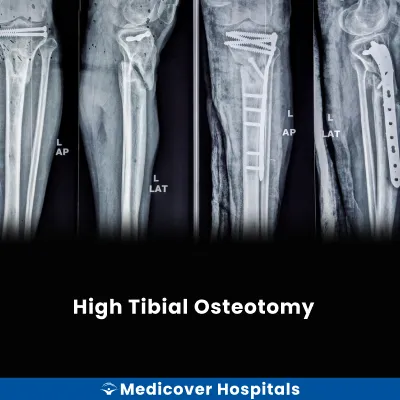
High Tibial Osteotomy is a surgical procedure involving the tibia (shinbone). It is performed to realign the knee joint. The surgery involves cutting and reshaping the upper part of the tibia. This helps in redistributing weight-bearing forces away from the damaged area of the knee.
This surgery is often needed for patients with knee osteoarthritis. It is particularly beneficial when the damage is on one side of the knee. If left untreated, the condition can worsen, leading to severe pain and limited mobility. Modern surgical approaches include open wedge and closed wedge osteotomies. These techniques help in achieving better alignment and pain relief.
High Tibial Osteotomy Doctors Near You
Discover skilled orthopedics for high tibial osteotomy at Medicover Hospitals across India. Choose your city and book a consultation to explore treatment options tailored to your needs.
Why Choose Medicover Hospitals for High Tibial Osteotomy Surgery?
Get a second opinion from trusted experts and makeconfident, informed decisions.
 Get Second Opinion
Complete Guide To High Tibial Osteotomy
Everything you need to know about the procedure, preparation, and recovery
High Tibial Osteotomy Surgery Indications
Doctors recommend High Tibial Osteotomy (HTO) when conservative treatments for knee issues fail. It is often considered for patients with specific knee problems that cause pain and mobility issues.
Medial Compartment Osteoarthritis
Patients experience pain on the inner side of the knee. X-rays show narrowing of the medial joint space. When pain persists despite medication and physiotherapy, HTO may be advised.
Varus Deformity
Patients notice bowing of the legs, causing uneven weight distribution. Clinical examination reveals a varus alignment. Surgery is considered when bracing and exercises do not alleviate symptoms.
Unicompartmental Knee Pain
Patients report localized knee pain, often worsening with activity. MRI or X-ray confirms damage limited to one compartment. When pain limits daily activities and injections or therapy fail, HTO is an option.
Young Active Patients
Active individuals with knee pain affecting sports or work may benefit. Imaging shows early joint changes. If non-surgical methods do not restore function, HTO is considered.
Failed Conservative Management
Patients have tried medications, injections, and physical therapy without relief. Persistent symptoms and imaging findings guide the decision for surgery.
How to Prepare for High Tibial Osteotomy?
Proper preparation is crucial for a successful High Tibial Osteotomy. It helps minimise risks and ensures a smoother recovery. Follow these steps to get ready for the procedure.
- Medication Review: Stop NSAIDs, anticoagulants, and herbal supplements as advised by your doctor.
- Fasting Guidelines: Fast for at least 8 hours before the surgery if general anaesthesia is used.
- Pre-Surgery Exercises: Perform any recommended exercises to strengthen the leg muscles.
- Clothing: Wear loose, comfortable clothing on the day of surgery for easy dressing post-operation.
- Transportation: Arrange for someone to drive you home after the procedure.
- Medication List: Bring a list of all medications you take, including dosages, to the hospital.
- Home Preparation: Set up a comfortable recovery area at home with essentials within reach.
- Smoking and Alcohol: Avoid smoking and alcohol as they can affect healing.
High Tibial Osteotomy Surgery (Step-by-Step)
High tibial osteotomy is performed by experienced specialists from the Orthopedics department. The procedure usually takes 1–2 hours and is commonly carried out under general or regional anaesthesia.
- Preparation: The patient is positioned on the operating table. Anaesthesia is administered to ensure comfort and pain management during the procedure.
- Incision: A 5-10 cm incision is made on the upper part of the tibia. This allows access to the bone for the osteotomy.
- Bone Exposure: Surgical instruments like retractors are used to gently move tissues aside. This exposes the tibia for the next steps.
- Osteotomy: A saw is used to carefully cut the tibia. The cut is made at a specific angle to realign the bone. This helps in redistributing weight away from the damaged area.
- Plate and Screw Fixation: A metal plate and screws are used to hold the bone in its new position. This stabilises the bone as it heals.
- Closure: The incision is closed with sutures or staples. A sterile bandage is applied to protect the area.
- Recovery: The patient is moved to a recovery room. They are monitored as the anaesthesia wears off. Pain relief and care instructions are provided.
Who Performs High Tibial Osteotomy Surgery?
This surgery is performed by orthopaedic surgeons who specialise in bone and joint conditions. They have expertise in surgical procedures involving the musculoskeletal system.
Recovery After High Tibial Osteotomy Surgery
Recovering from High Tibial Osteotomy Surgery involves several stages. It requires patience and adherence to your doctor's advice for a smooth healing process. Expect gradual improvement in mobility and strength over the coming weeks.
Day 1-3:
- Rest is crucial. Keep the leg elevated to reduce swelling.
- Pain management with prescribed medications.
- Begin gentle ankle and toe movements to promote circulation.
Day 4-7:
- Continue with elevation and icing to manage swelling.
- Start partial weight-bearing with crutches as advised by your doctor.
- Focus on a diet rich in proteins and calcium. Include curd, dal-rice, and soups.
Week 2-4:
- Increase physiotherapy exercises to improve range of motion.
- Gradually introduce more weight-bearing activities.
- Consume a balanced diet with moong dal and khichdi to aid recovery.
Week 5-8:
- Progress to full weight-bearing as tolerated.
- Continue physiotherapy to strengthen the knee.
- Most individuals can resume work or school by the end of this phase, depending on the nature of their activities.
When to Seek Urgent Help:
- Severe pain unrelieved by medication.
- Signs of infection such as fever, redness, or discharge from the incision.
- Sudden swelling or inability to move the leg.
Benefits of High Tibial Osteotomy Surgery
High Tibial Osteotomy (HTO) is a surgical procedure aimed at realigning the knee joint. It offers several benefits for patients with knee issues.
- Pain Relief: Helps reduce knee pain by redistributing weight away from the damaged area.
- Improved Mobility: Enhances knee function, allowing for better movement and activity.
- Delay in Knee Replacement: Can postpone the need for a total knee replacement surgery.
- Joint Preservation: Maintains the natural knee joint, which is beneficial for younger patients.
Risks and Complications of High Tibial Osteotomy Surgery
While HTO can be beneficial, it is important to be aware of potential risks and complications. These can vary in frequency and severity.
- Infection (Common): Risk of infection at the surgical site.
- Blood Clots (Common): Possibility of developing clots in the legs.
- Nerve Damage (Rare): Potential for nerve injury during surgery.
- Non-union (Rare): The bone may not heal properly.
- Overcorrection or Undercorrection (Rare): Incorrect alignment of the knee.
- Implant Issues (Rare): Problems with the hardware used in the procedure.
Cost of High Tibial Osteotomy Surgery
The cost of High Tibial Osteotomy Surgery at Medicover Hospitals varies depending on the ward category chosen. Prices range from Rs. 12,299 to Rs. 39,589 across different ward types. Our pricing is transparent, and we offer support for insurance and TPA, including CGHS, ESI, and major TPAs. Cashless facilities are also available for your convenience. Please contact the hospital for the latest insurance panel details as these may change periodically.
Frequently Asked Questions
1. How much does High Tibial Osteotomy cost?
The cost of High Tibial Osteotomy surgery at Medicover Hospitals ranges from Rs. 12,299 to Rs. 39,589, depending on the facility and care level.
2. Is High Tibial Osteotomy covered under insurance?
High Tibial Osteotomy surgery is often covered by CGHS, ESI, and major TPAs. Please contact the hospital for current panel details.
3. Will I need crutches after High Tibial Osteotomy?
Yes, crutches are typically needed for 6-8 weeks after the surgery to aid in mobility and support the healing knee.
4. Can I drive after High Tibial Osteotomy?
Driving is usually not recommended until 6-8 weeks post-surgery, once you regain full control and strength in your knee.
5. Will I have knee stiffness post-surgery?
Some knee stiffness is common after surgery, but physiotherapy can help improve flexibility and reduce stiffness over time.
6. What exercises are recommended post-surgery?
Physiotherapy exercises focusing on knee mobility and strength are recommended. Consult your physiotherapist for a tailored exercise plan.
7. Can I eat spicy food after High Tibial Osteotomy?
It's advisable to eat light, non-spicy foods like curd, dal-rice, and khichdi to aid digestion and recovery in the initial weeks.
8. Is high tibial osteotomy major surgery?
Yes, high tibial osteotomy (HTO) is considered a major orthopedic surgery, as it involves cutting and realigning the shinbone (tibia) to shift weight away from the damaged part of the knee.
9. Is a high tibial osteotomy worth it?
HTO can be very beneficial for selected patients, especially younger individuals with knee arthritis on one side. It can reduce pain, improve function, and delay the need for knee replacement surgery.
10. What is the recovery time for a high tibial osteotomy?
Recovery usually takes about 3 to 6 months, with gradual weight-bearing and physiotherapy. Full return to normal activities or sports may take longer depending on healing.
11. Is a TTO surgery painful?
Tibial tubercle osteotomy (TTO) may cause moderate pain after surgery, but it is well managed with medications. Pain typically improves over time as healing progresses and rehabilitation begins.


