 Call
Call Patient Reports
Best Hospital for Hepaticojejunostomy Surgery & Advanced Liver Care
Hepaticojejunostomy at Medicover Hospitals is performed using the laparoscopic approach by skilled liver-transplant-surgeons with qualifications like MS, DNB, and MCh. This minimally invasive technique results in smaller incisions and reduced blood loss, enhancing recovery and comfort for patients.
Expert Surgeons
Yearly Surgeries
Patient Satisfaction
What is Hepaticojejunostomy?
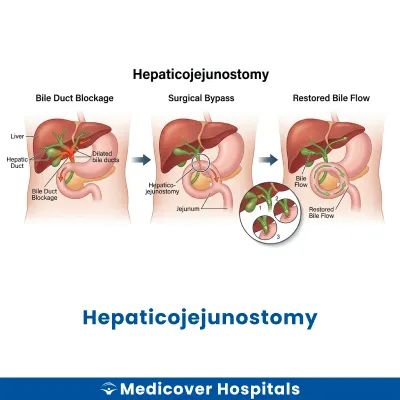
Hepaticojejunostomy is a surgical procedure that connects the hepatic duct (a bile duct coming from the liver) to the jejunum (part of the small intestine). This creates a new pathway for bile to flow from the liver into the digestive system. It is often performed to bypass a blockage or damage in the bile duct.
This surgery is needed when there is a blockage in the bile duct due to conditions like bile duct injury, strictures, or tumours. If untreated, these conditions can lead to jaundice, infections, or liver damage. Modern surgical approaches for hepaticojejunostomy include open surgery and minimally invasive techniques like laparoscopy. These methods aim to reduce recovery time and improve outcomes.
Hepaticojejunostomy Doctors Near You
Discover skilled liver-transplant-surgeons at Medicover Hospitals across India. Choose your city to find experts near you and book a consultation for hepaticojejunostomy needs today.
Why Choose Medicover Hospitals for Hepaticojejunostomy?
Get a second opinion from trusted experts and makeconfident, informed decisions.
 Get Second Opinion
Complete Guide To Hepaticojejunostomy
Everything you need to know about the procedure, preparation, and recovery
Hepaticojejunostomy Surgery Indications
Hepaticojejunostomy is a surgical procedure recommended by liver-transplant-surgeons to restore bile flow when the bile duct is obstructed. This procedure is often considered when non-surgical treatments fail to relieve symptoms or when imaging studies reveal significant blockages.
Biliary Stricture
Patients may experience jaundice, dark urine, and pale stools due to bile duct narrowing. Imaging tests like MRCP or ERCP show strictures. When stenting or balloon dilation fails, surgery is advised.
Choledochal Cyst
Symptoms include abdominal pain, jaundice, and a palpable mass. Ultrasound or CT scans reveal cystic dilations of the bile duct. Surgical intervention is necessary when cysts risk infection or malignancy.
Bile Duct Injury
Post-surgical complications can lead to bile leakage and abdominal pain. Imaging shows bile duct disruption. When endoscopic repair is ineffective, hepaticojejunostomy is performed.
Cholangiocarcinoma
Patients may have jaundice and weight loss. Imaging and biopsy confirm bile duct cancer. Surgery is considered when resection is possible to bypass the tumor.
Recurrent Biliary Obstruction
Symptoms include repeated episodes of jaundice and cholangitis. Imaging shows persistent blockages. When endoscopic treatments repeatedly fail, surgery is the next step.
How to Prepare for Hepaticojejunostomy?
Proper preparation for hepaticojejunostomy is crucial to ensure a smooth surgery and recovery. It helps in reducing complications and aids in a quicker healing process.
- Medication Review: Stop NSAIDs, anticoagulants, and herbal supplements at least a week before surgery.
- Fasting: Do not eat or drink anything for at least 8 hours before the procedure to ensure safety during anaesthesia.
- Pre-Surgical Tests: Complete all required blood tests and imaging studies as advised by your doctor.
- Medication List: Bring a list of all medications you take, including dosages, on the day of surgery.
- Clothing: Wear loose, comfortable clothing on the day of the procedure for ease after surgery.
- Transportation: Arrange for someone to drive you home post-surgery as you may feel drowsy.
- Smoking and Alcohol: Avoid smoking and alcohol for at least 24 hours before the surgery.
- Hygiene: Take a shower with antiseptic soap the night before or the morning of the surgery.
Hepaticojejunostomy Surgery (Step-by-Step)
Performed by liver transplant surgeons, this surgery typically lasts 3-5 hours. It requires general anaesthesia to ensure the patient is unconscious and pain-free.
- Preparation: The patient is placed under general anaesthesia. The surgical area is cleaned and sterilized to prevent infection.
- Incision: A midline incision of about 10-15 cm is made in the abdomen to access the liver and bile ducts.
- Exposure: Surgical retractors are used to hold back tissues, providing a clear view of the liver and bile ducts.
- Dissection: Using instruments like a harmonic scalpel and bipolar cautery, the surgeon carefully dissects the bile duct to prepare for the connection.
- Anastomosis: The jejunum (part of the small intestine) is brought up and connected to the bile duct. This is done using sutures to create a passage for bile flow.
- Closure: The incision is closed in layers using sutures or staples. A drain may be placed to remove excess fluids.
- Recovery: The patient is moved to the recovery room to be monitored as they wake up from anaesthesia. Pain management and vital signs are closely observed.
Who Performs Hepaticojejunostomy Surgery?
This surgery is performed by liver-transplant-surgeons who specialise in complex liver and biliary procedures. They have extensive training in handling delicate tissues and ensuring successful bile duct reconstructions.
Recovery After Hepaticojejunostomy Surgery
Recovery from hepaticojejunostomy surgery involves careful monitoring and gradual return to daily activities. It's important to follow your doctor's advice for a smooth recovery. Expect some discomfort and fatigue initially, but these should improve over time.
Day 1-3:
- Hospital stay is common. Monitoring of vital signs and incision site.
- Start with clear liquids. Gradually introduce soft foods like soups and dal-rice.
- Rest is crucial. Minimal movement is encouraged.
Day 4-7:
- Transition to a soft diet. Include foods like khichdi, moong dal, and curd.
- Slowly increase light activities like short walks.
- Continue to avoid heavy lifting and strenuous activities.
Week 2-4:
- Gradual return to normal diet. Focus on balanced meals with adequate protein.
- Increase activity level as tolerated. Avoid high-impact exercises.
- Most can return to work or school by the end of this phase, depending on recovery.
Phase 2 (1-3 Months):
- Full recovery expected. Regular follow-ups to monitor liver function.
- Resume normal activities, but continue to avoid heavy lifting.
- Maintain a healthy diet to support liver health.
When to Seek Urgent Help
- Fever over 100.4°F (38°C) or chills.
- Severe abdominal pain or swelling.
- Yellowing of the skin or eyes (jaundice).
- Persistent nausea or vomiting.
- Signs of infection at the incision site, such as redness or pus.
Benefits of Hepaticojejunostomy Surgery
Hepaticojejunostomy is a surgical procedure that helps restore bile flow from the liver to the intestine. It offers several benefits for patients with bile duct obstructions.
- Restores Bile Flow: This procedure effectively re-establishes the flow of bile, aiding digestion.
- Relieves Jaundice: By bypassing the obstruction, it helps reduce jaundice symptoms.
- Prevents Liver Damage: Timely intervention can prevent further liver damage due to bile accumulation.
- Improves Quality of Life: Patients often experience improved overall health and energy levels.
Risks and Complications of Hepaticojejunostomy Surgery
Like any surgical procedure, hepaticojejunostomy carries certain risks. It is important to be aware of these potential complications.
- Infection at the surgical site can occur, requiring medical attention.
- Bile leakage may happen, which might need further intervention.
- Stricture formation at the anastomosis site can lead to recurrent obstructions.
- Bleeding during or after the surgery is possible.
- Injury to nearby organs, although uncommon, can occur.
Cost of Hepaticojejunostomy Surgery
The cost of hepaticojejunostomy surgery typically ranges from Rs.1,82,000 to Rs.2,90,000, depending on the surgical approach, duration of hospital stay, room category, required diagnostics, medications, and post-operative care.
At Medicover Hospitals, we ensure transparent pricing for all procedures with expert surgical care and advanced facilities. We offer support for insurance and TPA services, including CGHS, ESI, and major TPAs, with cashless facilities available. Please contact the hospital for the latest insurance panel details, as these may change periodically.
Frequently Asked Questions
1. How much does Hepaticojejunostomy surgery cost at Medicover Hospitals?
For specific pricing details, please contact Medicover Hospitals directly, as costs typically range from Rs.1,82,000 to Rs.2,90,000 based on individual cases and requirements.
2. Is Hepaticojejunostomy surgery covered under health insurance at Medicover?
Hepaticojejunostomy surgery may be covered by CGHS, ESI, and major TPAs. Please contact the hospital for current panel details as insurance panels may change.
3. Will I experience jaundice after Hepaticojejunostomy?
Jaundice can occur if bile flow is obstructed post-surgery. Regular follow-ups help monitor recovery and address any complications promptly.
4. Can I eat spicy food after Hepaticojejunostomy?
It's best to avoid spicy foods initially and opt for bland options like khichdi or curd rice. Gradually reintroduce spices as advised by your doctor.
5. What is the risk of bile leakage after surgery?
Bile leakage is a potential complication of Hepaticojejunostomy. Monitoring and timely intervention by your healthcare team help manage this risk effectively.
6. How long before I can resume normal activities?
Patients typically resume normal activities within 4-6 weeks post-surgery. Always follow your doctor's advice for a safe and steady recovery.
7. Will I need a drain tube after Hepaticojejunostomy?
A drain tube may be placed to prevent fluid accumulation. Your doctor will decide based on your specific surgical outcome and recovery needs.


