 Call
Call Patient Reports
Best Hepatectomy with Wedge Resection for Liver Hemangioma Surgery Hospital
At Medicover Hospitals, our liver-transplant-surgeons perform open hepatectomy with wedge resection for liver hemangioma. Our specialists, holding qualifications like MS, DNB, and MCh, ensure precise surgical intervention. This approach results in reduced blood loss, leading to a quicker recovery for patients.
Expert Surgeons
Yearly Surgeries
Patient Satisfaction
What is Hepatectomy With Wedge Resection for Liver Hemangioma?
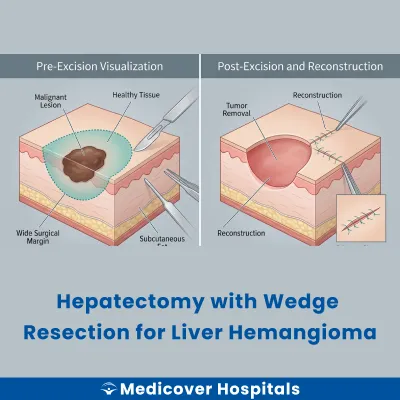
Hepatectomy with wedge resection for liver hemangioma involves the surgical removal of a portion of the liver (hepatectomy) where a hemangioma is located. A hemangioma is a benign (non-cancerous) tumour made up of blood vessels. The wedge resection technique involves removing the tumour along with a small, wedge-shaped section of healthy liver tissue surrounding it.
This surgery is necessary when a liver hemangioma causes symptoms like pain or discomfort, or if it grows large enough to affect liver function. If left untreated, it can lead to complications such as bleeding or rupture. Modern surgical approaches for this procedure include laparoscopic surgery, which uses small incisions, and robotic-assisted surgery, which offers precision and control.
Hepatectomy With Wedge Resection for Liver Hemangioma Doctors Near You
Find experienced liver-transplant-surgeons for hepatectomy with wedge resection for liver hemangioma at Medicover Hospitals across India. Choose your city and book a consultation today for expert care.
Why Choose Medicover Hospitals for Hepatectomy With Wedge Resection for Liver Hemangioma?
Get a second opinion from trusted experts and makeconfident, informed decisions.
 Get Second Opinion
Complete Guide To Hepatectomy With Wedge Resection For Liver Hemangioma
Everything you need to know about the procedure, preparation, and recovery
Hepatectomy with Wedge Resection for Liver Hemangioma surgery Indications
Doctors recommend Hepatectomy with Wedge Resection for Liver Hemangioma when the hemangioma causes significant symptoms or complications. This procedure is considered when conservative treatments do not relieve symptoms or when the hemangioma poses a risk to the patient's health.
Severe Abdominal Pain
Patients may experience persistent or severe abdominal pain due to the size or location of the hemangioma. Imaging tests like an ultrasound or MRI may show a large hemangioma pressing on nearby organs. Surgery is considered when pain management fails to provide relief.
Hemorrhage
Some patients may experience internal bleeding from the hemangioma, leading to symptoms like dizziness or low blood pressure. CT scans or MRIs can reveal bleeding. Surgery is recommended if bleeding is recurrent or poses a significant health risk.
Compression of Nearby Organs
Patients might feel discomfort or fullness due to the hemangioma pressing against the stomach or intestines. Imaging tests may show displacement of these organs. Surgery is considered when this compression affects normal function.
Rapid Growth
Rapid enlargement of the hemangioma can cause concern. Patients may notice increased abdominal girth or discomfort. Regular imaging can track growth, and surgery is suggested if the hemangioma grows quickly, risking rupture or other complications.
Failure of Conservative Management
When medications or non-surgical interventions do not alleviate symptoms like pain or discomfort, surgery becomes an option. Persistent symptoms despite treatment indicate the need for surgical intervention.
How to Prepare for Hepatectomy with Wedge Resection for Liver Hemangioma?
Proper preparation is crucial for a successful hepatectomy with wedge resection for liver hemangioma. It helps minimise risks and ensures a smoother recovery.
- Medication Review: Stop NSAIDs, anticoagulants, and herbal supplements as advised by your doctor.
- Fasting: Do not eat or drink anything for at least 8 hours before the surgery due to general anaesthesia.
- Medical Tests: Complete all required blood tests, imaging, and liver function tests as scheduled.
- Pre-Surgery Consultation: Discuss any allergies, current medications, and medical history with your surgical team.
- Clothing: Wear loose, comfortable clothing on the day of surgery for ease and comfort.
- Transportation: Arrange for someone to drive you home post-surgery as you will not be able to drive yourself.
- Medication List: Bring a list of all medications with dosages to the hospital for reference.
- Home Preparation: Set up a comfortable recovery area at home with necessary supplies within easy reach.
Hepatectomy with Wedge Resection for Liver Hemangioma surgery (Step-by-Step)
This procedure is performed by liver transplant surgeons. It typically lasts 3-5 hours and is done under general anaesthesia.
- Preparation: The patient is placed under general anaesthesia. Monitoring equipment is attached to track vital signs.
- Incision: A 10-20 cm incision is made in the abdomen to access the liver. The size depends on the hemangioma's location.
- Exposing the Liver: The liver is carefully exposed using retractors. This allows the surgeon to view the hemangioma clearly.
- Wedge Resection: Using a harmonic scalpel, the surgeon removes the hemangioma along with a wedge of surrounding liver tissue. This ensures complete removal.
- Bleeding Control: Bipolar cautery is used to control bleeding. This step is crucial for patient safety.
- Closure: The incision is closed with sutures or staples. A drain may be placed to remove excess fluid.
- Recovery: The patient is moved to a recovery room. Vital signs are monitored as the anaesthesia wears off.
Who Performs Hepatectomy with Wedge Resection for Liver Hemangioma surgery?
This surgery is performed by liver-transplant-surgeons. They specialise in liver surgeries and have extensive training in managing complex liver conditions.
Recovery After Hepatectomy with Wedge Resection for Liver Hemangioma surgery
Recovery from a hepatectomy with wedge resection involves gradual healing and lifestyle adjustments. Patients can expect to stay in the hospital for a few days post-surgery, followed by a period of rest and recovery at home.
Day 1-3:
- Hospital stay for monitoring vital signs and managing pain.
- Start with clear liquids and gradually introduce light foods.
- Encouraged to move gently to prevent blood clots.
Day 4-7:
- Discharge from the hospital if stable.
- Continue with a soft diet including curd, dal-rice, and soups.
- Limit physical activity; short walks are recommended.
Week 2-4:
- Gradual increase in activity; avoid heavy lifting.
- Introduce more solid foods like khichdi and moong dal.
- Resume light work or school activities if feeling well.
Week 5-8:
- Regular follow-up appointments to monitor recovery.
- Resume normal diet, focusing on balanced nutrition.
- Gradually return to normal activities, avoiding strenuous exercise.
When to Seek Urgent Help
Contact your healthcare provider if you experience:
- Severe abdominal pain or swelling.
- Persistent fever or chills.
- Yellowing of the skin or eyes (jaundice).
- Uncontrolled vomiting or inability to eat.
Benefits of Hepatectomy with Wedge Resection for Liver Hemangioma surgery
Hepatectomy with wedge resection is a surgical procedure aimed at removing liver hemangiomas, which are benign liver tumours. This surgery offers several benefits for patients.
- Symptom Relief: Alleviates symptoms such as pain and discomfort caused by large hemangiomas.
- Improved Liver Function: Enhances liver function by removing the affected tissue.
- Prevention of Complications: Reduces the risk of potential complications like rupture or bleeding.
- Minimally Invasive Option: Wedge resection is less invasive compared to other surgical methods, leading to quicker recovery.
Risks and Complications of Hepatectomy with Wedge Resection for Liver Hemangioma surgery
While this surgery is generally safe, it carries certain risks and potential complications, as with any surgical procedure.
- Common: Bleeding during or after surgery.
- Common: Infection at the surgical site.
- Rare: Bile leakage from the liver.
- Rare: Liver failure, particularly in patients with pre-existing liver conditions.
- Rare: Blood clots forming in the veins.
- Rare: Adverse reactions to anaesthesia.
Cost of Hepatectomy with Wedge Resection for Liver Hemangioma surgery
The cost of a Hepatectomy with Wedge Resection for Liver Hemangioma surgery Rs. 250000 to Rs. 800000 can vary based on several factors. These include the surgical approach, duration of hospital stay, room category, required diagnostics, and post-operative care.
At Medicover Hospitals, we offer transparent pricing. We support various insurance and TPA options, including CGHS, ESI, and major TPAs. A cashless facility is also available for your convenience. Please contact the hospital for the latest insurance panel details as these may change periodically.
Frequently Asked Questions
1. How much does Hepatectomy with Wedge Resection for Liver Hemangioma surgery cost at Medicover Hospitals?
The cost of Hepatectomy with Wedge Resection for Liver Hemangioma surgery Rs. 250000 to Rs. 800000 varies. Please contact Medicover Hospitals for detailed pricing information.
2. Is Hepatectomy with Wedge Resection for Liver Hemangioma surgery covered under health insurance at Medicover?
This surgery may be covered by CGHS, ESI, and major TPAs. Please contact the hospital for current panel details.
3. Will I have liver function issues post-surgery?
Liver function may temporarily be affected after surgery. Regular follow-ups and liver function tests are crucial to monitor recovery.
4. Can I consume alcohol after liver surgery?
It's advised to avoid alcohol for several weeks post-surgery. Consult your doctor for a timeline based on your recovery.
5. What foods aid recovery after liver surgery?
Consume easily digestible foods like curd, dal-rice, and khichdi. These help in gentle digestion and support recovery.
6. Is there a risk of bleeding after the procedure?
Bleeding is a potential risk due to the liver's blood supply. Close monitoring and follow-up appointments help manage this risk.
7. Will I need a special diet post-surgery?
A low-fat, high-protein diet is often recommended. Include foods like lean meat, fish, and lentils to support liver health.
8. Does the liver grow back after surgery?
Yes, the liver can regenerate after a Hepatectomy. The remaining liver tissue usually grows back to near-normal size within a few weeks to months.
9. What is the survival rate for a hepatectomy?
The survival rate after a Hepatectomy depends on the condition being treated, but overall outcomes are good, with 5-year survival rates around 50–70% in many cancer cases. Results are better for early-stage disease and healthy patients.
10. What are the complications of a hepatectomy?
Possible complications of Hepatectomy include bleeding, infection, bile leakage, liver failure, and blood clots. Careful monitoring helps reduce these risks.
11. How long does hepatectomy surgery take?
Hepatectomy usually takes 2 to 6 hours, depending on how much of the liver is removed and the complexity of the case.


