 Call
Call Patient Reports
Hospital for Groin Hernia Repair Surgery with Advanced Surgical Care
At Medicover Hospitals, our expert general surgeons, holding qualifications like MS, DNB, and MCh, perform groin hernia repair using advanced laparoscopic techniques. This minimally invasive approach ensures smaller incisions and reduced blood loss, leading to a quicker recovery and shorter hospital stay for patients.
Expert Surgeons
Yearly Surgeries
Patient Satisfaction
What is Groin Hernia Repair?
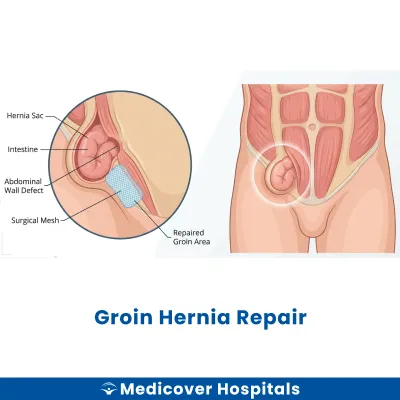
Groin hernia repair is a surgical procedure to fix a hernia in the groin area. A hernia occurs when an internal organ, like the intestine, pushes through a weak spot in the abdominal wall. In the groin, this is often referred to as an inguinal hernia. The surgery involves repositioning the protruding tissue and reinforcing the weakened area.
This surgery is necessary to relieve pain and prevent complications. Conditions like heavy lifting, chronic coughing, or obesity can lead to a groin hernia. If untreated, it can cause severe pain or strangulation of the intestine. Modern surgical approaches include open surgery and laparoscopic repair. These methods aim to reduce recovery time and minimise discomfort. Always consult a healthcare professional for advice.
Groin Hernia Repair Doctors Near You
Discover skilled general surgeons for groin hernia repair at Medicover Hospitals across India. Choose your city and book a consultation to address your health needs with expert care.
Why Choose Medicover Hospitals for Groin Hernia Repair?
Advanced General Surgery OT: Equipped with laparoscopic towers, 4K camera systems, and harmonic scalpels for precise groin hernia repair.
Get a second opinion from trusted experts and makeconfident, informed decisions.
 Get Second Opinion
Complete Guide To Groin Hernia Repair
Everything you need to know about the procedure, preparation, and recovery
Groin Hernia Repair Surgery Indications
Doctors recommend groin hernia repair surgery when the hernia causes discomfort or complications. It is often advised when symptoms interfere with daily activities or when there is a risk of complications.
Persistent Pain or Discomfort
Patients often experience a dull ache or sharp pain in the groin area, especially when lifting or bending. On examination, a bulge may be visible or palpable. If pain persists despite rest and medication, surgery may be necessary.
Increasing Hernia Size
A noticeable increase in the size of the hernia over time can be alarming. Doctors may observe this through physical exams or imaging. When the hernia grows, the risk of complications rises, prompting surgical intervention.
Obstruction Symptoms
Symptoms like nausea, vomiting, or constipation may indicate bowel obstruction. Imaging or scans can reveal trapped intestinal loops. When conservative treatments fail to relieve symptoms, surgery is recommended.
Strangulation Risk
Severe pain, redness, or tenderness in the groin may suggest strangulation. This is confirmed through urgent imaging. Immediate surgery is crucial to prevent tissue death.
Recurrent Hernia
Some patients experience hernia recurrence after previous repairs. Examination and imaging confirm the recurrence. Surgery is often the solution when non-surgical methods are ineffective.
How to Prepare for Groin Hernia Repair?
Proper preparation for groin hernia repair can help ensure a smooth surgery and recovery. It reduces the risk of complications and aids in faster healing.
- Medication Review: Stop NSAIDs, anticoagulants, and herbal supplements as advised by your doctor.
- Fasting: Do not eat or drink anything for at least 6-8 hours before the surgery, as general anaesthesia is typically used.
- Clothing: Wear loose, comfortable clothing on the day of the surgery for ease and comfort.
- Transportation: Arrange for someone to drive you home post-surgery, as you may feel drowsy from anaesthesia.
- Medication List: Bring a list of all medications, including dosages, to share with your medical team.
- Hygiene: Bathe or shower the night before or the morning of the surgery to reduce infection risk.
- Smoking and Alcohol: Avoid smoking and alcohol for at least 24 hours before the procedure.
- Pre-Surgery Instructions: Follow any additional instructions provided by your surgeon or healthcare team.
Groin Hernia Repair Surgery (Step-by-Step)
Groin hernia repair is performed by general surgeons, typically lasting 1 to 2 hours. The procedure can be done under general, regional, or local anaesthesia, depending on the patient's condition and the surgeon's preference.
- Preparation: The patient is positioned on the operating table. Anaesthesia is administered to ensure comfort and pain-free surgery. The surgical area is cleaned and sterilised.
- Incision: A small incision, usually 1-2 cm, is made in the groin area. This allows access to the hernia site.
- Hernia Access: The surgeon uses a laparoscope, a thin tube with a camera, to view the hernia. Small surgical instruments, like a trocar and bipolar cautery, are inserted through the incision.
- Hernia Repair: The protruding tissue or organ is gently pushed back into place. A mesh may be placed over the weak spot to strengthen the abdominal wall and prevent recurrence.
- Closure: The incision is closed with sutures or surgical glue. The area is cleaned and dressed with a sterile bandage.
- Recovery Room: The patient is moved to a recovery area. Vital signs are monitored as the anaesthesia wears off. Pain management and post-operative care instructions are provided.
Who Performs Groin Hernia Repair Surgery?
Groin hernia repair is performed by experienced surgeons specialising in hernia and abdominal surgeries. They are skilled in using advanced surgical instruments and techniques to ensure effective repair and recovery. Please contact the hospital for current details as insurance panels may change.
Recovery After Groin Hernia Repair Surgery
Recovery from groin hernia repair surgery involves rest and gradual return to normal activities. It's important to follow your doctor's advice to ensure a smooth recovery.
Day 1-3:
- Rest is crucial. Avoid strenuous activities.
- Stick to a light diet. Include curd, dal-rice, and soups.
- Manage pain with prescribed medications.
Day 4-7:
- Slowly increase light activities like walking.
- Continue with a soft diet. Try khichdi and moong dal.
- Keep the surgical area clean and dry.
Day 8-14:
- Gradually resume daily activities. Avoid heavy lifting.
- Return to work or school if you feel comfortable.
- Monitor for any unusual symptoms.
Phase 3 (Week 3-4):
- Engage in light exercises as advised by your doctor.
- Continue a balanced diet to aid healing.
- Follow up with your doctor for a post-surgery check-up.
When to Seek Urgent Help
Contact the hospital if you experience:
- Severe pain not relieved by medication
- Fever or chills
- Redness or swelling around the incision
- Difficulty urinating
- Nausea or vomiting
Benefits of Groin Hernia Repair Surgery
Groin hernia repair surgery can provide significant relief and improve quality of life. Here are some benefits:
- Pain Relief: Alleviates discomfort and pain caused by the hernia.
- Improved Mobility: Restores the ability to move freely without discomfort.
- Prevention of Complications: Reduces the risk of hernia-related complications like strangulation.
- Quick Recovery: Many patients return to normal activities within a few weeks.
Risks and Complications of Groin Hernia Repair Surgery
While groin hernia repair is generally safe, it carries some risks and potential complications.
- Pain and swelling at the surgery site.
- Bruising or discoloration around the groin area.
- Infection at the incision site.
- Recurrence of the hernia.
- Nerve damage leading to numbness or tingling.
- Difficulty urinating post-surgery.
Cost of Groin Hernia Repair Surgery
The cost of Groin Hernia Repair Surgery at Medicover Hospitals ranges from Rs. 90,000 to Rs. 3,90,000. The price varies depending on the ward category chosen, such as day care, general, private, or deluxe options. We offer transparent pricing to ensure clarity for our patients.
Insurance and TPA support is available, with acceptance of CGHS, ESI, and major TPAs. A cashless facility is also provided for convenience. Please contact the hospital for the latest insurance panel details as these may change periodically.
Frequently Asked Questions
1. How much does Groin Hernia Repair surgery cost at Medicover Hospitals?
The cost for Groin Hernia Repair surgery at Medicover Hospitals ranges from Rs. 90,000 to Rs. 3,90,
2. Prices vary based on room type and care level. 2. Is Groin Hernia Repair surgery covered under health insurance at Medicover?
Groin Hernia Repair surgery may be covered by CGHS, ESI, and major TPAs, with cashless options available. Please contact the hospital for current panel details.
3. Will I have a bulge after Groin Hernia Repair?
Post-surgery, the bulge from the hernia should disappear. Any persistent bulge may require follow-up with your doctor.
4. Can I lift weights after Groin Hernia Repair?
Avoid lifting heavy weights for at least 6 weeks post-surgery. Gradually resume activities based on your doctor's advice.
5. Will I feel pain when coughing after surgery?
You may experience discomfort when coughing initially. Supporting the area with a pillow can help reduce pain.
6. Can I eat spicy food after Groin Hernia Repair?
Initially, consume soft foods like dal-rice and khichdi. Gradually reintroduce spicy foods as tolerated after a few weeks.
7. Is there a risk of hernia recurrence?
There is a small risk of recurrence after Groin Hernia Repair. Following post-operative care instructions can help minimise this risk.


