 Call
Call Patient Reports
Full Thickness Buccal Mucosa Resection and Reconstruction Surgery by Expert Oncologists
Full Thickness Buccal Mucosa Resection and Reconstruction at Medicover Hospitals is performed using an open surgical approach. Our team of oncologists, holding qualifications such as MS, DNB, and MCh, ensures precise treatment. This approach often results in reduced blood loss during the procedure.
Expert Surgeons
Yearly Surgeries
Patient Satisfaction
What is Full Thickness Buccal Mucosa Resection and Reconstruction?
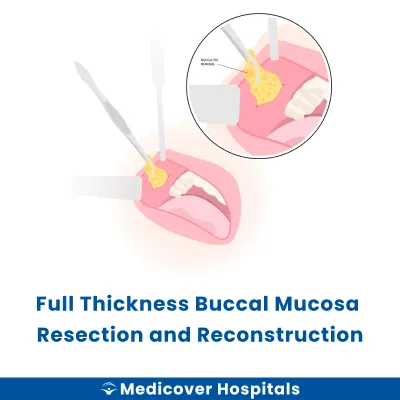
Full Thickness Buccal Mucosa Resection and Reconstruction is a surgical procedure involving the removal and repair of the buccal mucosa (inner lining of the cheeks). This surgery addresses issues affecting the full thickness of this tissue. The procedure involves excising the affected area and reconstructing it to restore function and appearance.
This surgery is necessary for conditions like oral cancer, severe trauma, or chronic infections affecting the buccal mucosa. If untreated, these conditions can lead to complications such as difficulty in chewing, speaking, or infection spread. Modern surgical approaches include microvascular free flap reconstruction and local flap techniques. These methods help in effectively restoring the affected area.
Full Thickness Buccal Mucosa Resection and Reconstruction Doctors Near You
Find experienced oncologists for full thickness buccal mucosa resection and reconstruction at Medicover Hospitals across India. Choose your city and book a consultation for expert care today.
Why Choose Medicover Hospitals for Full Thickness Buccal Mucosa Resection and Reconstruction?
Get a second opinion from trusted experts and makeconfident, informed decisions.
 Get Second Opinion
Complete Guide To Full Thickness Buccal Mucosa Resection And Reconstruction
Everything you need to know about the procedure, preparation, and recovery
Full Thickness Buccal Mucosa Resection and Reconstruction Surgery Indications
Doctors recommend full thickness buccal mucosa resection and reconstruction when treating certain oral conditions. This procedure is often necessary when conservative treatments are ineffective, and the patient's quality of life is affected.
Oral Cancer
Patients may experience persistent ulcers, pain, or a lump in the cheek. Doctors may find suspicious lesions or masses during examination. Biopsy results confirming malignancy often lead to recommending surgery.
Severe Oral Submucous Fibrosis
Symptoms include difficulty opening the mouth, burning sensation, and stiffness. Examination reveals fibrous bands and restricted mouth opening. When these symptoms significantly impair daily activities, surgery is considered.
Recurrent Oral Leukoplakia
Patients notice white patches in the mouth that do not heal. Doctors identify these lesions during oral exams. If patches recur or show dysplastic changes, surgical intervention is advised.
Traumatic Buccal Mucosa Injury
Patients may report pain and bleeding from cheek injuries. Examination shows deep lacerations or tissue loss. When healing is inadequate or function is compromised, surgery becomes necessary.
Chronic Buccal Mucosa Infection
Symptoms include persistent pain, swelling, and discharge. Tests may reveal resistant infections or abscesses. Surgery is considered when infections do not respond to antibiotics.
How to Prepare for Full-Thickness Buccal Mucosa Resection and Reconstruction?
Proper preparation is crucial for a smooth Full Thickness Buccal Mucosa Resection and Reconstruction. It helps minimise complications and ensures a successful recovery.
- Medication Review: Stop NSAIDs, anticoagulants, and herbal supplements 1 week prior. Consult your doctor.
- Fasting Guidelines: Fast for at least 8 hours before the procedure. This is essential for general anaesthesia.
- Oral Hygiene: Maintain good oral hygiene. Use an antiseptic mouthwash as advised by your surgeon.
- Pre-Surgery Tests: Complete all recommended blood tests and imaging studies. Bring results on the day of surgery.
- Clothing: Wear loose, comfortable clothing on the day of surgery. It helps in easy movement post-procedure.
- Transportation: Arrange for someone to drive you home after the surgery. Anaesthesia effects may linger.
- Medication List: Bring a list of all medications with dosages. Share it with your healthcare team.
- Smoking and Alcohol: Avoid smoking and alcohol for at least 48 hours before surgery. It aids in better healing.
Full-Thickness Buccal Mucosa Resection and Reconstruction Surgery (Step-by-Step)
This procedure is performed by experienced specialists from the Oncology department. The surgery usually takes 2-4 hours and is carried out under general anaesthesia to ensure patient comfort throughout the procedure.
- Preparation: The patient is positioned comfortably. Anaesthesia is administered to ensure they are asleep and pain-free.
- Incision: A 1-2 cm incision is made inside the mouth. This allows access to the buccal mucosa.
- Resection: The affected mucosa is carefully removed using surgical instruments like a harmonic scalpel or bipolar cautery. This ensures precision and minimizes bleeding.
- Reconstruction: Tissue from another part of the mouth or body is grafted to replace the removed mucosa. The graft is secured with sutures.
- Closure: The incision is closed with dissolvable stitches. This helps in healing and reduces the need for suture removal later.
- Recovery: The patient is moved to a recovery area. They are monitored as they wake up from anaesthesia.
- Post-Operative Care: Instructions are given for oral hygiene and diet. Follow-up appointments are scheduled to monitor healing.
Who Performs Full Thickness Buccal Mucosa Resection and Reconstruction Surgery?
This surgery is performed by surgical oncologists for cancer. They specialise in removing cancerous tissues and reconstructing the affected areas. Their expertise ensures the procedure is done with precision.
Recovery After Full Thickness Buccal Mucosa Resection and Reconstruction Surgery
Recovery from Full Thickness Buccal Mucosa Resection and Reconstruction Surgery involves careful management of diet and activities. Patients can expect some swelling and discomfort initially, which gradually decreases. Following your surgeon's advice is crucial for a smooth recovery.
Day 1-3:
- Rest is essential. Avoid strenuous activities.
- Swelling and mild pain are common. Use prescribed pain relief.
- Stick to a soft diet. Opt for foods like curd, dal-rice, and soups.
Day 4-7:
- Swelling should start to reduce. Continue with soft foods like khichdi and moong dal.
- Maintain oral hygiene as advised by your doctor.
- Avoid smoking and alcohol as they can hinder healing.
Week 2:
- Gradually reintroduce regular foods, avoiding spicy and hard items.
- Light activities can be resumed. Avoid heavy lifting.
- Most patients can return to work or school, depending on comfort.
Phase 3 (Week 3-4):
- Continue to monitor for any unusual symptoms.
- Regular follow-up appointments are important to track healing.
- Resume normal activities, but listen to your body and rest as needed.
When to Seek Urgent Help:
- Severe pain not relieved by medication.
- Excessive bleeding or swelling.
- Fever or signs of infection like pus or foul smell.
- Difficulty breathing or swallowing.
Benefits of Full Thickness Buccal Mucosa Resection and Reconstruction Surgery
This surgery is performed to address various oral conditions and improve quality of life.
- Improved Oral Function: Helps restore chewing and speaking abilities.
- Enhanced Aesthetic Appearance: Aims to improve the facial structure and appearance.
- Reduced Pain: Alleviates discomfort caused by oral lesions or conditions.
- Prevention of Further Damage: Removes diseased tissue to prevent progression.
Risks and Complications of Full Thickness Buccal Mucosa Resection and Reconstruction Surgery
While generally safe, this surgery carries certain risks and potential complications.
- Common: Swelling and bruising in the surgical area.
- Common: Temporary numbness or altered sensation in the mouth.
- Rare: Infection at the surgical site.
- Rare: Bleeding that may require additional intervention.
- Rare: Scarring that could affect oral function.
- Rare: Difficulty in wound healing.
Cost of Full Thickness Buccal Mucosa Resection and Reconstruction Surgery
The cost for Full Thickness Buccal Mucosa Resection and Reconstruction Surgery at Medicover Hospitals ranges from Rs.153,000 to Rs.446,000. This variation depends on the type of ward selected, such as general, private, or deluxe.
We offer transparent pricing to ensure clarity for our patients. Insurance and TPA support, including CGHS, ESI, and major TPAs, is available, along with a cashless facility. Please contact the hospital for the latest insurance panel details as these may change periodically.
Frequently Asked Questions
1. How much does Full Thickness Buccal Mucosa Resection and Reconstruction surgery cost at Medicover Hospitals?
The cost ranges from Rs. 153,000 to Rs. 446,000 across Medicover Hospitals, depending on the facility and care level.
2. Is Full Thickness Buccal Mucosa Resection and Reconstruction surgery covered under health insurance at Medicover?
Yes, it may be covered by CGHS, ESI, and major TPAs for cashless treatment. Please contact the hospital for current panel details.
3. Will I have difficulty speaking after buccal mucosa surgery?
Temporary speech difficulties may occur due to swelling and healing. Speech usually improves as recovery progresses over a few weeks.
4. Can I eat spicy food after buccal mucosa surgery?
Avoid spicy foods like chilli and pepper for at least two weeks. Opt for soft foods like dal-rice and khichdi to aid healing.
5. Will my mouth feel dry after buccal mucosa surgery?
Dry mouth is a common temporary issue post-surgery. Staying hydrated and using prescribed oral rinses can help alleviate this sensation.
6. Is there a risk of infection after buccal mucosa surgery?
Yes, there's a risk of infection, but it's manageable with antibiotics. Follow your doctor's instructions to minimise this risk.
7. Will I need follow-up appointments after buccal mucosa surgery?
Yes, regular follow-ups are necessary to monitor healing and address any complications. Your doctor will schedule these appointments accordingly.
8. What is the recovery time for buccal mucosa cancer surgery?
Recovery usually takes about 3 to 6 weeks for initial healing, while full recovery (including speech and swallowing improvement) may take a few months, especially if reconstruction or additional therapy is involved.
9. What is the success rate of buccal mucosa urethroplasty?
Buccal mucosa urethroplasty has a high success rate (around 85% to 95%), making it one of the most effective procedures for urethral stricture repair.
10. What is reconstruction surgery for mouth cancer?
Reconstruction surgery for mouth cancer involves restoring the shape and function of the mouth after tumor removal. This may include using tissue grafts or flaps (often from the forearm, thigh, or buccal mucosa) to rebuild structures and improve speech, swallowing, and appearance.


