 Call
Call Patient Reports
Best Frenotomy Procedure Hospital with Experienced ENT Specialists
Frenotomy at Medicover Hospitals is performed using the open surgical approach by our skilled ENT surgeons with qualifications like MS and DNB. This procedure helps in addressing tongue-tie issues effectively. Patients can benefit from a shorter hospital stay and minimal discomfort post-surgery.
Expert Surgeons
Yearly Surgeries
Patient Satisfaction
What is Frenotomy?
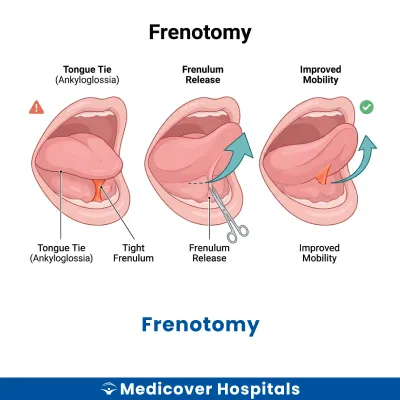
Frenotomy is a surgical procedure involving the frenulum, a small fold of tissue. This procedure is often performed on the lingual frenulum (the tissue connecting the tongue to the floor of the mouth). It involves making a small incision to release tension or restriction. This helps improve movement and function.
Frenotomy is needed when a person has ankyloglossia (tongue-tie). This condition restricts tongue movement, affecting speech, eating, or breastfeeding. If left untreated, it can lead to speech difficulties and oral health issues. Modern surgical approaches for frenotomy include laser surgery and electrocautery. These methods offer precision and minimal discomfort. They are commonly used for effective results.
Frenotomy Doctors Near You
Discover ENT specialists for frenotomy at Medicover Hospitals across India. Choose your city and book a consultation to address your needs with experienced professionals. Your path to better health starts here.
Why Choose Medicover Hospitals for Frenotomy?
Get a second opinion from trusted experts and makeconfident, informed decisions.
 Get Second Opinion
Complete Guide To Frenotomy
Everything you need to know about the procedure, preparation, and recovery
Frenotomy procedure Indications
Doctors recommend a frenotomy when the lingual frenulum, a small fold of tissue under the tongue, restricts tongue movement. This procedure is often suggested when conservative measures do not alleviate symptoms.
Tongue-Tie (Ankyloglossia)
Patients may experience difficulty in breastfeeding, speech issues, or restricted tongue movement. On examination, the frenulum appears short or tight. When exercises or speech therapy do not improve the condition, a frenotomy may be advised.
Feeding Difficulties in Infants
Infants may struggle to latch properly during breastfeeding, leading to poor weight gain. Doctors may notice a tight frenulum during an oral examination. If lactation support and positioning techniques fail, frenotomy might be necessary.
Speech Impediments
Children or adults may have difficulty articulating certain sounds. Speech therapy might reveal limited tongue mobility. If speech difficulties persist despite therapy, a frenotomy can be considered.
Oral Hygiene Challenges
Patients may find it hard to clean their mouth properly, leading to dental issues. Examination may show a restricted tongue that cannot reach certain areas. If oral hygiene remains poor despite efforts, a frenotomy may be recommended.
Chronic Mouth Ulcers
Some individuals experience repeated ulcers due to tongue friction. Doctors may observe a tight frenulum causing tongue irritation. When topical treatments do not resolve the issue, frenotomy could be the solution.
How to Prepare for Frenotomy?
Proper preparation for a frenotomy ensures a smooth procedure and recovery. It helps minimise risks and enhances comfort.
- Medication Review: Stop NSAIDs, anticoagulants, and herbal supplements a week before surgery.
- Fasting Guidelines: Follow a fasting period of 6 hours before the procedure if general anaesthesia is used.
- Oral Hygiene: Maintain good oral hygiene to reduce the risk of infection.
- Clothing: Wear loose, comfortable clothing on the day of the procedure.
- Transportation: Arrange for someone to drive you home after the procedure.
- Medication List: Bring a list of all medications with dosages for the medical team.
- Pre-Procedure Instructions: Follow any specific instructions given by your healthcare provider.
- Hydration: Stay well-hydrated the day before the procedure unless advised otherwise.
Frenotomy procedure (Step-by-Step)
Overview: Frenotomy is performed by an ENT specialist. The procedure typically lasts about 15 to 30 minutes. It is usually done under local anaesthesia.
- Preparation: The patient is positioned comfortably. Local anaesthesia is applied to numb the area under the tongue.
- Examination: The specialist examines the frenulum to assess its thickness and position. This helps plan the incision.
- Incision: A small incision, usually 1-2 cm, is made on the frenulum using sterile surgical scissors or a harmonic scalpel. The patient may feel slight pressure but no pain.
- Release: The frenulum is carefully released. This allows for better movement of the tongue. The patient might feel a sense of relief as the tension is reduced.
- Bleeding Control: Any minor bleeding is controlled using a bipolar cautery. The patient may feel a warm sensation during this step.
- Closure: In most cases, the incision heals naturally without stitches. The patient is advised on oral hygiene to promote healing.
- Recovery: The patient is monitored briefly for any immediate reactions. They are usually able to leave the hospital shortly after the procedure.
Who Performs Frenotomy procedure?
An ENT specialist, also known as an otolaryngologist, performs the frenotomy. They are trained to handle conditions related to the ear, nose, and throat. Their expertise ensures the procedure is done safely and effectively.
Recovery After Frenotomy Procedure
Recovery from a frenotomy is generally quick, especially in children. Most patients experience minimal discomfort and can resume normal activities shortly. However, following specific guidelines can aid in a smoother recovery.
Day 1-2:
- Expect some swelling and mild discomfort. Pain relief medication may be prescribed.
- Stick to soft foods like curd, dal-rice, and khichdi to avoid irritation.
- Avoid spicy or acidic foods that could cause discomfort.
- Rest is crucial. Limit physical activities and avoid strenuous exercise.
Day 3-5:
- Swelling should start to decrease. Continue with soft foods like moong dal and soups.
- Gradually introduce regular foods as comfort allows, but avoid hard or crunchy items.
- Children can usually return to school by Day 3, but monitor for any discomfort.
Day 6-7:
- Most discomfort should subside. Normal diet can be resumed if comfortable.
- Resume light physical activities. Avoid contact sports until fully healed.
- Adults can typically return to work by the end of the week, depending on their comfort level.
When to Seek Urgent Help
- Excessive bleeding that doesn't stop with gentle pressure.
- Signs of infection, such as fever or pus at the site.
- Severe pain not relieved by prescribed medication.
- Difficulty in swallowing or breathing.
If any of these symptoms occur, contact your healthcare provider immediately.
Benefits of Frenotomy procedure
Frenotomy is a simple procedure used to treat tongue-tie, which can improve feeding and speech issues.
- Improved Feeding: Helps infants latch better during breastfeeding.
- Enhanced Speech Development: May prevent speech difficulties in older children.
- Quick Recovery: Most patients recover swiftly with minimal discomfort.
- Minimally Invasive: The procedure is quick and often requires no anaesthesia.
Risks and Complications of Frenotomy procedure
While frenotomy is generally safe, it is important to be aware of potential risks and complications.
- Common: Mild bleeding at the site of the incision.
- Common: Temporary fussiness or discomfort in infants.
- Rare: Infection at the incision site.
- Rare: Damage to the tongue or surrounding tissues.
- Rare: Reattachment of the frenulum requiring further intervention.
Cost of Frenotomy procedure
The cost of a Frenotomy procedure at Medicover Hospitals ranges from Rs. 25,000 to Rs. 70,000. Prices vary based on the ward category chosen, such as day care, general, or private rooms. We offer transparent pricing to ensure clarity for our patients.
Insurance and TPA support are available, with CGHS, ESI, and major TPAs accepted. A cashless facility is also offered for convenience. Please contact the hospital for the latest insurance panel details as these may change periodically.
Frequently Asked Questions
1. How much does Frenotomy procedure cost at Medicover Hospitals?
The Frenotomy procedure costs ranges from Rs. 25,000 to Rs. 70,
2. at Medicover Hospitals, depending on the type of accommodation chosen. 2. Is Frenotomy procedure covered under health insurance at Medicover?
Frenotomy may be covered under CGHS, ESI, and major TPAs with cashless options. Please contact the hospital for current panel details.
3. Can my baby breastfeed immediately after Frenotomy?
Yes, most babies can breastfeed immediately after Frenotomy. Consult your doctor for specific advice tailored to your baby's needs.
4. Will my child's speech improve after Frenotomy?
Frenotomy can help improve speech in children with tongue-tie. However, speech therapy may also be required for optimal results.
5. Is there a risk of infection after Frenotomy?
Infection risk after Frenotomy is low but possible. Maintain oral hygiene and follow your doctor's post-procedure care instructions to minimise risk.
6. Can my child eat solid food after Frenotomy?
Children can usually resume eating soft foods like curd and dal-rice shortly after Frenotomy. Consult your doctor for specific dietary guidelines.
7. Will my child experience pain after Frenotomy?
Some discomfort is normal after Frenotomy, but it typically subsides quickly. Pain relief can be managed with prescribed medication if necessary.


