 Call
Call Patient Reports
Advanced Free Flap Microvascular Reconstruction Surgery Hospital
Free Flap Microvascular Reconstruction at Medicover Hospitals involves open surgical techniques performed by skilled Plastic surgeons with qualifications such as MS, DNB, and MCh. This approach is essential for reconstructing complex defects post-cancer surgery. Patients benefit from shorter hospital stays and improved functional outcomes.
Expert Surgeons
Yearly Surgeries
Patient Satisfaction
What is Free Flap Microvascular Reconstruction?
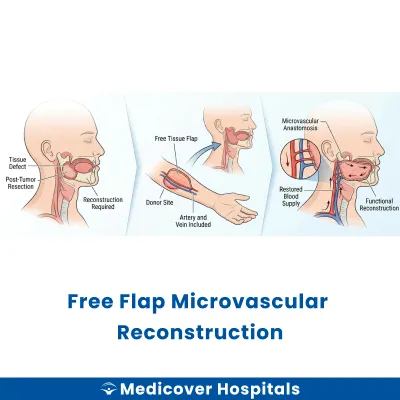
Free Flap Microvascular Reconstruction is a surgical procedure used to repair or reconstruct tissues. It involves transferring a section of tissue, along with its blood vessels, from one part of the body to another. This technique is often used for areas like the head, neck, breast, or limbs. The term "free flap" refers to the tissue being completely detached and then reattached at the recipient site using microvascular surgery (tiny blood vessel surgery).
This surgery is essential for patients with significant tissue loss due to trauma, cancer, or congenital defects. Without it, patients may face functional impairments or aesthetic concerns. Conditions like head and neck cancers often necessitate this procedure. Modern surgical approaches include perforator flaps and muscle-sparing techniques. These methods aim to improve outcomes and reduce recovery time.
Free Flap Microvascular Reconstruction Doctors Near You
Discover expert Plastic surgeons for free flap microvascular reconstruction at Medicover Hospitals across India. Choose your city and book a consultation to explore your treatment options today.
Why Choose Medicover Hospitals for Free Flap Microvascular Reconstruction?
Get a second opinion from trusted experts and makeconfident, informed decisions.
 Get Second Opinion
Complete Guide To Free Flap Microvascular Reconstruction
Everything you need to know about the procedure, preparation, and recovery
Free Flap Microvascular Reconstruction Surgery Indications
Doctors recommend Free Flap Microvascular Reconstruction when significant tissue loss or damage occurs. This procedure helps restore form and function, especially after trauma or cancer surgery.
Head and Neck Cancer
Patients may experience difficulty swallowing or speaking due to tumour removal. Imaging might show extensive tissue loss. When reconstructive options like grafts fail, free flap surgery is considered.
Breast Reconstruction Post-Mastectomy
After mastectomy, patients may feel discomfort or dissatisfaction with their appearance. Scans reveal insufficient tissue for traditional reconstruction. Free flap surgery offers a solution when implants are not viable.
Traumatic Injuries
Severe accidents can lead to exposed bones or nerves, causing pain and functional impairment. X-rays or MRIs show extensive damage. When wounds do not heal with conservative care, surgery is necessary.
Chronic Non-Healing Wounds
Patients with ulcers or sores might suffer from persistent pain and infection. Lab tests indicate poor blood supply. When standard wound care fails, free flap reconstruction is advised.
Osteoradionecrosis
Following radiation therapy, patients may experience jaw pain or fractures. Imaging shows bone death. When medication and hyperbaric oxygen therapy do not work, surgery is the next step.
How to Prepare for Free Flap Microvascular Reconstruction?
Proper preparation is crucial for a successful free flap microvascular reconstruction. It helps minimise complications and ensures a smoother recovery.
- Medication Review: Stop NSAIDs, anticoagulants, and herbal supplements at least 7 days before surgery. Consult your doctor for guidance.
- Fasting Guidelines: Do not eat or drink anything for at least 8 hours before the procedure to ensure safety during anaesthesia.
- Pre-Surgery Tests: Complete all required blood tests and imaging studies as advised by your healthcare provider.
- Smoking Cessation: Quit smoking at least 4 weeks prior to surgery to improve healing and reduce complications.
- Clothing and Comfort: Wear loose, comfortable clothing on the day of surgery for ease of movement post-procedure.
- Transportation: Arrange for someone to drive you home after the surgery, as you will not be able to drive yourself.
- Medication List: Bring a list of all medications you are currently taking, including dosages, for the medical team's reference.
- Hydration: Stay well-hydrated in the days leading up to the surgery unless advised otherwise by your doctor.
Free Flap Microvascular Reconstruction Surgery (Step-by-Step)
This surgery is performed by reconstructive surgeons. It typically lasts 6-12 hours and is conducted under general anaesthesia.
- Preparation: The patient is given general anaesthesia to ensure they are asleep and pain-free. The surgical area is cleaned and sterilised.
- Donor Site Incision: A 1-2 cm incision is made at the donor site, often the thigh or abdomen. Instruments like a scalpel and bipolar cautery are used to carefully harvest the tissue flap.
- Recipient Site Preparation: The recipient site, where the flap will be attached, is prepared. Surgeons use a scalpel to make precise incisions and remove any damaged tissue.
- Flap Transfer: The harvested flap is carefully transferred to the recipient site. Surgeons use microvascular instruments to connect blood vessels, ensuring proper blood flow.
- Microvascular Anastomosis: Using a microscope and fine sutures, the surgeon connects tiny blood vessels. This step is crucial for the flap's survival.
- Closure: Both the donor and recipient sites are closed with sutures. The surgeon ensures there is no tension on the flap.
- Recovery: The patient is monitored in a recovery room. They are kept comfortable and observed for any complications.
Who Performs Free Flap Microvascular Reconstruction Surgery?
This surgery is performed by plastic and reconstructive surgeons. They have specialised training in microvascular techniques to ensure successful outcomes. Please contact the hospital for current details as insurance panels may change.
Recovery After Free Flap Microvascular Reconstruction Surgery
Recovery from Free Flap Microvascular Reconstruction Surgery involves several stages. Patients should expect a gradual return to normal activities, with close monitoring of the surgical site for any complications.
Day 1-3:
- Hospital stay is common for monitoring. Expect some swelling and discomfort.
- Diet starts with liquids and progresses to soft foods. Opt for soups and dal-rice.
- Minimal movement is advised. Rest is crucial.
Day 4-7:
- Swelling should reduce. Pain management continues with prescribed medications.
- Introduce soft, easy-to-digest foods like khichdi and moong dal.
- Short walks around the room are encouraged to improve circulation.
Day 8-14:
- Stitches or staples may be removed if healing is adequate.
- Diet can include curd and other soft foods, avoiding spicy or hard-to-digest items.
- Gradually increase activity but avoid strenuous tasks. Light household tasks may resume.
Phase 3 (Week 3-6):
- Most patients can return to work or school, depending on their job's physical demands.
- Continue with a balanced diet, incorporating more variety as tolerated.
- Follow-up appointments are crucial to monitor healing and flap viability.
When to Seek Urgent Help
- Sudden increase in pain or swelling at the surgical site.
- Fever or chills indicating possible infection.
- Discoloration or unusual changes in the flap area.
- Any signs of bleeding or fluid discharge from the wound.
Benefits of Free Flap Microvascular Reconstruction Surgery
Free flap microvascular reconstruction is a surgical technique used to repair complex defects by transferring tissue from one part of the body to another.
- Restoration of Function: Helps restore function to affected areas, improving quality of life.
- Improved Aesthetics: Provides a more natural appearance by using the patient's own tissue.
- Versatility: Can be used for various defects, including those in the head, neck, and limbs.
- Durability: Offers long-lasting results due to the use of living tissue.
Risks and Complications of Free Flap Microvascular Reconstruction Surgery
While this surgery can be beneficial, it also carries certain risks. Understanding these can help in making an informed decision.
- Common: Infection at the donor or recipient site.
- Common: Blood clots that may affect the success of the flap.
- Rare: Total or partial flap failure due to inadequate blood supply.
- Rare: Nerve damage leading to numbness or weakness.
- Rare: Prolonged healing time, especially in patients with underlying health conditions.
Cost of Free Flap Microvascular Reconstruction Surgery
The cost of Free Flap Microvascular Reconstruction Surgery at Medicover Hospitals ranges from Rs. 117,500 to Rs. 302,000. The price varies based on the ward category chosen, such as general, private, or deluxe options. Medicover Hospitals offer transparent pricing, and support for insurance and TPA services, including CGHS, ESI, and major TPAs. A cashless facility is also available for added convenience. Please contact the hospital for the latest insurance panel details as these may change periodically.
Frequently Asked Questions
1. How much does Free Flap Microvascular Reconstruction surgery cost at Medicover Hospitals?
The cost of Free Flap Microvascular Reconstruction surgery at Medicover Hospitals ranges from Rs. 117500 to Rs. 302000, depending on the type of room and care.
2. Is Free Flap Microvascular Reconstruction surgery covered under health insurance at Medicover?
Yes, it is often covered by CGHS, ESI, and major TPAs with cashless options. Please contact the hospital for current panel details.
3. Will I have difficulty speaking after surgery?
Some patients may experience temporary speech difficulties after Free Flap Microvascular Reconstruction surgery. Speech therapy can help improve communication over time.
4. Can I eat spicy food after surgery?
It's best to avoid spicy foods like chilli and masala for a few weeks post-surgery. Opt for soft foods like curd, dal-rice, and khichdi instead.
5. Will I need physical therapy after surgery?
Yes, physical therapy is often recommended to aid recovery and restore function after Free Flap Microvascular Reconstruction surgery.
6. Can smoking affect my recovery?
Smoking can significantly hinder healing and increase complications after Free Flap Microvascular Reconstruction surgery. Quitting smoking is strongly advised for optimal recovery.
7. How long before I can resume normal activities?
Most patients can gradually resume normal activities 4-6 weeks after surgery, depending on recovery progress and doctor's advice.
8. How long is recovery after flap surgery?
Recovery usually takes 2–4 weeks for initial healing, but full recovery may take a few months. It depends on the size and location of the flap.
9. Is flap surgery a major surgery?
Yes, flap surgery is considered a major surgery because it involves transferring tissue with its blood supply. It requires careful monitoring and hospital stay.
10. What is the recovery time for free flap surgery?
Recovery from Free Flap Surgery typically takes 4–6 weeks or longer. Complete healing and return to normal activities may take a few months.


