 Call
Call Patient Reports
Best Follicular Unit Extraction Surgery Hospital with Advanced Care
Follicular Unit Extraction (FUE) at Medicover Hospitals is performed using advanced techniques by plastic surgeons with qualifications like MS, MCh, and DNB. This minimally invasive approach ensures smaller incisions and reduced recovery time, making it a preferred choice for hair restoration across India.
Expert Surgeons
Yearly Surgeries
Patient Satisfaction
What is Follicular Unit Extraction?
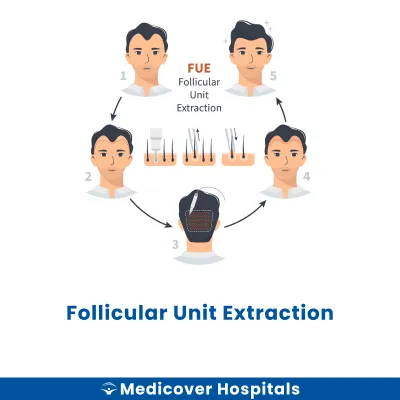
Follicular Unit Extraction (FUE) is a hair transplant technique. It involves extracting individual hair follicles from the donor area, usually the back of the scalp. These follicles are then implanted into the balding or thinning areas. The procedure focuses on the scalp, aiming to restore hair density and natural appearance.
FUE is often needed for androgenetic alopecia (pattern baldness) or hair loss due to injury. If left untreated, hair loss can lead to permanent baldness or thinning. Modern surgical approaches for FUE include robotic-assisted extraction and advanced microsurgical tools. These methods enhance precision and reduce recovery time, offering effective solutions for hair restoration.
Follicular Unit Extraction Doctors Near You
Discover skilled plastic-surgeons for Follicular Unit Extraction at Medicover Hospitals across India. Choose your city and book a consultation to explore effective hair restoration options.
Why Choose Medicover Hospitals for Follicular Unit Extraction?
Get a second opinion from trusted experts and makeconfident, informed decisions.
 Get Second Opinion
Complete Guide To Follicular Unit Extraction
Everything you need to know about the procedure, preparation, and recovery
Follicular Unit Extraction Surgery Indications
Follicular Unit Extraction (FUE) is recommended by plastic surgeons for individuals experiencing hair loss where other treatments have not been effective. It is often considered when patients seek a minimally invasive solution for hair restoration.
Androgenetic Alopecia
Patients often notice thinning hair or a receding hairline. Examination reveals a pattern of hair loss typical of androgenetic alopecia. When medications like minoxidil or finasteride do not yield satisfactory results, FUE may be suggested.
Traction Alopecia
Individuals experience hair thinning or bald patches due to constant pulling from hairstyles. Doctors observe hair loss patterns consistent with traction alopecia. If changing hairstyles does not improve hair density, FUE might be recommended.
Scarring Alopecia
Patients report hair loss in areas with previous injury or surgery scars. Examination shows hair loss within scarred regions. When topical treatments fail to promote hair regrowth, FUE can help restore hair in these areas.
Patchy Hair Loss
Patients present with uneven hair loss or bald patches. Clinical evaluation confirms localized hair loss without systemic disease. If topical or oral treatments are ineffective, FUE is considered to achieve uniform hair coverage.
Cosmetic Improvement
Some individuals seek fuller hair for aesthetic reasons. They may not have significant hair loss but desire increased hair density. When non-surgical options do not meet their expectations, FUE is an option for enhancing hair volume.
How to Prepare for Follicular Unit Extraction?
Proper preparation for Follicular Unit Extraction (FUE) can enhance the procedure's success and ensure a smoother recovery. Following these steps can help you get ready for your surgery.
- Medication Review: Stop NSAIDs, anticoagulants, and herbal supplements 7-10 days before surgery.
- Fasting Guidelines: If local anaesthesia is used, fasting is not required. Confirm with your doctor.
- Scalp Condition: Avoid using hair products like gels or sprays on the day of the procedure.
- Clothing Choice: Wear loose, comfortable clothing. A button-up shirt is ideal to avoid disturbing the scalp post-surgery.
- Transportation Arrangement: Plan for someone to drive you home after the procedure.
- Medication List: Bring a list of current medications with dosages for the medical team.
- Hydration: Drink plenty of water the day before to stay hydrated.
- Hair Length: Follow your surgeon's advice on whether to cut your hair before the procedure.
Follicular Unit Extraction Surgery (Step-by-Step)
Performed by plastic surgeons, the procedure typically lasts 4-8 hours. It is usually done under local anaesthesia.
- Preparation: The patient's scalp is cleaned and numbed with local anaesthesia. This ensures comfort during the procedure.
- Donor Area Trimming: The hair in the donor area is trimmed to about 1-2 mm. This allows for easier extraction of hair follicles.
- Follicle Extraction: A small, precise instrument called a punch is used to extract individual hair follicles. The punch creates tiny circular incisions, usually less than 1 mm in diameter.
- Graft Preparation: The extracted follicles are carefully sorted and prepared for transplantation. This step ensures that only healthy grafts are used.
- Recipient Site Creation: Tiny incisions are made in the recipient area using a fine needle or blade. These incisions determine the direction and density of new hair growth.
- Graft Implantation: The prepared follicles are implanted into the recipient sites. This is done with precision to achieve a natural look.
- Post-Procedure Care: The scalp is cleaned and bandaged. Patients receive instructions on how to care for their scalp and manage any discomfort.
Who Performs Follicular Unit Extraction Surgery?
Follicular Unit Extraction is performed by plastic surgeons with expertise in hair restoration. These specialists are trained to handle the delicate nature of hair transplantation, ensuring optimal results. They use advanced techniques and instruments to perform the procedure effectively.
Recovery After Follicular Unit Extraction Surgery
Recovering from Follicular Unit Extraction (FUE) surgery involves a few weeks of care and attention. Patients can expect some swelling, redness, and minor discomfort initially. Proper care and following post-operative instructions are crucial for optimal results.
Day 1-3:
- Rest is essential. Avoid touching or scratching the scalp.
- Sleep with your head elevated to reduce swelling.
- Stick to a soft diet like curd, dal-rice, and soups to avoid discomfort.
Day 4-7:
- Swelling and redness should start to subside.
- Gently wash your hair as instructed by your surgeon.
- Continue with a nutritious diet including khichdi and moong dal.
Day 8-14:
- Most patients can resume work or school, depending on comfort.
- Avoid strenuous activities and direct sun exposure.
- Hair shedding may begin, which is normal.
Phase 3 (Week 3-4):
- New hair growth may start, but patience is key.
- Resume light exercises but avoid heavy lifting.
- Maintain a balanced diet to support hair growth.
When to Seek Urgent Help:
- Severe pain or swelling that doesn't improve.
- Signs of infection like pus, excessive redness, or fever.
- Sudden hair loss in large patches.
Benefits of Follicular Unit Extraction Surgery
Follicular Unit Extraction (FUE) is a popular hair transplant technique offering several advantages.
- Minimally Invasive: FUE involves tiny incisions, reducing recovery time.
- No Linear Scarring: Unlike other methods, FUE leaves minimal scarring, making it ideal for short hairstyles.
- Natural-Looking Results: The procedure uses individual follicles, ensuring a natural hairline.
- Quick Recovery: Patients often resume normal activities within a few days.
- Versatile Donor Sites: Hair can be extracted from various body parts, not just the scalp.
Risks and Complications of Follicular Unit Extraction Surgery
While FUE is generally safe, it carries certain risks and complications.
- Common: Temporary swelling and redness at the extraction site.
- Common: Mild discomfort or pain during the healing process.
- Rare: Infection at the donor or recipient site.
- Rare: Folliculitis disease, or inflammation of hair follicles.
- Rare: Shock loss, a temporary thinning of existing hair.
- Rare: Uneven hair growth or unnatural appearance.
- Rare: Scarring, though typically minimal and less noticeable.
Cost of Follicular Unit Extraction Surgery
The cost of Follicular Unit Extraction (FUE) surgery at Medicover Hospitals ranges from Rs. 120,000 to Rs. 552,000. The price varies depending on the ward category chosen, such as outpatient, day care, or private rooms. We offer transparent pricing to ensure clarity for our patients.
Insurance and TPA support is available, with acceptance of CGHS, ESI, and major TPAs. A cashless facility is also offered for added convenience. Please contact the hospital for the latest insurance panel details as these may change periodically.
Frequently Asked Questions
1. How much does Follicular Unit Extraction surgery cost at Medicover Hospitals?
The cost of Follicular Unit Extraction surgery at Medicover Hospitals ranges from Rs. 120,000 to Rs. 552,000, depending on the package chosen.
2. Is Follicular Unit Extraction surgery covered under health insurance at Medicover?
Follicular Unit Extraction surgery may be covered by CGHS, ESI, and major TPAs. Please contact the hospital for current panel details.
3. Will hair regrow after Follicular Unit Extraction?
Yes, hair typically regrows in the transplanted area after Follicular Unit Extraction. Full results can be seen within 6 to 12 months.
4. Can I wash my hair immediately after FUE?
You should avoid washing your hair for the first 48 hours after FUE. Use a gentle shampoo and follow the doctor's instructions thereafter.
5. Is there pain after Follicular Unit Extraction?
Mild discomfort or soreness is common after FUE. Pain usually subsides within a few days and can be managed with prescribed medication.
6. Can I exercise after Follicular Unit Extraction?
Avoid strenuous activities for at least two weeks after FUE. Light exercises like walking can be resumed after the first week.
7. Will I have visible scars after FUE?
Follicular Unit Extraction leaves minimal scarring that is usually not visible. The small puncture marks heal quickly and blend with the surrounding skin.
8. What is the follicular unit extraction method?
Follicular Unit Extraction (FUE) is a minimally invasive hair transplant method where individual hair follicles are extracted from a donor area and implanted into thinning or bald areas. It leaves tiny, almost invisible scars and offers a natural-looking result.
9. Can hair follicles be surgically removed?
Yes, hair follicles can be surgically removed using techniques like FUE, where each follicle is carefully extracted one by one. This method is commonly used in hair transplantation and avoids large incisions or stitches.
10. How long does follicular unit extraction last?
The results of FUE are generally permanent because the transplanted hair follicles are resistant to hair loss. However, the procedure itself can take several hours to complete, depending on the number of grafts required.


