 Call
Call Patient Reports
Best Hospital for Flexible Suction Procedure with Expert Care
At Medicover Hospitals, our skilled pulmonologist, holding qualifications like MS, DNB, and MCh, perform flexible suction using advanced endoscopic techniques. This approach ensures smaller incisions and reduced blood loss, enhancing recovery and leading to shorter hospital stays for patients across India.
Expert Specialists
Yearly Treatments
Patient Satisfaction
What is Flexible Suction?
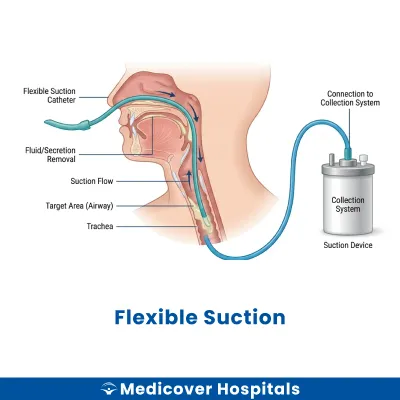
Flexible Suction is a medical procedure used to remove fluid or debris from the respiratory tract. It involves the use of a flexible suction catheter, a thin tube, to clear the airways (the passages that carry air to and from the lungs). This procedure helps in maintaining clear airways and is often used in patients who have difficulty clearing secretions on their own.
This surgery is needed when conditions like chronic obstructive pulmonary disease (COPD), pneumonia, or cystic fibrosis lead to excessive mucus buildup. If left untreated, these conditions can cause breathing difficulties and infections. Modern surgical approaches for Flexible Suction include endoscopic techniques, which allow for a minimally invasive way to access and clear the airways effectively.
Flexible Suction Doctors Near You
Discover experienced pulmonology specialists across Medicover Hospitals in India. Choose your city and book a consultation to address your respiratory concerns with ease and convenience.
Why Choose Medicover Hospitals for Flexible Suction?
Get a second opinion from trusted experts and makeconfident, informed decisions.
 Get Second Opinion
Complete Guide To Flexible Suction
Everything you need to know about the procedure, preparation, and recovery
Flexible Suction Procedure Indications
Doctors recommend the Flexible Suction Procedure when patients are unable to clear airway secretions effectively using non-invasive methods. This procedure helps remove excess mucus, secretions, or obstructions from the respiratory tract, improving breathing and preventing complications such as infections and airway blockage.
Excessive Mucus Build-Up
Patients may experience persistent cough, difficulty breathing, or chest congestion. Clinical evaluation and imaging may show mucus accumulation in the airways. When medications and physiotherapy fail to clear secretions, flexible suction is recommended.
Airway Obstruction
Symptoms include shortness of breath, wheezing, or noisy breathing. Bronchoscopy or imaging may reveal blockage due to secretions or debris. Flexible suction helps clear the airway and restore normal airflow.
Ventilated or ICU Patients
Patients on ventilators may not be able to clear secretions on their own. Monitoring may show secretion build-up affecting oxygen levels. Flexible suction is performed to maintain airway patency and prevent complications.
Ineffective Cough Reflex
Patients with neurological conditions or weakness may have difficulty clearing mucus. Clinical assessment shows reduced cough efficiency. Flexible suction is used to remove retained secretions and prevent respiratory distress.
Post-Operative Airway Management
After surgery, patients may develop mucus retention due to reduced mobility or anesthesia effects. Monitoring may indicate secretion accumulation. Flexible suction helps maintain clear airways and supports recovery.
Respiratory Infections
Conditions like pneumonia or bronchitis can cause excessive mucus production. Patients may have fever, cough, and breathing difficulty. When secretions are thick and difficult to expel, flexible suction aids in airway clearance.
How to Prepare for Flexible Suction?
Proper preparation for flexible suction is crucial to ensure a smooth procedure and recovery. Following the guidelines helps minimise risks and enhances the effectiveness of the procedure.
- Medication Review: Stop NSAIDs, anticoagulants, and herbal supplements 7 days prior, as advised by your doctor.
- Fasting: Fast for at least 6 hours before the procedure if general anaesthesia is used.
- Specific Prep: Use any prescribed nasal sprays as directed to clear nasal passages before the procedure.
- Clothing: Wear loose, comfortable clothing on the day of the procedure for ease and comfort.
- Transport: Arrange for someone to drive you home after the procedure, as you may feel drowsy.
- Medication List: Bring a list of all medications with dosages to inform the medical team.
- Hydration: Stay well-hydrated the day before, unless advised otherwise by your doctor.
- Health Updates: Inform your doctor of any recent changes in health, such as colds or infections.
Flexible Suction Procedure (Step-by-Step)
The Flexible Suction Procedure is performed by Pulmonology specialists. It typically takes 15 to 45 minutes and is usually done under local anaesthesia or mild sedation, depending on the patient's condition.
- Preparation: The patient is positioned comfortably, and vital signs are monitored. Local anaesthesia or mild sedation is administered to minimize discomfort. The airway is prepared for safe insertion of the suction device.
- Insertion of Flexible Scope: A flexible catheter or bronchoscope is gently inserted through the nose or mouth into the airway. This allows the specialist to visualize the respiratory tract clearly.
- Navigation: The pulmonologist carefully guides the scope through the airways to reach the affected area. The patient may feel slight pressure but generally no pain.
- Suction: A suction device is used to remove mucus, secretions, or obstructions from the airways. The patient may hear suction sounds but typically experiences minimal discomfort.
- Inspection and Confirmation: The specialist inspects the airway to ensure all secretions are cleared and airflow is restored. Continuous monitoring ensures patient safety throughout the procedure.
- Removal of Instruments: The bronchoscope or catheter is gently withdrawn. The patient may feel a mild sensation during removal, which subsides quickly.
- Post-Procedure Care: The patient is observed for a short period for any immediate reactions. Breathing usually improves quickly. Instructions regarding diet, activity, and medications are provided.
Who Performs Flexible Suction Procedure?
The Flexible Suction Procedure is performed by pulmonologists who specialize in diagnosing and treating respiratory conditions. They use advanced bronchoscopy techniques and modern equipment to ensure safe, precise, and effective airway management.
Recovery After Flexible Suction Procedure
After a Flexible Suction procedure, patients can expect a relatively quick recovery. It's important to follow post-procedure instructions to ensure a smooth healing process. Most individuals can resume normal activities within a short period.
Day 1-2:
- Rest is crucial. Avoid strenuous activities.
- Stick to a soft diet. Opt for foods like curd, dal-rice, and khichdi to ease digestion.
- Stay hydrated. Drink plenty of water and clear soups.
Day 3-5:
- Gradually increase activity levels. Short walks are encouraged.
- Continue with a light diet. Include moong dal and soft-cooked vegetables.
- Monitor for any discomfort or unusual symptoms.
Day 6-7:
- Most can return to work or school if feeling comfortable.
- Introduce regular foods slowly. Avoid spicy or oily dishes initially.
- Maintain hydration and balanced nutrition.
Phase 2 (Week 2-4):
- Resume normal activities, including exercise, as tolerated.
- Continue a balanced diet with a variety of foods.
- Attend follow-up appointments as scheduled.
When to Seek Urgent Help
- Severe pain not relieved by medication.
- Persistent nausea or vomiting.
- Signs of infection like fever or unusual discharge.
- Difficulty breathing or chest pain.
Benefits of Flexible Suction Procedure
Flexible Suction is a medical procedure designed to remove unwanted fluids or obstructions from the body. It offers several advantages for patients.
- Minimally Invasive: The procedure requires only small incisions, reducing recovery time.
- Precision: Allows for targeted removal of fluids, minimizing damage to surrounding tissues.
- Versatility: Can be used in various medical situations, such as respiratory or gastrointestinal issues.
- Reduced Discomfort: Patients often experience less pain compared to traditional methods.
Risks and Complications of Flexible Suction Procedure
While Flexible Suction is generally safe, it is important to be aware of potential risks and complications.
- Mild bleeding or bruising at the insertion site.
- Temporary discomfort or soreness in the treated area.
- Infection at the site of the procedure.
- Allergic reaction to anaesthesia or materials used.
- Damage to nearby organs or tissues, depending on the area treated.
Common Risks:
Rare Complications:
Cost of Flexible Suction Procedure
The cost of the Flexible Suction procedure at Medicover Hospitals ranges from Rs.15,000 to Rs.50,000. Prices vary based on the ward category chosen, such as day care, general, private, and suite options. We offer transparent pricing to ensure clarity for our patients.
Insurance and TPA support is available, with acceptance of CGHS, ESI, and major TPAs. A cashless facility is also offered for added convenience. Please contact the hospital for the latest insurance panel details as these may change periodically.
Frequently Asked Questions
1. How much does Flexible Suction procedure cost at Medicover Hospitals?
The cost of a Flexible Suction procedure ranges from Rs.15,000 to Rs.50,000 across Medicover Hospitals, depending on the type of accommodation.
2. Is Flexible Suction procedure covered under health insurance at Medicover?
Flexible Suction may be covered by CGHS, ESI, and major TPAs. Please contact the hospital for current panel details.
3. Will I experience breathing difficulties post-procedure?
Some patients may experience mild breathing difficulties after Flexible Suction. These usually resolve within a few days with proper care.
4. Can I eat spicy food after Flexible Suction?
It's best to avoid spicy food like masala dosa and opt for bland options like curd rice for a week after the procedure.
5. Will I need to avoid strenuous activities post-procedure?
Yes, it is advisable to avoid strenuous activities for at least two weeks after Flexible Suction to ensure proper healing.
6. Can Flexible Suction lead to nasal congestion?
Nasal congestion is a possible temporary side effect after Flexible Suction. It typically improves within a few days with appropriate treatment.
7. Is there a risk of infection after Flexible Suction?
There is a minimal risk of infection following Flexible Suction. Following post-procedure care instructions can help reduce this risk.


