 Call
Call Patient Reports
Best Hospital for Flap Revision Surgery with Expert Reconstructive Care
At Medicover Hospitals, experienced plastic surgeons with qualifications such as MS, DNB, and MCh perform flap revision surgery using advanced surgical techniques. This procedure is an important part of post-cancer reconstructive care, helping manage complications after cancer treatment. With a focus on precision and patient safety, we ensure improved healing, reduced hospital stay, and better recovery outcomes.
Expert Surgeons
Yearly Surgeries
Patient Satisfaction
What is Flap Revision Surgery?
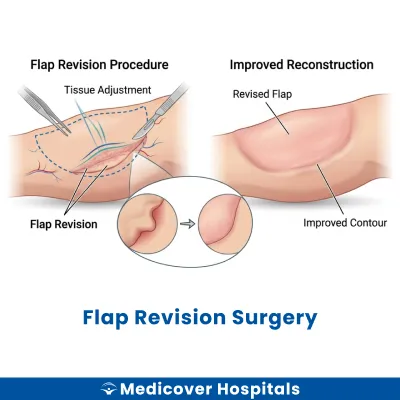
Flap revision surgery is a procedure to improve the appearance or function of a flap. A flap is a piece of tissue, often skin and underlying fat, moved from one part of the body to another. This surgery is commonly performed on areas like the face, breast, or limbs. It aims to correct issues such as irregularities, asymmetry, or complications from previous surgeries.
This surgery is needed when the initial flap does not heal properly or causes aesthetic or functional problems. Conditions like poor blood supply, infection, or scarring can lead to the need for revision. If untreated, these issues may worsen, affecting quality of life. Modern surgical approaches include microsurgery and laser techniques, which help in precise correction and faster recovery.
Flap Revision Surgery Doctors Near You
Discover skilled plastic surgeons across Medicover Hospitals in multiple locations in India. Choose your city to find experts in flap revision surgery and book a consultation for advanced, safe, and effective post-cancer reconstructive care.
Why Choose Medicover Hospitals for Flap Revision Surgery?
Advanced Plastic Surgery OT: Equipped with cutting-edge tools like harmonic scalpels, bipolar cautery, microsurgical instruments, and 4K camera systems for precise and safe reconstructive procedures.
Get a second opinion from trusted experts and makeconfident, informed decisions.
 Get Second Opinion
Complete Guide To Flap Revision Surgery
Everything you need to know about the procedure, preparation, and recovery
Flap Revision Surgery Indications
Doctors recommend flap revision surgery when initial reconstructive procedures do not achieve the desired outcomes. This surgery helps improve function or appearance when complications arise.
Flap Necrosis
Patients may experience tissue death, leading to blackened skin and foul odour. Doctors find poor blood supply in the flap area. When non-surgical interventions fail, revision surgery is necessary.
Flap Contracture
Patients report tightness and restricted movement in the affected area. Examination reveals scar tissue causing contraction. Surgery is advised when physical therapy does not improve mobility.
Infection
Symptoms include redness, swelling, and pus discharge. Lab tests show elevated white blood cell counts. If antibiotics do not resolve the infection, surgical intervention is required.
Asymmetry
Patients notice uneven appearance post-surgery. Doctors observe mismatched contours or sizes. When minor adjustments do not correct the issue, revision surgery is considered.
Functional Impairment
Patients experience difficulty in daily activities due to flap placement. Doctors identify misalignment affecting function. Surgery is needed when non-invasive methods fail to restore function.
Flap Dehiscence
Patients may see wound separation at the surgical site. Examination shows gaping edges. When wound care does not promote healing, surgical correction becomes necessary.
How to Prepare for Flap Revision Surgery?
Proper preparation for flap revision surgery is crucial to ensure a smooth procedure and recovery. It helps minimise risks and enhances the healing process.
- Medication Review: Stop NSAIDs, anticoagulants, and herbal supplements at least a week before surgery. Consult your doctor for specific guidance.
- Fasting Guidelines: Do not eat or drink anything for at least 8 hours before the surgery to prepare for anaesthesia.
- Pre-Surgery Hygiene: Bathe with an antiseptic soap the night before and the morning of the surgery to reduce infection risk.
- Clothing Choice: Wear loose, comfortable clothing on the day of the surgery to avoid pressure on the surgical area.
- Transportation Arrangements: Plan for someone to drive you home post-surgery, as you may feel drowsy from anaesthesia.
- Medication List: Bring a list of all medications you are currently taking, including dosages, for the medical team's reference.
- Smoking Cessation: Stop smoking at least two weeks prior to surgery to improve healing and recovery.
- Post-Surgery Care: Prepare your home with necessary supplies like gauze, pillows, and prescribed medications for a comfortable recovery.
Flap Revision Surgery (Step-by-Step)
Flap revision surgery is performed by plastic surgeons. It typically lasts 1 to 3 hours. General anaesthesia is commonly used to ensure the patient is comfortable and pain-free during the procedure.
- Preparation: The patient is placed under general anaesthesia. The surgical area is cleaned and sterilised to prevent infection.
- Incision: The surgeon makes small incisions, usually 1-2 cm, around the flap area. This allows access to the tissue that needs revision.
- Tissue Adjustment: Using precise instruments like a scalpel and bipolar cautery, the surgeon carefully adjusts the tissue. This may involve removing excess tissue or repositioning the flap for better contour.
- Reshaping: The surgeon reshapes the flap to achieve the desired appearance. This step may involve trimming or suturing the tissue for optimal results.
- Closure: The incisions are closed with sutures. The surgeon ensures that the flap is securely positioned and that the incisions are neatly closed to minimise scarring.
- Dressing: A sterile dressing is applied to protect the surgical site. This helps in healing and reduces the risk of infection.
- Recovery: The patient is moved to a recovery area to wake up from anaesthesia. Medical staff monitor vital signs and provide post-operative care instructions.
Who Performs Flap Revision Surgery?
Flap revision surgery is performed by plastic surgeons. These specialists have expertise in reconstructive procedures and are skilled in handling delicate tissues to improve both function and appearance.
Recovery After Flap Revision Surgery
Recovery from flap revision surgery requires patience and care. Expect some swelling and discomfort initially, which should gradually subside. Following your surgeon's instructions is crucial for a smooth recovery.
Day 1-3:
- Rest is essential. Avoid any strenuous activities.
- Keep the surgical area clean and dry. Follow wound care instructions.
- Stick to a soft diet. Include foods like curd, dal-rice, and soups to aid digestion.
Day 4-7:
- Swelling and bruising should start to decrease.
- Continue with light, nutritious meals. Khichdi and moong dal are good options.
- Gradually increase light activities as advised by your doctor.
Day 8-14:
- Most discomfort should be reduced. You may start gentle exercises if permitted.
- Return to work or school is possible, depending on your comfort and doctor's advice.
- Maintain a balanced diet to support healing. Include plenty of fluids.
Phase 3 (Week 3-6):
- Resume normal activities gradually. Avoid heavy lifting or intense exercise.
- Regular follow-up appointments are important to monitor healing.
- Continue with a healthy diet to maintain energy levels and support recovery.
When to Seek Urgent Help
Contact your doctor if you experience:
- Severe pain not relieved by medication
- Excessive swelling or redness
- Fever or chills indicating infection
- Unusual discharge from the surgical site
Benefits of Flap Revision Surgery
Flap revision surgery aims to improve the appearance and function of a previous flap procedure. It offers several benefits for patients.
- Improved Aesthetics: Enhances the visual appearance of the flap area.
- Better Functionality: Restores or improves the functional aspects of the affected area.
- Increased Comfort: Reduces discomfort or tightness in the flap region.
- Enhanced Confidence: Boosts self-esteem by improving physical appearance.
Risks and Complications of Flap Revision Surgery
While flap revision surgery can offer significant benefits, it is important to be aware of potential risks and complications. These vary in frequency and severity.
- Infection: Risk of infection at the surgical site.
- Scarring: Possibility of noticeable scars post-surgery.
- Bleeding: Uncontrolled bleeding during or after the procedure.
- Flap Loss: The flap may not survive, requiring additional surgery.
- Nerve Damage: Potential for nerve injury leading to numbness or weakness.
- Asymmetry: Uneven appearance of the flap area.
Cost of Flap Revision Surgery
The cost of flap revision surgery at Medicover Hospitals ranges from Rs. 25,000 to Rs. 1,50,000. This variation depends on the ward category chosen, such as day care, general, or private suites. Our pricing is transparent, ensuring you know what to expect. We offer insurance and TPA support, accepting CGHS, ESI, and major TPAs. A cashless facility is also available for your convenience. Please contact the hospital for the latest insurance panel details as these may change periodically.
Frequently Asked Questions
1. How much does Flap revision surgery cost?
The cost of Flap revision surgery at Medicover Hospitals ranges from Rs. 25,000 to Rs. 1,50,000, depending on the type of care and accommodation.
2. Is Flap revision surgery covered under insurance?
Flap revision surgery may be covered under CGHS, ESI, and major TPAs with cashless options. Please contact the hospital for current panel details.
3. Will I have visible scars after flap revision?
Flap revision surgery aims to minimise visible scarring. However, some scars may remain, which typically fade over time with proper care.
4. Can I resume exercise after flap revision?
Light exercise can usually be resumed after a few weeks post-surgery. Consult your doctor for specific guidance based on your recovery progress.
5. Will my skin colour match after flap revision?
Skin colour matching can vary after flap revision surgery. It may take time for the skin tone to blend naturally, depending on individual healing.
6. Can flap revision affect skin sensation?
Temporary changes in skin sensation are possible after flap revision surgery. Sensation usually improves over time as the nerves heal.
7. What foods aid recovery after flap revision?
Eating a balanced diet with curd, dal-rice, and khichdi can aid recovery. These foods are gentle on the stomach and promote healing.


