 Call
Call Patient Reports
Fistulectomy for Low Anal Fistula Surgery by Expert General Surgeons
At Medicover Hospitals, our general surgeons, with qualifications like MS, DNB, and FMAS, perform open fistulectomy for low anal fistula. This procedure effectively removes the fistula tract. Patients often experience shorter recovery times and reduced postoperative discomfort.
Expert Surgeons
Yearly Surgeries
Patient Satisfaction
What is Fistulectomy for Low Anal Fistula?
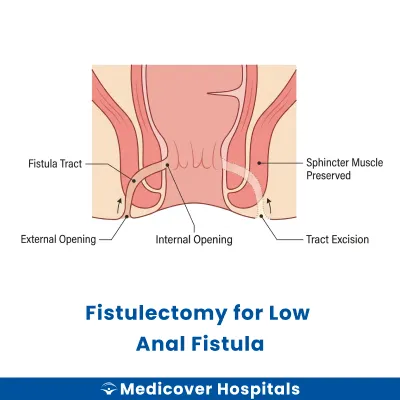
Fistulectomy for Low Anal Fistula is a surgical procedure to remove an abnormal connection fistula between the anal canal and the skin near the anus. The anal canal is the last part of the digestive tract. This surgery involves excising the fistula tract to prevent infection and promote healing.
This surgery is necessary when a fistula causes pain, infection, or discharge. Conditions like chronic abscesses or Crohn's disease can lead to fistula formation. If left untreated, it can result in recurrent infections or complications. Modern surgical approaches include the LIFT procedure (Ligation of Intersphincteric Fistula Tract) and VAAFT (Video-Assisted Anal Fistula Treatment). These techniques aim to minimize complications and promote faster recovery.
Fistulectomy for Low Anal Fistula Doctors Near You
Find experienced general-surgeons for fistulectomy at Medicover Hospitals across India. Choose your city and book a consultation to discuss treatment options for low anal fistula.
Why Choose Medicover Hospitals for Fistulectomy for Low Anal Fistula?
Get a second opinion from trusted experts and makeconfident, informed decisions.
 Get Second Opinion
Complete Guide To Fistulectomy For Low Anal Fistula
Everything you need to know about the procedure, preparation, and recovery
Fistulectomy for Low Anal Fistula Surgery Indications
Doctors recommend fistulectomy for low anal fistula when conservative treatments fail. This procedure is often necessary to relieve symptoms and prevent complications.
Persistent Pain and Discomfort
Patients may experience ongoing pain and discomfort around the anal area. Examination often reveals a palpable tract or swelling. When pain persists despite medication and sitz baths, surgery is considered.
Recurrent Infections
Frequent infections can occur, leading to abscess formation. Patients report fever and pus discharge. If antibiotics and drainage do not resolve the issue, fistulectomy is advised.
Chronic Drainage
Continuous drainage from the fistula opening is a common symptom. This can cause skin irritation and hygiene issues. When drainage does not stop with conservative measures, surgical intervention is needed.
Failure of Previous Treatments
Some patients have undergone previous procedures or treatments without success. Persistent symptoms and non-healing fistulas on imaging indicate the need for fistulectomy.
Complex Fistula Tract
Imaging may reveal a complex or branching fistula tract. Patients often have multiple openings or tracts. When complexity prevents healing, surgery is recommended.
How to Prepare for Fistulectomy for Low Anal Fistula?
Proper preparation for fistulectomy is crucial to ensure a smooth procedure and recovery. It helps in reducing complications and aids in a quicker healing process.
- Medication Review: Stop NSAIDs, anticoagulants, and herbal supplements as advised by your doctor.
- Fasting Guidelines: Fast for at least 6-8 hours before the surgery, as general anaesthesia is typically used.
- Bowel Preparation: Follow any bowel prep instructions provided by your healthcare team to ensure a clear surgical field.
- Clothing Choice: Wear loose, comfortable clothing on the day of the surgery for ease post-procedure.
- Transport Arrangement: Arrange for someone to drive you home after the surgery, as you may feel drowsy.
- Medication List: Bring a list of your current medications with dosages for the medical team to review.
- Pre-Surgery Hygiene: Take a shower and ensure the anal area is clean to reduce infection risk.
- Pelvic Floor Exercises: Practice any recommended exercises to strengthen the area and aid recovery.
Fistulectomy for Low Anal Fistula Surgery (Step-by-Step)
Overview: Performed by general surgeons, the procedure typically lasts 30-60 minutes. It is usually done under general anaesthesia.
- Preparation: The patient is positioned comfortably. Anaesthesia is administered to ensure they are asleep and pain-free.
- Incision: A small incision, about 1-2 cm, is made near the fistula opening. This allows access to the fistula tract.
- Identification: The surgeon uses a probe to trace the fistula tract. This helps in understanding its path and connections.
- Excision: The fistula tract is carefully excised using a curette or a harmonic scalpel. This ensures complete removal of the infected tissue.
- Cleaning: The area is cleaned to remove any debris or infection. Bipolar cautery may be used to control bleeding.
- Closure: The incision is closed with sutures. Sometimes, the wound is left open to heal naturally, depending on the case.
- Recovery: The patient is monitored as they wake up from anaesthesia. Pain management and post-operative care instructions are provided.
Who Performs Fistulectomy for Low Anal Fistula Surgery?
Fistulectomy for low anal fistula is performed by general surgeons. These specialists have expertise in treating conditions of the digestive tract, including anal fistulas. They are skilled in using surgical instruments like curettes and harmonic scalpels to ensure effective treatment.
Recovery After Fistulectomy for Low Anal Fistula Surgery
Recovery from a fistulectomy for low anal fistula involves a gradual return to normal activities. Patients can expect some discomfort initially, but it typically improves over time. Following post-operative instructions is crucial for a smooth recovery.
Day 1-3:
- Rest is essential. Avoid strenuous activities.
- Consume a soft diet. Include curd, dal-rice, and soups.
- Maintain hygiene. Follow instructions for wound care.
- Pain and swelling are normal. Use prescribed medications.
Day 4-7:
- Continue with a soft diet. Add khichdi and moong dal.
- Gradually increase light activities like walking.
- Avoid sitting for long periods. Use a cushion if needed.
- Monitor for any unusual symptoms.
Day 8-14:
- Introduce more solid foods gradually.
- Resume light work or school activities if comfortable.
- Continue to avoid heavy lifting or strenuous exercise.
- Follow up with your doctor as advised.
Phase 3 (Week 3-4):
- Most patients can resume normal activities.
- Continue a balanced diet to aid healing.
- Engage in regular, gentle exercise.
- Attend any scheduled follow-up appointments.
When to Seek Urgent Help:
- Severe pain not relieved by medication.
- Excessive bleeding or discharge from the wound.
- High fever or signs of infection.
- Difficulty in bowel movements or urination.
Benefits of Fistulectomy for Low Anal Fistula Surgery
Fistulectomy is a surgical procedure aimed at treating low anal fistulas effectively.
- Effective Treatment: It helps in completely removing the fistula tract.
- Reduced Recurrence: Lower chances of fistula recurrence compared to other treatments.
- Improved Healing: Promotes better healing of the affected area.
- Symptom Relief: Alleviates pain and discomfort associated with anal fistulas.
Risks and Complications of Fistulectomy for Low Anal Fistula Surgery
While fistulectomy is generally safe, it carries certain risks and complications.
Common Risks
- Infection at the surgical site, which may require antibiotics.
- Bleeding during or after the procedure.
Rare Risks
- Incontinence, affecting the control of bowel movements.
- Delayed wound healing, leading to prolonged recovery.
- Narrowing of the anal canal, which might require further treatment.
Cost of Fistulectomy for Low Anal Fistula Surgery
The cost of a Fistulectomy for Low Anal Fistula Surgery at Medicover Hospitals ranges from ₹35,000 and ₹75,000. The price varies based on the ward category chosen, such as day care, general, or private rooms. We offer transparent pricing and support for insurance and TPA, including CGHS, ESI, and major TPAs. Cashless facility is available for your convenience. Please contact the hospital for the latest insurance panel details as these may change periodically.
Frequently Asked Questions
1. How much does Fistulectomy for Low Anal Fistula surgery cost at Medicover Hospitals?
The cost ranges from ₹35,000 and ₹75,000 across Medicover Hospitals, depending on the room type and care level.
2. Is Fistulectomy for Low Anal Fistula surgery covered under health insurance at Medicover?
Yes, it is often covered by CGHS, ESI, and major TPAs, with cashless options. Please contact the hospital for current panel details.
3. Can I sit comfortably after Fistulectomy?
Sitting may be uncomfortable initially due to the surgery site. Using a cushion can help ease discomfort during recovery.
4. Will I need a special diet post-Fistulectomy?
A soft diet including curd, dal-rice, and khichdi is recommended initially. This helps avoid straining during bowel movements.
5. How soon can I return to work after Fistulectomy?
Most patients can return to work within 1-2 weeks. However, this depends on the nature of your job and personal recovery.
6. Is there a risk of incontinence after Fistulectomy?
Incontinence is rare but possible if the sphincter muscle is affected. Discuss potential risks with your surgeon before the procedure.
7. Can the fistula reoccur after surgery?
There is a possibility of recurrence, especially if the fistula is complex. Regular follow-ups with your doctor can help monitor and manage this risk.


