 Call
Call Patient Reports
Best Hospital for Fissurectomy with Sphincterotomy Surgery
Fissurectomy with sphincterotomy at Medicover Hospitals is performed using open surgical techniques by qualified general surgeons with MS and DNB credentials. This procedure effectively addresses anal fissures, leading to shorter hospital stays and reduced post-operative discomfort for patients.
Expert Surgeons
Yearly Surgeries
Patient Satisfaction
What is Fissurectomy With Spictoromy?
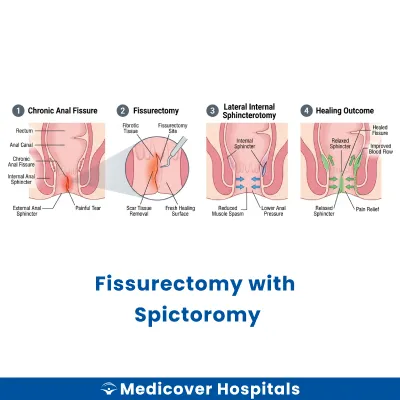
Fissurectomy with sphincterotomy is a surgical procedure involving the anal canal. It combines two techniques: fissurectomy, which removes an anal fissure (a small tear in the lining of the anus), and sphincterotomy, which involves cutting a small portion of the anal sphincter (muscle that controls bowel movements) to reduce tension. This helps in healing and relieving pain.
This surgery is needed for chronic anal fissures that do not respond to medication or other treatments. Persistent fissures can cause severe pain and bleeding during bowel movements. If left untreated, they may lead to complications like infection or abscess. Modern surgical approaches for this procedure include laser surgery and minimally invasive techniques, which aim to reduce recovery time and discomfort.
Fissurectomy With Spictoromy Doctors Near You
Find experienced general-surgeons for fissurectomy with sphincterotomy at Medicover Hospitals across India. Choose your city and book a consultation today for expert care and guidance.
Why Choose Medicover Hospitals for Fissurectomy With Spictoromy?
Get a second opinion from trusted experts and makeconfident, informed decisions.
 Get Second Opinion
Complete Guide To Fissurectomy With Spictoromy
Everything you need to know about the procedure, preparation, and recovery
Fissurectomy with Spictoromy Surgery Indications
Doctors recommend fissurectomy with spictoromy when anal fissures cause persistent discomfort and do not heal with conservative treatments. This procedure is advised to alleviate symptoms and promote healing.
Chronic Anal Fissure
Patients experience severe pain during bowel movements, often accompanied by bleeding. Examination reveals a tear in the anal lining that persists for more than six weeks. When dietary changes and topical treatments fail, surgery is considered.
Recurrent Anal Fissures
Patients report repeated episodes of sharp pain and bleeding. Doctors find multiple or recurring fissures upon examination. Surgery is suggested when non-surgical methods, like stool softeners and sitz baths, do not prevent recurrence.
Severe Anal Spasm
Patients suffer from intense anal pain and tightness. Examination shows increased anal sphincter tone. When muscle relaxants and other therapies do not relieve the spasm, surgery may be necessary.
Non-Healing Fissures
Patients have persistent pain and bleeding despite treatment. Examination confirms a fissure that fails to heal over time. Surgery is recommended when healing does not occur with conservative measures.
Associated Sentinel Pile
Patients experience pain and notice a skin tag near the fissure. Doctors identify a sentinel pile during examination. When this condition complicates healing, surgery may be advised.
How to Prepare for Fissurectomy with Spictoromy?
Proper preparation for a fissurectomy with spictoromy is crucial for a smooth procedure and recovery. Following the guidelines helps reduce complications and ensures a quicker return to daily activities.
- Medication Review: Stop NSAIDs, anticoagulants, and herbal supplements 7 days before surgery.
- Fasting: Begin fasting 8 hours before the procedure to prepare for anaesthesia.
- Bowel Preparation: Follow the doctor's instructions for bowel prep to ensure a clear surgical area.
- Clothing: Wear loose, comfortable clothing on the day of the surgery for ease of movement post-procedure.
- Transportation: Arrange for someone to drive you home after the surgery, as you may feel drowsy.
- Medication List: Bring a list of all medications you take, including dosages, for the medical team.
- Pelvic Floor Exercises: Practice any recommended exercises to strengthen the area before surgery.
- Hygiene: Bathe with antibacterial soap the night before to reduce infection risk.
Fissurectomy with Spincterotomy Surgery (Step-by-Step)
This procedure is performed by general surgeons. It usually takes about 30 to 60 minutes. It is done under local or regional anaesthesia.
- Preparation: The patient is positioned comfortably. Anaesthesia is administered to numb the area.
- Incision: A small incision, about 1-2 cm, is made near the anal fissure. This allows access to the affected area.
- Fissure Removal: The surgeon uses a curette to carefully remove the damaged tissue around the fissure.
- Spincterotomy: A small cut is made in the internal anal sphincter muscle. This helps reduce pressure and allows healing.
- Bleeding Control: Bipolar cautery is used to control any bleeding during the procedure.
- Closure: The incision may be left open to heal naturally or closed with sutures, depending on the case.
- Recovery: The patient is monitored as the anaesthesia wears off. They may feel mild discomfort, which is managed with medication.
Who Performs Fissurectomy with Spincterotomy Surgery?
This surgery is performed by general surgeons with expertise in colorectal procedures. They are skilled in using surgical instruments like curettes and bipolar cautery to ensure precise removal of the fissure and effective spincterotomy. Their training allows them to manage the procedure efficiently, ensuring patient safety and comfort.
Recovery After Fissurectomy with Spictoromy Surgery
Recovery from a fissurectomy with spictoromy surgery involves gradual healing and care. Patients can expect some discomfort initially, but it typically improves over time. Following the doctor's advice on diet and activity is crucial for a smooth recovery.
Day 1-3:
- Expect mild pain and swelling. Pain relief medications may be prescribed.
- Rest is essential. Avoid strenuous activities.
- Consume a soft diet. Include curd, dal-rice, and soups to aid digestion.
Day 4-7:
- Swelling and discomfort should gradually decrease.
- Continue with a fibre-rich diet. Add khichdi and moong dal to prevent constipation.
- Short walks are encouraged to improve circulation.
Day 8-14:
- Most patients can resume light activities and return to work or school.
- Maintain a balanced diet with plenty of fluids.
- Avoid heavy lifting and intense exercise.
Phase 3 (Week 3-4):
- Full recovery is expected. Continue with healthy eating habits.
- Gradually reintroduce regular activities.
- Follow up with your doctor for a check-up.
When to Seek Urgent Help
- Severe pain not relieved by medication.
- Excessive bleeding or pus from the surgical site.
- High fever or chills.
- Difficulty in bowel movements despite dietary changes.
Benefits of Fissurectomy with Spictoromy Surgery
Fissurectomy with spictoromy is a surgical procedure aimed at treating anal fissures effectively. It offers several benefits for patients experiencing discomfort.
- Pain Relief: This procedure can significantly reduce pain associated with chronic fissures.
- Improved Healing: By removing the fissure, it promotes better and faster healing of the affected area.
- Reduced Recurrence: It lowers the chances of fissure recurrence compared to non-surgical treatments.
- Enhanced Comfort: Patients often experience improved comfort during bowel movements post-surgery.
Risks and Complications of Fissurectomy with Spictoromy Surgery
While effective, fissurectomy with spictoromy carries certain risks and potential complications. It's important to be aware of them before proceeding.
- Bleeding can occur during or after the procedure.
- Infection at the surgical site is a possibility.
- Incontinence, or loss of bowel control, may occur in some cases.
- Anal stenosis, or narrowing of the anal canal, can develop post-surgery.
- Delayed healing may happen, requiring additional care.
Cost of Fissurectomy with Spictoromy Surgery
The cost of Fissurectomy with Spictoromy Surgery at Medicover Hospitals ranges from Rs. 97,000 to Rs. 1,55,000. The price varies depending on the ward category chosen, such as day care, general, private, or suite options. Medicover Hospitals offers transparent pricing, and supports insurance and TPA services, including CGHS, ESI, and major TPAs. A cashless facility is also available for your convenience. Please contact the hospital for the latest insurance panel details as these may change periodically.
Frequently Asked Questions
1. How much does Fissurectomy with spictoromy cost?
The cost of Fissurectomy with spictoromy surgery at Medicover Hospitals ranges from Rs. 97,000 to Rs. 155,000, depending on the room type.
2. Is Fissurectomy with spictoromy covered by insurance?
Yes, it is often covered by CGHS, ESI, and major TPAs. Please contact the hospital for current panel details.
3. Will bowel movements be painful after surgery?
Yes, initial bowel movements may be painful post-surgery. Pain relief and a high-fibre diet can help ease discomfort.
4. Can I sit comfortably after Fissurectomy?
Sitting may be uncomfortable for a few days after surgery. Using a cushion or donut pillow can provide relief.
5. Will I need to change my diet post-surgery?
Yes, a diet rich in fibre like dal-rice and khichdi is recommended. Avoid spicy foods to prevent irritation.
6. Is there a risk of infection after surgery?
There is a risk of infection, but it can be minimized with proper hygiene. Follow your doctor's care instructions carefully.
7. How soon can I return to work post-surgery?
Most patients can return to work within 1-2 weeks. However, avoid heavy lifting and strenuous activities.


