 Call
Call Patient Reports
Hospital for Finger or Thumb Amputation with Direct Closure Surgery
Finger or thumb amputation with direct closure is performed using an open surgical approach at Medicover Hospitals. Our orthopaedic team, with qualifications like MS and DNB, ensures precise treatment. This method often results in a shorter hospital stay for patients across India.
Expert Surgeons
Yearly Surgeries
Patient Satisfaction
What is Finger or Thumb Amputation With Direct Closure?
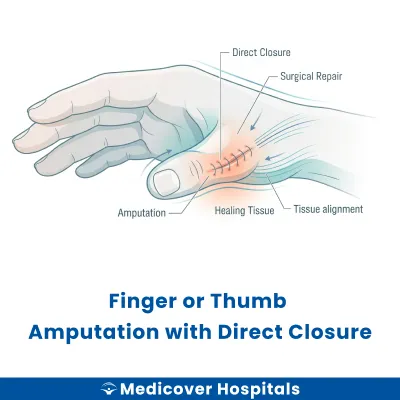
Finger or Thumb Amputation with Direct Closure is a surgical procedure involving the removal of part or all of a finger or thumb. The affected digit (finger or thumb) is surgically removed, and the wound is closed directly. This method is used when the remaining tissue is sufficient to cover the wound without additional grafts or flaps.
This surgery is necessary for severe injuries, infections, or conditions like gangrene affecting the finger or thumb. If untreated, these conditions can lead to severe pain, infection, or loss of function. Modern surgical approaches for this procedure include microsurgery and advanced wound closure techniques. These methods help ensure proper healing and functionality. Early intervention is crucial to prevent complications.
Finger or Thumb Amputation With Direct Closure Doctors Near You
Discover experienced orthopedics for finger or thumb amputation with direct closure at Medicover Hospitals across India. Choose your city and book a consultation for expert care today.
Why Choose Medicover Hospitals for Finger or Thumb Amputation With Direct Closure?
Get a second opinion from trusted experts and makeconfident, informed decisions.
 Get Second Opinion
Complete Guide To Finger Or Thumb Amputation With Direct Closure
Everything you need to know about the procedure, preparation, and recovery
Finger or Thumb Amputation with Direct Closure Surgery Indications
Doctors may recommend finger or thumb amputation with direct closure when severe injury or disease affects the digit. This procedure is considered when preserving the finger or thumb is not possible or practical.
Severe Trauma
Patients may experience intense pain and visible deformity after an accident. Examination often reveals crushed or irreparably damaged bones and tissues. When reconstruction is not feasible, amputation is advised.
Infection
Severe infections can cause swelling, redness, and pus discharge. Lab tests may show elevated white blood cell counts. If antibiotics and other treatments fail, and the infection threatens to spread, amputation may be necessary.
Gangrene
Patients with gangrene may notice blackened skin and a foul smell. Doctors find tissue death and lack of blood flow in the affected digit. When revascularization is not possible, amputation is the solution.
Tumours
Patients may feel a lump or mass in the finger or thumb. Imaging tests can reveal abnormal growths. If the tumour is malignant or large, and other treatments are ineffective, amputation is considered.
Frostbite
Frostbite can cause numbness and discolouration. Examination shows tissue damage due to extreme cold. When tissue is non-viable and conservative measures fail, amputation is required.
How to Prepare for Finger or Thumb Amputation with Direct Closure?
Preparation is crucial for a smooth surgery and recovery. It helps reduce complications and ensures a faster healing process.
- Medications: Stop NSAIDs, anticoagulants, and herbal supplements as advised by your doctor.
- Fasting: Do not eat or drink anything for at least 6-8 hours before the surgery.
- Clothing: Wear loose, comfortable clothing on the day of the surgery.
- Transport: Arrange for someone to drive you home after the procedure.
- Medication List: Bring a list of your current medications, including dosages, to the hospital.
- Hygiene: Bathe and clean the affected area thoroughly before the surgery.
- Smoking: Avoid smoking for at least a few weeks before and after surgery to aid healing.
- Consultation: Discuss any allergies or medical conditions with your surgeon beforehand.
Finger or Thumb Amputation with Direct Closure Surgery (Step-by-Step)
This procedure is performed at Medicover Hospitals Orthopedics Department. It typically takes 1 to 2 hours and may be performed under general or regional anaesthesia depending on the patient's condition.
- Preparation: The patient is positioned comfortably on the operating table. The surgical area is cleaned and sterilised. Anaesthesia is administered to ensure the patient feels no pain.
- Incision: The surgeon makes a precise incision, usually 1-2 cm, around the affected area using a scalpel. This allows access to the bone and soft tissues.
- Bone and Tissue Removal: The surgeon uses instruments like bone cutters and forceps to carefully remove the damaged bone and surrounding tissues. Care is taken to preserve as much healthy tissue as possible.
- Bleeding Control: Bipolar cautery is used to control bleeding by sealing blood vessels. This ensures a clear surgical field and reduces blood loss.
- Direct Closure: The remaining skin and tissues are carefully sutured together to close the wound. This step ensures proper healing and minimises scarring.
- Dressing and Bandaging: A sterile dressing is applied over the incision site. The area is then bandaged to protect it from infection and support healing.
- Recovery: The patient is moved to a recovery area. Vital signs are monitored as the anaesthesia wears off. Pain management and post-operative care instructions are provided.
Who Performs Finger or Thumb Amputation with Direct Closure Surgery?
Orthopaedic surgeons perform this surgery. They are trained in procedures involving bones, joints, and soft tissues. Their expertise ensures the procedure is done safely and effectively.
Recovery After Finger or Thumb Amputation with Direct Closure Surgery
Recovery from finger or thumb amputation with direct closure surgery involves careful management to ensure proper healing. Patients can expect some discomfort and swelling initially, but these should gradually subside. Following the surgeon's instructions is crucial for a smooth recovery.
Day 1-3:
- Rest and elevate the hand to reduce swelling.
- Keep the bandage clean and dry.
- Pain management with prescribed medications.
- Consume soft, nutritious foods like curd, dal-rice, and soups to support healing.
Day 4-7:
- Begin gentle finger movements as advised by the doctor.
- Continue with a balanced diet including moong dal and khichdi.
- Monitor for any signs of infection around the surgical site.
Day 8-14:
- Gradual increase in hand activities, avoiding heavy lifting.
- Attend follow-up appointments for stitch removal and progress assessment.
- Introduce more variety in diet, ensuring adequate protein intake.
Phase 3 (Week 3-6):
- Resume light activities and return to work/school if approved by the doctor.
- Engage in hand therapy exercises to improve strength and flexibility.
- Continue a healthy diet to support overall recovery.
When to Seek Urgent Help
- Severe pain not relieved by medication.
- Excessive swelling or redness around the surgical site.
- Fever or chills indicating possible infection.
- Unusual discharge or bleeding from the wound.
Benefits of Finger or Thumb Amputation with Direct Closure Surgery
This procedure helps in managing severe injuries or infections by removing the affected part and closing the wound directly.
- Pain Relief: Reduces chronic pain from severe injury or infection.
- Infection Control: Helps in preventing the spread of infection to other parts of the hand.
- Improved Functionality: Enhances the overall function of the hand by removing non-functional parts.
- Quick Recovery: Direct closure allows for faster healing compared to other methods.
Risks and Complications of Finger or Thumb Amputation with Direct Closure Surgery
While generally safe, this surgery carries certain risks and complications that patients should be aware of.
- Infection at the surgical site.
- Bleeding during or after the procedure.
- Nerve damage leading to numbness or tingling.
- Poor wound healing or reopening of the wound.
- Phantom limb pain, where the patient feels pain in the amputated area.
Cost of Finger or Thumb Amputation with Direct Closure Surgery
The cost of Finger or Thumb Amputation with Direct Closure Surgery at Medicover Hospitals varies depending on the ward category. Prices range from Rs.16,500 to Rs.25,500. This ensures that patients can choose a suitable option based on their needs and budget.
Medicover Hospitals offers transparent pricing and supports insurance and TPA services, including CGHS, ESI, and major TPAs. A cashless facility is also available for added convenience. Please contact the hospital for the latest insurance panel details as these may change periodically.
Frequently Asked Questions
1. How much does Finger or Thumb Amputation with Direct Closure surgery cost at Medicover Hospitals?
The cost for Finger or Thumb Amputation with Direct Closure surgery at Medicover Hospitals ranges from Rs.16,500 to Rs.25,500, depending on the facility and care level.
2. Is Finger or Thumb Amputation with Direct Closure surgery covered under health insurance at Medicover?
Yes, it is typically covered by CGHS, ESI, and major TPAs. Please contact the hospital for current panel details.
3. Will I need physiotherapy after finger amputation?
Yes, physiotherapy is often recommended to improve hand function and mobility. It helps in adapting to the changes post-surgery.
4. Can I still write after a thumb amputation?
Writing might be challenging initially, but adaptive techniques and tools can help. Occupational therapy can assist in regaining writing skills.
5. What complications can occur after finger amputation?
Possible complications include infection, phantom pain, and reduced hand function. Regular follow-ups help in managing these effectively.
6. How soon can I return to work after thumb amputation?
Return to work depends on your job type and recovery speed. Generally, it may take a few weeks to a couple of months.
7. Will I need to change my diet after finger amputation?
No specific diet change is needed, but a balanced diet with curd, dal-rice, and fruits aids recovery. Stay hydrated and eat nutritious meals.


