 Call
Call Patient Reports
Best Hospital for Fine Needle Aspiration Biopsy Procedure with Advanced Diagnostic Care
Fine needle aspiration biopsy at Medicover Hospitals is performed using advanced techniques by skilled ENT specialists with qualifications like MS and DNB. This minimally invasive procedure ensures smaller incisions and reduced recovery time, providing patients with a quicker return to daily activities.
Expert Experts
Yearly Procedures
Patient Satisfaction
What is Fine Needle Aspiration Biopsy?
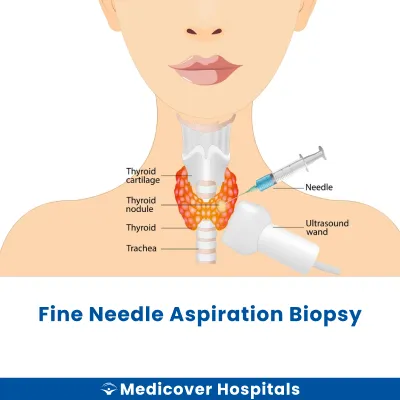
Fine needle aspiration biopsy is a diagnostic procedure. It involves using a thin, hollow needle to extract cells or fluid from a specific organ or body part, such as the thyroid, breast, or lymph nodes. This procedure helps in examining the cells under a microscope to detect abnormalities. It is minimally invasive and often performed under local anaesthesia.
This procedure is needed to diagnose conditions like cancer, infections, or inflammatory diseases. If left untreated, these conditions can worsen and lead to serious health complications. Fine needle aspiration biopsy helps in early detection and treatment planning. Modern surgical approaches include ultrasound-guided or CT-guided techniques, which enhance accuracy and safety. These methods ensure precise targeting of the area of concern.
Fine Needle Aspiration Biopsy Doctors Near You
Discover ENT specialists for fine needle aspiration biopsy at Medicover Hospitals across India. Choose your city and book a consultation to address your health concerns with expert care.
Why Choose Medicover Hospitals for Fine Needle Aspiration Biopsy?
Get a second opinion from trusted experts and makeconfident, informed decisions.
 Get Second Opinion
Complete Guide To Fine Needle Aspiration Biopsy
Everything you need to know about the procedure, preparation, and recovery
Fine needle aspiration biopsy procedure Indications
Doctors often recommend a fine needle aspiration biopsy when there is a need to evaluate lumps or masses in the body. This minimally invasive procedure helps in diagnosing the nature of the abnormal growth.
Thyroid Nodules
Patients may notice a lump in the neck or experience difficulty swallowing. Upon examination, doctors may find a nodule on the thyroid gland. If ultrasound results show suspicious characteristics, a biopsy is advised to rule out malignancy.
Enlarged Lymph Nodes
Swelling in the neck, underarms, or groin may be noticed by patients. Doctors may detect enlarged lymph nodes during a physical exam. If the swelling persists despite initial treatment, a biopsy helps determine the cause.
Salivary Gland Masses
Patients might experience facial swelling or pain. On examination, a mass in the salivary glands may be found. If imaging suggests an abnormality, a biopsy is necessary to assess for benign or malignant conditions.
Breast Lumps
Women may feel a lump in the breast during self-examination. Doctors may confirm this through a clinical exam and mammogram. If the lump shows suspicious features, a biopsy is performed to evaluate its nature.
Parathyroid Lesions
Symptoms like fatigue or bone pain may occur. Doctors might find elevated calcium levels and suspect parathyroid issues. If imaging shows a lesion, a biopsy is needed to confirm the diagnosis.
How to Prepare for Fine Needle Aspiration Biopsy?
Proper preparation for a fine needle aspiration biopsy helps ensure accurate results and reduces complications. Follow these steps to prepare effectively.
- Medication Review: Inform your doctor about all medications you take, including NSAIDs, anticoagulants, and herbal supplements.
- Medication Adjustment: You may need to stop NSAIDs, anticoagulants, and certain herbal supplements a few days before the procedure.
- Fasting Instructions: If sedation is planned, avoid eating or drinking for 6-8 hours before the procedure.
- Clothing Choice: Wear loose, comfortable clothing to the hospital for easy access to the biopsy site.
- Transportation Arrangement: Arrange for someone to drive you home after the procedure, especially if sedation is used.
- Medication List: Bring a list of your current medications, including dosages, to the hospital.
- Allergy Notification: Inform your healthcare provider about any allergies, especially to medications or latex.
- Relaxation Techniques: Practice deep breathing or other relaxation techniques to ease anxiety before the procedure.
Fine Needle Aspiration Biopsy Procedure (Step-by-Step)
Fine needle aspiration biopsy is performed by experienced specialists from the ENT department. The procedure usually takes 15-30 minutes and is commonly carried out under local anaesthesia.
- Preparation: The patient is positioned comfortably, and the biopsy area is cleaned and sterilised. Local anaesthesia may be applied to minimise discomfort.
- Needle Insertion: A thin, hollow needle is carefully inserted into the targeted lump, swelling, or mass to collect tissue or fluid samples.
- Sample Collection: Cells or fluid are gently aspirated using a syringe attached to the needle for laboratory analysis.
- Needle Removal: Once an adequate sample is collected, the needle is carefully withdrawn from the biopsy site.
- Pressure Application: Gentle pressure is applied to minimise bleeding, and a small dressing or bandage is placed over the area.
- Observation: The patient is monitored briefly for any immediate complications before discharge.
- Post-Procedure Care: Instructions regarding wound care, activity, and follow-up are provided, and patients can usually resume normal activities shortly after the procedure.
Who performs the fine needle aspiration biopsy procedure?
This procedure is performed by skilled ENT specialists trained in diagnosing and managing head and neck conditions through minimally invasive diagnostic techniques.
Recovery After Fine Needle Aspiration Biopsy Procedure
After a fine needle aspiration biopsy, recovery is typically quick and uncomplicated. Most patients can resume normal activities shortly after the procedure. However, it's important to follow specific guidelines to ensure a smooth recovery.
Day 1:
- Rest is recommended for the remainder of the day.
- Apply a cold compress to the biopsy site to reduce swelling.
- Avoid strenuous activities and heavy lifting.
- Stick to a light diet. Opt for soft foods like curd, dal-rice, or soups.
Day 2-3:
- Resume light activities as tolerated.
- Continue to avoid heavy lifting and vigorous exercise.
- Maintain a balanced diet with easily digestible foods such as khichdi or moong dal.
- Monitor the biopsy site for any signs of infection.
Day 4-7:
- Most patients can return to work or school unless advised otherwise by the doctor.
- Gradually reintroduce regular activities, but listen to your body.
- Ensure adequate hydration and nutrition to support healing.
When to Seek Urgent Help
- Severe pain or swelling at the biopsy site.
- Persistent bleeding or discharge from the biopsy site.
- Fever or chills indicating a possible infection.
- Difficulty breathing or swallowing if the biopsy was near the throat.
Contact your healthcare provider if you experience any of these symptoms. Always follow your doctor's specific instructions for recovery.
Benefits of the fine needle aspiration biopsy procedure
Fine needle aspiration biopsy is a minimally invasive procedure used to collect tissue samples for diagnostic purposes.
- Minimally Invasive: The procedure involves a small needle, reducing the need for surgical incisions.
- Quick Recovery: Patients can usually resume normal activities shortly after the procedure.
- Accurate Diagnosis: Provides essential information to help diagnose conditions like cancer.
- Cost-Effective: Generally less expensive than surgical biopsy methods.
Risks and Complications of Fine Needle Aspiration Biopsy Procedure
While generally safe, fine needle aspiration biopsy carries some risks and potential complications.
- Common: Minor bleeding or bruising at the needle site.
- Common: Mild pain or discomfort during or after the procedure.
- Rare: Infection at the biopsy site.
- Rare: Damage to nearby structures, depending on the biopsy location.
- Rare: Inconclusive results, necessitating further testing.
Cost of Fine needle aspiration biopsy procedure
The cost of a Fine needle aspiration biopsy procedure at Medicover Hospitals ranges from Rs. 1,000 to Rs. 36,000. The price varies based on the ward category chosen. We offer transparent pricing and support for insurance and TPA, including CGHS, ESI, and major TPAs. Cashless facilities are also available for your convenience.
Please contact the hospital for the latest insurance panel details as these may change periodically.
Frequently Asked Questions
1. How much does Fine needle aspiration biopsy cost?
The cost of a Fine needle aspiration biopsy at Medicover Hospitals ranges from Rs. 1000 to Rs. 36000, depending on the facility and services.
2. Is Fine needle aspiration biopsy covered under insurance?
Fine needle aspiration biopsy may be covered by CGHS, ESI, and major TPAs. Please contact the hospital for current panel details.
3. Will I have a scar after Fine needle aspiration?
Fine needle aspiration usually leaves a minimal scar. The small needle used reduces the risk of noticeable scarring.
4. Can I resume work immediately after Fine needle aspiration?
Most patients can return to work the next day. However, strenuous activities should be avoided for 24 hours.
5. Is there a risk of infection after Fine needle aspiration?
The risk of infection is low with Fine needle aspiration. Proper aftercare and hygiene can further minimize this risk.
6. Will I feel pain during Fine needle aspiration?
You may feel slight discomfort or pressure during the procedure. Local anaesthesia is often used to minimize pain.
7. Can I eat immediately after Fine needle aspiration?
You can eat light meals like curd, dal-rice, or khichdi after the procedure. Avoid heavy or spicy foods for a few hours.
8. How painful is a fine needle aspiration biopsy?
A fine needle aspiration biopsy is usually minimally painful, similar to a small injection. You may feel slight discomfort or a brief stinging sensation during the procedure.
9. Is a FNA biopsy considered surgery?
No, an FNA biopsy is not considered surgery. It is a minimally invasive diagnostic procedure performed using a thin needle.
10. How long does it take to recover from a fine needle aspiration biopsy?
Recovery is usually immediate or within a few hours. Some patients may experience mild soreness or bruising at the site, which resolves quickly.
11. Can I eat before the FNAC test?
Yes, in most cases you can eat normally before an FNAC test, unless your doctor gives specific instructions based on the biopsy site.


