What is Femto LASIK?
Femto LASIK is an advanced form of laser eye surgery used to correct common vision problems like nearsightedness, farsightedness, and astigmatism. It's also known as bladeless LASIK or all-laser LASIK, as it utilises a femtosecond laser instead of a mechanical blade to create the corneal flap.
In traditional LASIK, a surgical tool called a microkeratome, with a thin oscillating blade, is used to create a flap in the cornea. In Femto LASIK, this step is performed with a femtosecond laser, which delivers ultra-fast pulses of light to create a precise, evenly shaped flap.
This advancement enhances accuracy, reduces the risk of complications, and facilitates a smoother recovery.
The term keratomileusis means "carving the cornea," a technique that began with anterior lamellar keratoplasty (ALK), where surgeons used a microkeratome to reshape the cornea.
Over time, technology evolved. In the early 1990s, the femtosecond laser was introduced, revolutionizing the procedure by replacing the blade with laser precision. This innovation led to Femto LASIK a safer, more predictable option for vision correction.
Because the corneal flap heals naturally without stitches, recovery is quick for most patients. Many people experience clear vision within 24 hours and can return to normal activities within a few days.
How does Femto LASIK work?
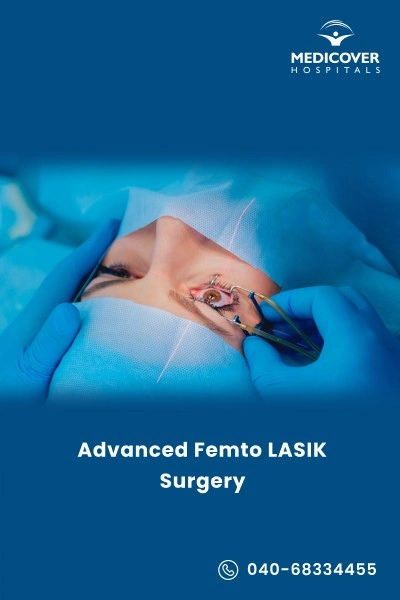
The Femto LASIK procedure is quick, typically taking about 10 to 15 minutes for both eyes. It's performed as an outpatient procedure using numbing eye drops no needles or general anesthesia are needed.
First, the femtosecond laser creates a thin, hinged flap in the outer layer of the cornea. The laser uses thousands of tiny, focused pulses to separate the tissue at a precise depth. This flap is then gently lifted to expose the inner layer of the cornea.
Next, an excimer laser reshapes the underlying corneal tissue. This laser removes microscopic amounts of tissue to correct how light focuses on the retina. For example:
- In nearsightedness, it flattens the cornea
- In farsightedness, it steepens the cornea
- In astigmatism, it smooths out irregular curves
After reshaping, the flap is carefully repositioned. It adheres naturally and begins healing immediately, acting like a built-in bandage.
You'll rest briefly after the procedure and go home the same day. Most people notice improved vision right away, with little discomfort.
What are the types of laser eye surgery?
Two main types of laser vision correction are used today: Photorefractive keratectomy (PRK) and Laser in-situ keratomileusis (LASIK). Both correct vision by reshaping the cornea with an excimer laser, but they differ in how the cornea is accessed.
Photorefractive keratectomy (PRK):
In PRK, the thin outer layer of the cornea (called the epithelium) is completely removed. Then, the excimer laser reshapes the surface. A protective contact lens is placed over the eye while the epithelium regrows over 3 to 5 days. PRK is often recommended for people with thin corneas or those in physically demanding jobs where eye injury is a risk.
Laser in-situ keratomileusis (LASIK):
LASIK involves creating a flap in the cornea, lifting it, reshaping the inner layer, and replacing the flap. Because the flap heals quickly, recovery is faster than with PRK, and most people have little discomfort.
Femto LASIK is a modern form of LASIK that uses a femtosecond laser to create the flap, making it more precise than blade-based methods. It combines the rapid recovery of LASIK with the safety and precision of laser-assisted flap creation.
Your eye doctor will evaluate your corneal thickness, eye health, and lifestyle to help you decide which procedure is best for you.
15-30 minutes
Surgery Duration
Eye Drops
Anesthesia Used
Outpatient (same-day)
Hospital Stay
1-2 Days
Full Recovery Timeline
What conditions does Femto LASIK treat?
Femto LASIK corrects common refractive errors and vision problems caused by the way light focuses on the retina.
It can effectively treat:
- Nearsightedness (myopia): Distant objects appear blurry because the cornea is too steep or the eye is too long.
- Farsightedness (hyperopia): Close objects are blurry because the cornea is too flat or the eye is too short.
- Astigmatism: Vision is blurry or distorted at all distances due to an irregularly shaped cornea.
Using a femtosecond laser to create a precise corneal flap and an excimer laser to reshape the underlying tissue, Femto LASIK improves how light focuses on the retina. This often reduces or eliminates the need for glasses or contact lenses.
Who is the ideal candidate for Femto LASIK surgery?
To qualify as a candidate for Femto LASIK surgery, you must meet the following requirements:
- Age of 18 or older: LASIK procedures are strictly meant for adult patients.
- Stable vision: Surgery can't be performed if your prescription has changed in the past year, you take vision-altering medications, or experience hormonal fluctuations affecting your vision, like those from breastfeeding or diabetes.
- Good wound healing: You should not have any conditions or be on medications that hinder proper healing.
- Thin cornea: Individuals with skinny corneas might face a higher risk during a LASIK procedure.
- Previous refractive surgeries: Past refractive surgeries may disqualify you from undergoing Femto or other LASIK procedures.
Conditions that May Make You Ineligible for Surgery
Certain eye conditions may affect your suitability for surgery, especially if they could complicate the procedure or healing process. It's important to discuss your medical history with your doctor to determine if any of these conditions apply to you.
Preparing for Femto LASIK Procedure
Preparing for Femto LASIK is an important step in ensuring a safe and successful outcome. This advanced vision correction procedure requires a few simple but essential steps before surgery day. Your eye care team will guide you through the process, but knowing what to expect can help you feel confident and ready.
How should I prepare before the Femto LASIK procedure?
Start by having a detailed discussion with your surgeon about your vision goals, lifestyle, and any concerns you may have. This is the time to ask about realistic outcomes, recovery, risks, and costs.
If you wear contact lenses, you'll need to stop wearing them before your final eye exam and surgery. This is because contacts can temporarily change the shape of your cornea. The recommended time off depends on the type:
- Soft contact lenses: Stop for at least 1-2 weeks
- Rigid gas-permeable lenses: Stop for 3 weeks or longer
Avoid wearing eye makeup, creams, lotions, or perfumes around your eyes for at least 24 hours before surgery these can interfere with the laser and increase infection risk.
Plan for your surgery day:
- Arrange for someone to drive you to and from the clinic. you won't be able to drive after the procedure
- Wear comfortable clothing
- Follow all instructions from your provider about medications and eye drops
Ensure that your job or daily responsibilities allow for sufficient rest. Most people return to work within 1-2 days, although this timeframe depends on your individual healing process and the nature of your job.
What tests are done before Femto LASIK surgery?
Before your procedure, your eye doctor will perform a comprehensive eye exam to confirm you're a good candidate.
These tests may include:
- Corneal topography: A detailed map of the cornea's shape and curvature to guide the laser.
- Pachymetry: Measurement of corneal thickness to confirm it's safe to create a flap and reshape the cornea.
- Refraction test: Confirms your current prescription for glasses or contact lenses.
- Pupil size measurement: Large pupils can increase the risk of glare or halos after surgery, especially at night.
- Dry eye evaluation: Detects dryness that could affect healing and visual outcomes.
- Eye pressure check (tonometry): Screens for glaucoma or ocular hypertension.
- Wavefront analysis (aberrometry): Advanced scan that detects subtle vision imperfections for a customized treatment.
These scans help your surgeon create a personalized treatment plan for your eyes.
Should I stop eating, drinking, or taking medicines before the procedure?
You do not need to fast before Femto LASIK. Since the procedure uses only numbing eye drops and no general anesthesia, you can eat and drink normally on the day of surgery.
However:
- Avoid alcohol the day before it can dehydrate your eyes
- Skip caffeine if it makes you jittery staying calm helps during the procedure
For medications:
- Continue most regular medicines unless your surgeon tells you otherwise
- Inform your provider if you're taking blood thinners, steroids, or acne medications like isotretinoin, as they may affect healing
- Use any prescribed eye drops as directed in the days leading up to surgery
Never stop a medication without talking to your doctor first.
How is the Femto LASIK procedure performed?
You will be guided into a procedure room and asked to lie down on a reclining chair. Your eye will be cleaned, and a device called an eye speculum will be used to keep your eyelids open, so you won't have to worry about blinking.
Numbing eye drops are applied to ensure you do not feel pain during the procedure. You will remain awake but relaxed.
To create the corneal flap, a suction ring is placed over your eye. This may cause a brief dimming or graying out of your vision, which is normal and lasts only a few seconds. A flat contact lens is then used to stabilize your eye and gently flatten the cornea.
The femtosecond laser delivers thousands of tiny pulses to create a thin hinged flap in the outer layer of the cornea. Once the flap is formed, the suction is released and the flap is gently lifted.
Next, an excimer laser reshapes the underlying corneal tissue using cool ultraviolet light to remove microscopic amounts of tissue. You may hear a clicking or ticking sound and sometimes notice a mild burning smell this is normal and comes from the laser interacting with tissue.
After the reshaping is complete the flap is carefully repositioned. It adheres naturally without stitches and begins to heal immediately.
The same process is repeated on the other eye if both eyes are being treated.
What type of anesthesia is used?
Femto LASIK does not require general anesthesia. Instead numbing eye drops are used to keep your eyes comfortable throughout the procedure. These drops prevent pain and discomfort.
You may also be offered a mild oral sedative to help you relax if you feel anxious. Most people are awake and alert during the procedure but feel no pain.
Because no general anesthesia is used there is no need for breathing tubes or extended recovery. You will be able to walk out shortly after the procedure is complete.
How long does the Femto LASIK procedure take?
The entire process takes about 10 to 15 minutes for both eyes. Each eye usually takes less than 10 minutes with actual laser time lasting only seconds to a few minutes depending on your prescription.
You should plan to spend about an hour at the surgical center to allow time for preparation and immediate post procedure monitoring.
Most people notice improved vision right away although full stabilization can take a few days to a week.
Who performs the Femto LASIK procedure?
Femto LASIK is performed by an ophthalmologist who specializes in refractive surgery. These surgeons have advanced training in laser vision correction and use precision technology to guide every step.
Your care team will include trained technicians and nurses who assist during the procedure and ensure your comfort and safety.
You will meet your surgeon before the procedure and they will be with you throughout the process. They use detailed eye scans taken earlier to customize the treatment for your unique vision needs.
What is the Mechanism Behind Femto LASIK?
To understand how Femto LASIK works, it is essential to comprehend the progression of vision issues and the role of refractive surgery in addressing them. Refractive errors occur when the eye struggles to refract and focus light. Varieties of refractive errors encompass:
- Myopia: Difficulty in seeing distant objects, also known as nearsightedness. It is characterized by the cornea's steep shape, prompting refractive surgery to lessen the cornea's curvature for correction.
- Hyperopia: Difficulty in perceiving nearby objects, also termed farsightedness. This condition results from the cornea being excessively flat, necessitating refractive surgery to augment the cornea's curvature.
- Astigmatism: Anomalies in the cornea's shape attributed to irregular curvature. The shaping surgery can rectify these aberrations.
- Presbyopia: Loss of eye lens flexibility due to ageing. This age-related occurrence involves the lens inside the eye becoming rigid, impairing its flexibility. While refractive surgery can alleviate this issue in select cases, it might exclude you from being an ideal candidate for refractive procedures.
Not all refractive errors are amenable to refractive surgery. It solely targets issues that can be rectified by reshaping the cornea.
When refractive surgeries are employed to address these issues, an incision is made on the eye's surface, followed by using a laser to reshape the cornea.
What to Expect During Recovery After Femto LASIK Surgery
Recovery after Femto LASIK is typically quick, and most people notice improved vision within a day or two. The procedure is minimally invasive and performed with precision; however, your eyes still require time to heal. Following your provider's instructions closely helps ensure a smooth recovery and the best possible vision outcome.
What to Expect After Femto LASIK Surgery?
- You may encounter discomfort such as mild pain, burning, itching, or irritation.
- Experience watering or tearing of the eyes.
- Encounter hazy or blurred vision.
- Sensitivity to light, halos, or glare around lights.
- Redness or bloodshot eyes may occur; these symptoms usually resolve within a few days.
Femto LASIK Surgery Recovery
- Wear an eye shield for the first 24 to 48 hours post-surgery to protect the eye.
- Follow-up appointment within 24 to 48 hours after surgery to remove eye shields and assess vision. You may be given eye drops to bring home to prevent infection or inflammation.
- Even if your vision is blurred, you will be instructed not to wear contact lenses on the operated eye.
- It is recommended to refrain from using lotions, creams, and cosmetics for two weeks following surgery.
- Your doctor will recommend limiting activities such as non-contact sports and strenuous exercises for one to three days after the procedure.
- Avoid swimming or using a hot tub for one to two weeks after surgery.
- Avoid contact sports and rigorous activities for at least four weeks after your surgery.
- Your vision may experience fluctuations during the initial months after surgery, with the full effects of the procedure becoming apparent three to six months after the procedure.
- Your surgeon will arrange regular follow-up appointments with you for a minimum of six months post-surgery.
Lifestyle Changes After Femto LASIK Surgery
Following Femto LASIK surgery, patients should adopt specific lifestyle changes to ensure proper healing and maintain long-term eye health:
- Avoid rubbing your eyes for at least a few weeks post-surgery to prevent flap displacement.
- Use prescribed eye drops regularly to prevent dryness and infection.
- Limit screen time during the first few days to reduce eye strain.
- Wear protective sunglasses outdoors to shield your eyes from UV rays and reduce sensitivity to light.
- Avoid swimming pools, hot tubs, and saunas for at least 1-2 weeks to minimize infection risk.
- Refrain from eye makeup and facial creams around the eyes for about a week.
- Attend follow-up appointments as scheduled to monitor healing and vision clarity.
- Maintain a healthy diet and hydration to support eye recovery and reduce dryness.
What Are the Benefits of Femto LASIK?
Femto LASIK offers several advantages over traditional LASIK or PRK:
- High precision in creating the corneal flap using a femtosecond laser
- Reduced risk of flap-related complications compared with blade-based LASIK
- Faster healing and quicker visual recovery
- Effective correction of nearsightedness, farsightedness, and astigmatism
- Minimally invasive procedure with no need for stitches
What Are the Risks and Complications OF Femto LASIK?
Although Femto LASIK is generally safe, potential risks include:
- Treatment may be ineffective or only partially effective, requiring enhancement or retreatment
- Reduced long-term effectiveness as vision changes over time
- Permanent vision loss, although rare
- Ongoing visual disturbances such as halos, glare, or starbursts around lights
Complications specific to Femto LASIK:
- Opaque bubble layer (OBL): Gas bubbles in the corneal flap may interfere with laser function during surgery
- Transient light sensitivity syndrome (TLSS): Post-surgery extreme light sensitivity; usually treated with topical steroids
- Rainbow glare: Minor irregularities on the back of the flap causing colored bands of light in vision
What are the Side Effects of Femto Lasik?
- Mild dry eyes or irritation after surgery
- Temporary blurred or fluctuating vision during initial recovery
- Slight discomfort or itching as the eye heals
- Light sensitivity for a few days to weeks
How much does Femto LASIK surgery cost?
The cost of Femto LASIK surgery in India can vary based on several factors, including:
- Hospital or Clinic: Premium eye care centers with advanced technology and experienced surgeons may charge higher fees. Reputed institutions often offer packages that include pre-surgery consultations, the surgery itself, and post-operative care.
- Location: The cost may differ significantly between metropolitan cities and smaller towns. For instance, the cost in cities might be higher compared to smaller cities.
- Technology Used: The type of laser technology and equipment used can influence the cost. More advanced, newer technologies tend to be more expensive.
- Surgeon's Expertise: Highly experienced and renowned surgeons may charge more for their services. Their expertise often ensures better outcomes and safety.
- Pre-and Post-Surgery Care: Complete care packages that include follow-up visits, medications, and tests can increase the overall cost.
Typical Cost Range
In India, the cost of Femto LASIK surgery typically ranges from INR 80,000 to INR 1,50,000 per eye. Some centers may offer discounts or packages that reduce the overall cost, especially if both eyes are treated simultaneously.
 040 68334455
 WhatsApp
 Patient Portal
 Home Care