 Call
Call Patient Reports
Best Hospital for Femoro Popliteal Bypass Surgery with Advanced Graft Care
At Medicover Hospitals, our expert team of cardiothoracic and vascular surgeons, with qualifications like MS, DNB, and MCh, perform the femoro popliteal bypass with graft using the open surgical approach. This procedure effectively restores blood flow, often resulting in shorter hospital stays for patients.
Expert Surgeons
Yearly Surgeries
Patient Satisfaction
What is Femoro Popliteal Bypass With Graft?
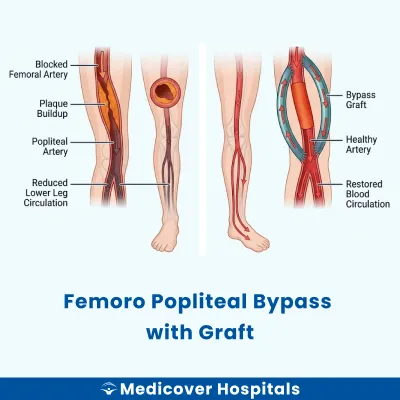
Femoro popliteal bypass with graft is a surgical procedure. It involves rerouting blood flow around a blocked artery in the leg. The femoral artery (main artery in the thigh) and the popliteal artery (located behind the knee) are the primary focus. A graft, which is a blood vessel from another part of the body or a synthetic tube, is used to create a new pathway for blood flow.
This surgery is needed when arteries in the leg become narrowed or blocked due to peripheral artery disease (PAD). If untreated, PAD can lead to pain, ulcers, or even gangrene. Modern surgical approaches include open surgery and minimally invasive techniques like endovascular procedures. These methods help restore proper blood circulation and alleviate symptoms.
Femoro Popliteal Bypass With Graft Doctors Near You
Find experienced CTVS specialists for femoro popliteal bypass with graft at Medicover Hospitals across India. Choose your city and book a consultation to discuss your treatment options today.
Why Choose Medicover Hospitals for Femoro Popliteal Bypass With Graft?
Get a second opinion from trusted experts and makeconfident, informed decisions.
 Get Second Opinion
Complete Guide To Femoro Popliteal Bypass With Graft
Everything you need to know about the procedure, preparation, and recovery
Femoro Popliteal Bypass with Graft Surgery Indications
Doctors recommend femoro popliteal bypass with graft surgery primarily to restore blood flow in the legs. This procedure is often considered when other treatments have not improved symptoms or when blood flow is severely restricted.
Severe Peripheral Artery Disease (PAD)
Patients may experience leg pain while walking, known as claudication. Doctors find reduced blood flow in the arteries on imaging tests. When lifestyle changes and medications fail to relieve symptoms, surgery may be necessary.
Critical Limb Ischaemia
Symptoms include persistent pain in the legs or feet, even at rest, and non-healing wounds. Diagnostic tests show severely reduced blood flow. Surgery is considered when there is a risk of tissue loss or amputation.
Failed Angioplasty or Stenting
Patients may have recurrent symptoms after previous procedures like angioplasty. Imaging may reveal re-narrowing of the artery. Surgery is recommended when these less invasive treatments do not succeed.
Aneurysm in the Femoral or Popliteal Artery
Symptoms might include a pulsating mass or pain in the leg. Ultrasound or CT scans show an aneurysm. Surgery is advised to prevent rupture or thrombosis.
Severe Atherosclerosis
Patients often report leg weakness and pain. Tests reveal significant plaque build-up in the arteries. When medication and lifestyle changes are ineffective, surgical intervention is considered.
How to Prepare for Femoro Popliteal Bypass with Graft?
Proper preparation for a femoro popliteal bypass with graft is crucial to ensure a smooth surgery and recovery. It helps minimise risks and complications.
- Medication Review: Discuss all medications with your doctor. You may need to stop NSAIDs, anticoagulants, and herbal supplements a week before surgery.
- Fasting Guidelines: Do not eat or drink anything for at least 8 hours before the procedure to prepare for anaesthesia.
- Pre-Surgery Tests: Complete any required blood tests, imaging, or other evaluations as advised by your healthcare provider.
- Clothing: Wear loose, comfortable clothing on the day of surgery for ease of movement and comfort.
- Transportation: Arrange for someone to drive you home post-surgery, as you may not be able to drive yourself.
- Medication List: Bring a list of all medications you take, including dosages, to the hospital.
- Smoking and Alcohol: Avoid smoking and alcohol for a few days before and after surgery to aid recovery.
- Hygiene: Bathe with an antiseptic soap the night before or morning of the surgery to reduce infection risk.
Femoro Popliteal Bypass with Graft Surgery (Step-by-Step)
This procedure is performed by CTVS (Cardiothoracic and Vascular Surgery) specialists. It typically lasts 2-4 hours and is done under general anaesthesia.
- Preparation: The patient is positioned on the operating table. General anaesthesia is administered to ensure the patient is asleep and pain-free.
- Incision: A 5-10 cm incision is made in the groin area to access the femoral artery. Another incision is made near the knee to access the popliteal artery.
- Harvesting the Graft: A suitable vein, often the saphenous vein, is harvested from the leg. This vein will be used as the graft for bypass.
- Bypass Creation: The harvested vein is carefully attached to the femoral artery and the popliteal artery. Surgical instruments like a bipolar cautery and vascular clamps are used to ensure precision.
- Graft Placement: The graft is checked for proper blood flow. A harmonic scalpel may be used to ensure minimal tissue damage during adjustments.
- Closure: Once the graft is in place and functioning, the incisions are closed with sutures or staples. The area is then bandaged.
- Recovery: The patient is moved to a recovery room. Vital signs are monitored as the patient wakes from anaesthesia.
Who Performs Femoro Popliteal Bypass with Graft Surgery?
This surgery is performed by cardiothoracic and vascular surgeons. These specialists are trained in managing complex vascular conditions and performing intricate procedures to restore blood flow in the limbs.
Recovery After Femoro Popliteal Bypass with Graft Surgery
Recovery from a femoro popliteal bypass with graft surgery involves gradual healing and lifestyle adjustments. Patients can expect a structured recovery timeline, focusing on wound care, mobility, and dietary changes to support healing.
Day 1-3:
- Hospital stay is common. Medical staff will monitor vital signs and manage pain.
- Start with light activities like sitting up and short walks with assistance.
- Begin a soft diet including curd, dal-rice, and soups to ease digestion.
Day 4-7:
- Gradual increase in walking distance. Avoid strenuous activities.
- Focus on wound care and follow-up appointments.
- Continue with a balanced diet. Include moong dal and khichdi for nutrition.
Week 2-4 (Phase 1):
- Stitches or staples may be removed. Continue with light exercises.
- Return to light work or school activities if comfortable.
- Maintain a heart-healthy diet. Include fruits, vegetables, and whole grains.
Week 5-8 (Phase 2):
- Increase activity levels gradually. Avoid heavy lifting or high-impact exercises.
- Regular follow-ups to monitor graft function and overall health.
- Stick to dietary recommendations to support vascular health.
When to Seek Urgent Help:
- Severe leg pain or swelling.
- Signs of infection like redness, warmth, or discharge from the wound.
- Sudden shortness of breath or chest pain.
Benefits of Femoro Popliteal Bypass with Graft Surgery
Femoro popliteal bypass with graft surgery is a procedure aimed at improving blood flow in the legs. It can offer several benefits for patients with blocked arteries.
- Improved Circulation: This surgery can significantly enhance blood flow to the legs, reducing pain and discomfort.
- Increased Mobility: Patients often experience better mobility and can engage in daily activities with less difficulty.
- Pain Relief: Many individuals report a reduction in leg pain, especially during walking or exercising.
- Prevention of Complications: By restoring blood flow, the procedure can help prevent further complications like ulcers or gangrene.
Risks and Complications of Femoro Popliteal Bypass with Graft Surgery
While the surgery can be beneficial, it is important to be aware of potential risks and complications.
- Infection at the surgical site can occur, requiring additional treatment.
- Bleeding during or after the procedure may necessitate further medical attention.
- Blood clots can form in the graft, affecting its effectiveness.
- Nerve damage might occur, leading to numbness or weakness in the leg.
- Graft failure is possible, which may require additional surgical intervention.
Common Risks:
Rare Complications:
Cost of Femoro Popliteal Bypass with Graft Surgery
The cost of femoro popliteal bypass with graft surgery typically ranges from Rs. 95,000 to Rs. 4,50,000 and may vary based on factors such as the surgical approach, duration of hospital stay, room category, required diagnostics, and post-operative care.
At Medicover Hospitals, we ensure transparent pricing and offer support for insurance and TPA, including CGHS, ESI, and major TPAs. A cashless facility is also available for your convenience. Please contact the hospital for the latest insurance panel details as these may change periodically.
Frequently Asked Questions
1. How much does Femoro popliteal bypass with graft surgery cost at Medicover Hospitals?
The cost of Femoro popliteal bypass with graft surgery typically ranges from Rs. 95,000 to Rs. 4,50,
2. For exact pricing based on individual needs, please contact Medicover Hospitals. 2. Is Femoro popliteal bypass with graft surgery covered under health insurance at Medicover?
Femoro popliteal bypass with graft surgery may be covered by CGHS, ESI, and major TPAs. Please contact the hospital for current panel details.
3. Will I experience leg swelling after surgery?
Leg swelling can occur after Femoro popliteal bypass with graft surgery. It usually subsides with proper care and follow-up.
4. Can I walk immediately after the surgery?
Walking is encouraged soon after Femoro popliteal bypass with graft surgery. However, follow your doctor's advice on the extent and duration of walking.
5. Will I need lifelong medication after the surgery?
You may need to take blood thinners after Femoro popliteal bypass with graft surgery. Your doctor will provide specific guidance based on your condition.
6. What foods should I avoid post-surgery?
After Femoro popliteal bypass with graft surgery, avoid high-fat foods. Opt for light meals like curd, dal-rice, and khichdi.
7. Is there a risk of graft blockage?
Graft blockage is a potential complication of Femoro popliteal bypass with graft surgery. Regular follow-ups and lifestyle changes can help manage this risk.


