 Call
Call Patient Reports
Femoral Femoral Bypass Grafting Surgery Hospital by Expert Ctvs Cardiothoracic And Vascular Surgery
Femoral Femoral Bypass Grafting at Medicover Hospitals is performed using the open surgical approach. Our team of surgeons, with qualifications like MS, DNB, and MCh, ensure precise execution. This procedure often results in shorter hospital stays, enhancing patient recovery.
Expert Surgeons
Yearly Surgeries
Patient Satisfaction
What is Femoral Femoral Bypass Grafting?
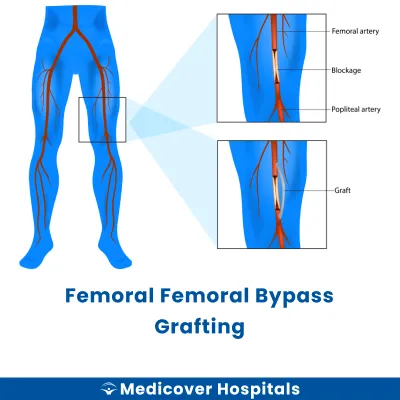
Femoral Femoral Bypass Grafting is a surgical procedure. It involves creating a bypass between the femoral arteries in the legs. The femoral artery is a major blood vessel that supplies blood to the lower limbs. This procedure helps improve blood flow when one of the femoral arteries is blocked or narrowed.
This surgery is needed for conditions like peripheral artery disease (PAD) or atherosclerosis. These conditions cause reduced blood flow to the legs. If left untreated, it can lead to pain, ulcers, or even gangrene. Modern surgical approaches include minimally invasive techniques and endovascular methods. These methods aim to reduce recovery time and improve outcomes.
Femoral Femoral Bypass Grafting Doctors Near You
Discover skilled ctvs-cardiothoracic-and-vascular-surgery specialists for femoral femoral bypass grafting at Medicover Hospitals across India. Choose your city and book a consultation today for expert care.
Why Choose Medicover Hospitals for Femoral Femoral Bypass Grafting?
Get a second opinion from trusted experts and makeconfident, informed decisions.
 Get Second Opinion
Complete Guide To Femoral Femoral Bypass Grafting
Everything you need to know about the procedure, preparation, and recovery
Femoral Femoral Bypass Grafting Surgery Indications
Doctors recommend femoral femoral bypass grafting when blood flow to the legs is severely restricted. This procedure is often considered when other treatments have not improved the patient's condition.
Severe Peripheral Arterial Disease
Patients may experience severe leg pain, especially when walking, due to reduced blood flow. Doctors find significant blockages in the femoral arteries through imaging tests. When medications and lifestyle changes do not relieve symptoms, surgery is considered.
Critical Limb Ischaemia
Patients often report persistent pain in the legs, even at rest, and may have non-healing wounds. Diagnostic tests show poor blood circulation. Surgery becomes necessary when there is a risk of tissue loss or gangrene.
Aortoiliac Occlusive Disease
Symptoms include leg weakness and pain during physical activity. Imaging reveals blockages in the aortoiliac region. When endovascular procedures are not effective, bypass grafting is recommended.
Failed Angioplasty or Stenting
Patients may continue to experience leg pain and limited mobility after these procedures. Follow-up tests show inadequate blood flow. Surgery is advised when previous interventions do not succeed.
Severe Claudication
Patients experience significant leg pain after short walks. Tests confirm reduced blood flow in the femoral arteries. When conservative treatments fail to improve mobility, bypass surgery is considered.
How to Prepare for Femoral Femoral Bypass Grafting?
Proper preparation is crucial for a successful femoral femoral bypass grafting. It helps reduce complications and ensures a smoother recovery process.
- Medication Review: Stop NSAIDs, anticoagulants, and herbal supplements as advised by your doctor.
- Fasting: Fast for at least 8 hours before the surgery if general anaesthesia is used.
- Pre-Surgery Tests: Complete all required blood tests, ECG, and imaging studies as scheduled.
- Medication List: Bring a list of all medications with dosages for hospital records.
- Clothing: Wear loose, comfortable clothing on the day of the surgery.
- Transport: Arrange for someone to drive you home post-surgery.
- Hygiene: Bathe with antiseptic soap the night before and morning of the surgery.
- Smoking and Alcohol: Avoid smoking and alcohol for at least 24 hours before the procedure.
Femoral Femoral Bypass Grafting Surgery (Step-by-Step)
Overview: Performed by CTVS (Cardiothoracic and Vascular Surgery) specialists, this procedure typically lasts 2-4 hours. It is done under general anaesthesia.
- Preparation: The patient is placed under general anaesthesia. The surgical area is cleaned and sterilised.
- Incision: A 5-10 cm incision is made in the groin area of each leg. This allows access to the femoral arteries.
- Exposure: The femoral arteries are carefully exposed using retractors. This step ensures clear visibility for the surgeon.
- Graft Harvesting: A suitable graft, often a synthetic tube, is prepared. It will be used to bypass the blocked artery.
- Anastomosis: The graft is sewn to the femoral artery on both sides using fine sutures. Instruments like vascular clamps and scissors are used.
- Closure: Once the graft is in place and blood flow is confirmed, the incisions are closed with sutures or staples.
- Recovery: The patient is moved to a recovery room. Vital signs are monitored as the anaesthesia wears off.
Who Performs Femoral Femoral Bypass Grafting Surgery?
This surgery is performed by specialists in Cardiothoracic and Vascular Surgery. These surgeons are trained to handle complex vascular procedures. They use precise instruments and techniques to ensure successful outcomes.
Recovery After Femoral Femoral Bypass Grafting Surgery
Recovery from femoral femoral bypass grafting surgery involves gradual healing and lifestyle adjustments. Patients can expect to stay in the hospital for a few days post-surgery. It's important to follow medical advice for a smooth recovery.
Day 1-3:
- Rest is crucial. Hospital staff will monitor vital signs and manage pain.
- Begin with a liquid diet, gradually moving to soft foods like soups and khichdi.
- Short walks around the hospital room are encouraged to improve circulation.
Day 4-7:
- Continue with light activities. Avoid strenuous movements.
- Include easily digestible foods like dal-rice and moong dal in meals.
- Follow wound care instructions to prevent infection.
Week 2-4:
- Gradually increase physical activity as advised by the doctor.
- Return to normal diet, focusing on nutritious options like curd and vegetables.
- Most patients can resume work or school after 2-4 weeks, depending on recovery progress.
Phase 2 (Week 5-8):
- Engage in regular, moderate exercise to maintain vascular health.
- Continue following a balanced diet. Avoid high-fat and high-sugar foods.
- Regular follow-up appointments are essential to monitor recovery.
When to Seek Urgent Help:
- Severe pain or swelling in the legs.
- Fever or signs of infection at the incision site.
- Sudden shortness of breath or chest pain.
- Changes in leg colour or temperature.
Benefits of Femoral Femoral Bypass Grafting Surgery
Femoral femoral bypass grafting is a surgical procedure aimed at improving blood flow in the legs.
- Improved Circulation: Helps restore blood flow to the affected leg, reducing symptoms of claudication.
- Pain Relief: Alleviates pain associated with poor blood circulation in the legs.
- Enhanced Mobility: Patients often experience improved ability to walk and perform daily activities.
- Reduced Risk of Limb Loss: Decreases the likelihood of amputation due to severe arterial disease.
Risks and Complications of Femoral Femoral Bypass Grafting Surgery
While the surgery can be beneficial, it carries certain risks and potential complications.
- Infection (Common): Risk of infection at the surgical site.
- Bleeding (Common): Possibility of bleeding during or after the procedure.
- Blood Clots (Rare): Formation of clots that can obstruct blood flow.
- Graft Failure (Rare): The bypass graft may not function as intended.
- Nerve Damage (Rare): Potential for nerve injury during surgery.
- Heart Attack (Rare): Risk of cardiac events during or after surgery.
Cost of Femoral Femoral Bypass Grafting Surgery
The cost of Femoral Femoral Bypass Grafting Surgery can vary starting from ₹2,00,000 - ₹5,00,000 based on several factors. These include the surgical approach, duration of hospital stay, room category, required diagnostics, and post-operative care.
At Medicover Hospitals, we ensure transparent pricing for all procedures. We offer support for insurance and TPA, including CGHS, ESI, and major TPAs. A cashless facility is also available for your convenience. Please contact the hospital for the latest insurance panel details as these may change periodically.
Frequently Asked Questions
1. How much does Femoral Femoral Bypass Grafting surgery cost at Medicover Hospitals?
The cost of Femoral Femoral Bypass Grafting surgery varies starting from ₹2,00,000 - ₹5,00,000 . Please contact Medicover Hospitals for detailed pricing information.
2. Is Femoral Femoral Bypass Grafting surgery covered under health insurance at Medicover?
Femoral Femoral Bypass Grafting surgery may be covered by CGHS, ESI, and major TPAs. Please contact the hospital for current panel details.
3. Will I need to modify my walking routine after surgery?
Yes, you may need to adjust your walking routine initially. Gradual increase in activity is advised to aid recovery.
4. Can I experience leg swelling after the surgery?
Leg swelling is a common occurrence post-surgery. Elevating your legs and wearing compression stockings can help manage it.
5. What dietary changes are needed post-surgery?
A balanced diet with curd, dal-rice, and fruits is recommended. Avoid high-fat foods to support vascular health.
6. Will I need blood thinners after the bypass?
Yes, blood thinners may be prescribed to prevent clotting. Follow your doctor's instructions for medication use.
7. Can I drive soon after the surgery?
Driving is usually restricted for a few weeks post-surgery. Your doctor will advise when it is safe to resume driving.


