 Call
Call Patient Reports
Facet Joint and Selective Nerve Root Blocks Procedure Hospital with Expert Neurosurgeons
At Medicover Hospitals, our neurosurgeons, with qualifications like MS, MCh, and DNB, perform Facet Joint and Selective Nerve Root Blocks using minimally invasive techniques. This approach ensures smaller incisions and reduced blood loss, promoting quicker recovery for patients across India.
Expert Surgeons
Yearly Surgeries
Patient Satisfaction
What is Facet Joint and Selective Nerve Root Blocks?
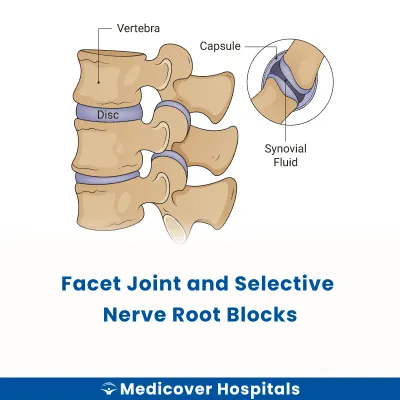
Facet Joint and Selective Nerve Root Blocks are minimally invasive procedures. They target the spine. Facet joints (small stabilizing joints in the spine) can cause pain. Selective nerve root blocks involve injecting medication near specific nerve roots (nerves branching from the spinal cord) to reduce inflammation and pain. These procedures help diagnose and treat spine-related pain.
These blocks are needed for conditions like arthritis, herniated discs, or spinal stenosis. These conditions can cause chronic back or neck pain. If left untreated, they may lead to decreased mobility and quality of life. Modern surgical approaches include fluoroscopy-guided injections and ultrasound-guided techniques. These ensure precise delivery of medication to the affected area.
Facet Joint and Selective Nerve Root Blocks Doctors Near You
Find experienced neurosurgeons for facet joint and selective nerve root blocks at Medicover Hospitals across India. Choose your city and book a consultation to address your spine health concerns today.
Why Choose Medicover Hospitals for Facet Joint and Selective Nerve Root Blocks?
Get a second opinion from trusted experts and makeconfident, informed decisions.
 Get Second Opinion
Complete Guide To Facet Joint And Selective Nerve Root Blocks
Everything you need to know about the procedure, preparation, and recovery
Facet Joint and Selective Nerve Root Blocks Procedure Indications
Doctors recommend Facet Joint and Selective Nerve Root Blocks to manage pain and inflammation in the spine. These procedures help diagnose and treat specific spinal conditions when conservative treatments are ineffective.
Chronic Back Pain
Patients often experience persistent back pain that doesn't improve with rest or medication. Imaging may show degenerative changes in the facet joints. When physical therapy and medications fail, this procedure can provide relief.
Radicular Pain
Patients report sharp, shooting pain radiating from the spine to the limbs. MRI or CT scans may reveal nerve root compression. If pain persists despite oral medications and physiotherapy, nerve root blocks may be advised.
Facet Joint Arthritis
Individuals suffer from localized pain and stiffness in the spine, especially in the morning. X-rays or MRIs often show arthritic changes in the facet joints. When non-steroidal anti-inflammatory drugs (NSAIDs) and lifestyle changes are insufficient, this procedure can help.
Sciatica
Patients experience pain, tingling, or numbness along the sciatic nerve path. Diagnostic imaging may indicate nerve irritation. If symptoms persist despite conservative care, selective nerve root blocks may be recommended.
Failed Back Surgery Syndrome
Some patients continue to experience pain after back surgery. Imaging might show no clear cause for the pain. When other treatments do not alleviate symptoms, nerve blocks can be considered for pain management.
How to Prepare for Facet Joint and Selective Nerve Root Blocks?
Proper preparation is crucial for the success and safety of facet joint and selective nerve root blocks. It ensures the procedure goes smoothly and helps in reducing potential complications.
- Medication Review: Stop NSAIDs, anticoagulants, and herbal supplements as advised by your doctor.
- Fasting Guidelines: Fast for at least 6 hours before the procedure if sedation is planned.
- Comfortable Clothing: Wear loose, comfortable clothing to the hospital for easy access to the treatment area.
- Transportation: Arrange for someone to drive you home after the procedure due to possible sedation effects.
- Medication List: Bring a list of all medications you are taking, including dosages, to the hospital.
- Pre-Procedure Instructions: Follow any specific instructions given by your healthcare provider, such as avoiding certain activities.
- Health Status: Inform your doctor about any changes in your health, such as fever or infections, before the procedure.
- Insurance Details: Verify insurance coverage and bring necessary documents. Please contact the hospital for current details as insurance panels may change.
Facet Joint and Selective Nerve Root Blocks procedure (Step-by-Step)
Overview: These procedures are performed by neurosurgeons. They typically last between 30 to 60 minutes. Local anaesthesia is commonly used.
- Preparation: The patient lies face down on the procedure table. The skin over the injection site is cleaned and sterilised.
- Local Anaesthesia: A small needle is used to inject local anaesthesia to numb the area. The patient may feel a slight pinch.
- Needle Insertion: Using fluoroscopic guidance, a fine needle is carefully inserted through the skin, targeting the facet joint or nerve root. The patient might feel pressure.
- Contrast Dye Injection: A contrast dye is injected to confirm the correct needle placement. The patient may feel a warm sensation.
- Medication Injection: A combination of steroid and anaesthetic medication is injected. The patient should not feel pain, but may feel pressure.
- Needle Removal: The needle is gently removed. A small bandage is applied to the injection site. The patient can usually sit up shortly after.
- Observation: The patient is monitored for a short period to ensure there are no immediate side effects. They can then go home the same day.
Who Performs Facet Joint and Selective Nerve Root Blocks procedure?
These procedures are performed by neurosurgeons or interventional pain specialists. They have expertise in managing spinal conditions and performing minimally invasive procedures. Their training ensures precision in targeting the affected areas for pain relief.
Recovery After Facet Joint and Selective Nerve Root Blocks procedure
Recovery from Facet Joint and Selective Nerve Root Blocks is generally quick. Most patients experience relief within a few days. However, it's important to follow post-procedure guidelines to ensure optimal healing and pain relief.
Day 1:
- Rest is essential. Avoid strenuous activities.
- Apply ice packs to the injection site to reduce swelling.
- Stick to light meals like curd or dal-rice to avoid discomfort.
Day 2-3:
- Gradually resume light activities as tolerated.
- Continue with a balanced diet. Include soft foods like khichdi or moong dal.
- Monitor the injection site for any unusual symptoms.
Day 4-7:
- Most patients can return to work or school, depending on comfort levels.
- Engage in gentle exercises, such as walking, to promote circulation.
- Maintain a nutritious diet with soups and dals for energy.
Phase 2 (Week 2 onwards):
- Resume normal activities, but avoid heavy lifting or intense workouts.
- Continue a healthy diet to support recovery.
- Follow up with your doctor as advised.
When to Seek Urgent Help
- Severe pain unrelieved by medication.
- Signs of infection: fever, redness, or swelling at the injection site.
- Numbness or weakness in the limbs.
Benefits of Facet Joint and Selective Nerve Root Blocks procedure
Facet Joint and Selective Nerve Root Blocks are minimally invasive procedures used to diagnose and manage pain.
- Pain Relief: Provides targeted relief from chronic back or neck pain.
- Diagnostic Tool: Helps identify the specific source of pain for further treatment.
- Minimally Invasive: Requires only a small needle, reducing recovery time.
- Improved Mobility: May enhance movement and quality of life by alleviating pain.
Risks and Complications of Facet Joint and Selective Nerve Root Blocks procedure
While generally safe, these procedures carry some risks and potential complications.
- Common: Temporary pain at the injection site.
- Common: Mild bruising or swelling around the injection area.
- Rare: Infection at the injection site.
- Rare: Allergic reaction to the medication used.
- Rare: Nerve damage leading to increased pain or numbness.
- Rare: Bleeding, especially in patients with bleeding disorders.
Cost of Facet Joint and Selective Nerve Root Blocks procedure
The cost of the Facet Joint and Selective Nerve Root Blocks procedure varies starting from ₹25,000 - ₹90,000 based on factors such as the surgical approach, duration of hospital stay, room category, required diagnostics, and post-operative care.
At Medicover Hospitals, we ensure transparent pricing for all procedures. We offer support for insurance and TPA, including CGHS, ESI, and major TPAs, with a cashless facility available. Please contact the hospital for the latest insurance panel details as these may change periodically.
Frequently Asked Questions
1. How much does Facet Joint and Selective Nerve Root Blocks procedure cost at Medicover Hospitals?
The cost of the Facet Joint and Selective Nerve Root Blocks procedure varies starting from ₹25,000 - ₹90,
2. Please contact Medicover Hospitals for detailed pricing information. 2. Is Facet Joint and Selective Nerve Root Blocks procedure covered under health insurance at Medicover?
This procedure is often covered by CGHS, ESI, and major TPAs. Please contact the hospital for current panel details.
3. Will I experience numbness after the procedure?
Temporary numbness in the treated area is possible after the procedure. It usually resolves within a few hours.
4. Can I drive immediately after the procedure?
Driving is not recommended immediately after the procedure due to potential drowsiness. Wait at least 24 hours before resuming driving.
5. Are there any dietary restrictions post-procedure?
No specific dietary restrictions are needed. However, a light meal like dal-rice or khichdi is recommended on the day of the procedure.
6. Will I need physiotherapy after the procedure?
Physiotherapy may be recommended to enhance recovery and mobility. Your doctor will advise based on your specific condition.
7. Can the pain return after the procedure?
Pain relief duration varies; some may experience recurring pain. Follow-up treatments or alternative therapies might be necessary based on your response.


