 Call
Call Patient Reports
Advanced Extracorporeal Shockwave Lithotripsy Procedure Hospital with Expert Care
Extracorporeal shockwave lithotripsy (ESWL) at Medicover Hospitals is a non-invasive procedure performed by skilled urologists with qualifications like MS, DNB, and MCh. This advanced technique effectively breaks kidney stones into smaller fragments, resulting in shorter hospital stays and faster recovery for patients across India.
Expert Surgeons
Yearly Procedures
Patient Satisfaction
What is Extracorporeal Shockwave Lithotripsy?
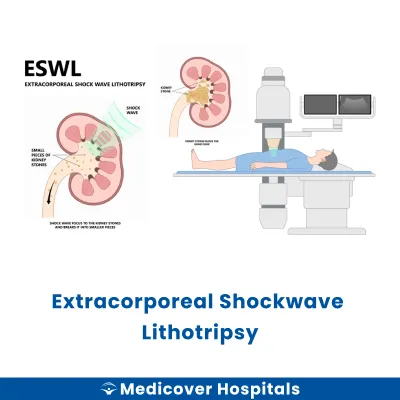
Extracorporeal shockwave lithotripsy (ESWL) is a non-invasive procedure used to treat kidney stones. It involves using shock waves to break down stones in the kidney (renal calculi) into smaller fragments. These fragments can then pass through the urinary tract more easily. The procedure targets the stones without the need for any incisions or direct contact with the stones.
This procedure is needed when kidney stones cause pain, infection, or block urine flow. If left untreated, kidney stones can lead to severe pain, urinary tract infections, or kidney damage. ESWL is a modern approach that offers a less invasive option compared to traditional surgery. Other surgical options include ureteroscopy and percutaneous nephrolithotomy. Each approach is chosen based on the stone's size and location.
Extracorporeal Shockwave Lithotripsy Doctors Near You
Find skilled urologists for extracorporeal shockwave lithotripsy at Medicover Hospitals across India. Choose your city and book a consultation to discuss your treatment options today.
Why Choose Medicover Hospitals for Extracorporeal Shockwave Lithotripsy?
Get a second opinion from trusted experts and makeconfident, informed decisions.
 Get Second Opinion
Complete Guide To Extracorporeal Shockwave Lithotripsy
Everything you need to know about the procedure, preparation, and recovery
Extracorporeal Shockwave Lithotripsy Procedure Indications
Doctors recommend extracorporeal shockwave lithotripsy (ESWL) when kidney stones cause significant discomfort or complications. It is often suggested when stones do not pass naturally and other treatments have not been effective.
Persistent Pain from Kidney Stones
Patients often experience severe, persistent pain in the back or side. This pain may not subside with medication. Imaging tests like an ultrasound or CT scan reveal stones that are too large to pass naturally. When pain management and hydration fail, ESWL is considered.
Recurrent Urinary Tract Infections
Frequent urinary tract infections (UTIs) can occur due to obstructive stones. Patients may report burning sensation during urination and fever. Doctors find stones on imaging that correlate with infection sites. If antibiotics and other treatments do not resolve the issue, ESWL may be recommended.
Obstructive Uropathy
Patients may have difficulty urinating or notice decreased urine output. Imaging shows stones blocking the urinary tract. When medications and other interventions do not relieve the obstruction, ESWL becomes necessary.
Hematuria
Visible blood in urine or microscopic hematuria can indicate kidney stones. Patients may not have pain, but lab tests confirm blood presence. If stones are identified as the cause and bleeding persists, ESWL is advised.
Non-Responsive to Medical Expulsion Therapy
Patients may initially try medications to help pass stones. If stones remain after several weeks, as confirmed by imaging, and symptoms persist, ESWL is considered to facilitate stone removal.
How to Prepare for Extracorporeal Shockwave Lithotripsy?
Proper preparation for extracorporeal shockwave lithotripsy (ESWL) ensures a smooth procedure and aids in recovery. Following these steps can help minimise complications and enhance the effectiveness of the treatment.
- Medication Review: Stop NSAIDs, anticoagulants, and herbal supplements at least 7 days before the procedure.
- Fasting Instructions: Fast for at least 6 hours before the procedure if anaesthesia is used.
- Hydration: Drink plenty of water the day before the procedure unless instructed otherwise by your doctor.
- Clothing: Wear loose, comfortable clothing on the day of the procedure for ease and comfort.
- Transportation: Arrange for someone to drive you home post-procedure as you may feel drowsy.
- Medication List: Bring a list of all medications with dosages to share with the medical team.
- Pre-procedure Tests: Complete any required blood tests or imaging studies as advised by your doctor.
- Personal Items: Leave valuables at home and bring only essentials to the hospital.
Extracorporeal Shockwave Lithotripsy Procedure (Step-by-Step)
Performed by urological surgeons, the procedure typically lasts 45 minutes to 1 hour. It is usually done under sedation or regional anaesthesia.
- Preparation: The patient lies on a water-filled cushion. Sedation or regional anaesthesia is administered to ensure comfort.
- Positioning: The patient is positioned to align the kidney stone with the shockwave machine. An X-ray or ultrasound helps in precise targeting.
- Shockwave Delivery: A lithotripter generates shockwaves. These waves pass through the body, breaking the stone into smaller pieces.
- Monitoring: The urologist monitors the stone's fragmentation through imaging. Adjustments are made to ensure effective stone breakage.
- Completion: Once the stone is adequately fragmented, the procedure ends. The patient is moved to a recovery area.
- Post-Procedure Care: The patient may experience mild discomfort. Pain relief medication is provided. Drinking plenty of water helps pass the stone fragments.
- Follow-Up: A follow-up appointment is scheduled to check the passage of stone fragments and assess kidney health.
Who Performs Extracorporeal Shockwave Lithotripsy Procedure?
Extracorporeal shockwave lithotripsy is performed by urologists. These specialists are trained in diagnosing and treating urinary tract conditions, including kidney stones. They use advanced imaging and lithotripter machines to ensure effective treatment.
Recovery After Extracorporeal Shockwave Lithotripsy Procedure
Recovery from extracorporeal shockwave lithotripsy (ESWL) is generally smooth. Most patients can return to their daily activities within a few days. However, some discomfort and minor side effects are common as the body expels the stone fragments.
Day 1-2:
- Expect mild pain or discomfort in the treated area. Pain relievers may be prescribed.
- Drink plenty of water to help flush out stone fragments.
- Rest is advised. Avoid strenuous activities.
Day 3-5:
- Gradually resume light activities. Avoid heavy lifting or intense exercise.
- Continue a fluid-rich diet. Include foods like dal-rice, khichdi, and soups.
- You may notice blood in urine, which is normal but should decrease over time.
Day 6-7:
- Most people can return to work or school unless advised otherwise by the doctor.
- Maintain a balanced diet with curd, moong dal, and fresh fruits.
- Monitor urine output and colour.
Week 2:
- Resume normal activities as tolerated.
- Continue to stay hydrated and follow dietary recommendations.
- Attend follow-up appointments to ensure proper recovery.
When to Seek Urgent Help
- Severe pain unrelieved by medication.
- High fever or chills.
- Persistent nausea or vomiting.
- Heavy bleeding in urine.
Benefits of Extracorporeal Shockwave Lithotripsy Procedure
Extracorporeal shockwave lithotripsy (ESWL) is a non-invasive procedure used to treat kidney stones.
- Non-Invasive: ESWL does not require any surgical incisions, reducing recovery time.
- Minimal Discomfort: The procedure is generally well-tolerated with minimal pain.
- Quick Recovery: Patients can usually resume normal activities shortly after treatment.
- Effective for Small Stones: ESWL is particularly effective for breaking down small to medium-sized stones.
Risks and Complications of Extracorporeal Shockwave Lithotripsy Procedure
While ESWL is generally safe, it does carry some risks and potential complications.
- Minor bruising or discomfort in the treated area.
- Blood in urine for a few days post-procedure.
- Infection requiring antibiotics.
- Damage to kidney tissue or surrounding organs.
- Formation of stone fragments that may require additional treatment.
- High blood pressure as a temporary side effect.
Common Risks:
Rare Complications:
Cost of Extracorporeal Shockwave Lithotripsy Procedure
The cost of the Extracorporeal shockwave lithotripsy procedure at Medicover Hospitals ranges from Rs. 35,000 to Rs. 50,000 depending on the ward category chosen. Prices vary based on the type of accommodation and services provided.
We offer transparent pricing with support for insurance and TPA, including CGHS, ESI, and major TPAs. Cashless facilities are available for your convenience. Please contact the hospital for the latest insurance panel details as these may change periodically.
Frequently Asked Questions
1. How much does Extracorporeal shockwave lithotripsy procedure cost at Medicover Hospitals?
The cost for Extracorporeal shockwave lithotripsy ranges from Rs. 35,000 to 50,000 across Medicover Hospitals. Prices vary based on room type and care level.
2. Is Extracorporeal shockwave lithotripsy procedure covered under health insurance at Medicover?
Extracorporeal shockwave lithotripsy may be covered by CGHS, ESI, and major TPAs with cashless options. Please contact the hospital for current panel details.
3. Can kidney stones reoccur after lithotripsy?
Yes, kidney stones can reoccur after lithotripsy. Regular check-ups and dietary changes like reducing salt can help prevent recurrence.
4. Will I need to change my diet after lithotripsy?
Post-lithotripsy, a diet low in salt and oxalates is recommended. Include foods like curd, dal-rice, and khichdi to aid recovery.
5. Is there pain after Extracorporeal shockwave lithotripsy?
Mild pain or discomfort is common after lithotripsy as stones pass. Pain relief medications can help manage this discomfort effectively.
6. How soon can I resume work after lithotripsy?
Most patients can resume work within a few days after lithotripsy. However, avoid heavy lifting and strenuous activities for at least a week.
7. Can lithotripsy cause kidney damage?
Lithotripsy is generally safe, but there's a small risk of kidney bruising. Regular follow-ups can ensure any complications are managed promptly.


