 Call
Call Patient Reports
Best Hospital for Extracorporeal Shock Wave Lithotripsy with Advanced Urology Care
Extracorporeal Shock Wave Lithotripsy (ESWL) at Medicover Hospitals is a non-invasive procedure performed by skilled urologists with qualifications like MS, DNB, and MCh. This approach effectively treats kidney stones without the need for incisions, resulting in shorter hospital stays for patients.
Expert Specialists
Yearly Treatments
Patient Satisfaction
What is Extracorporeal Shock Wave Lithotripsy?
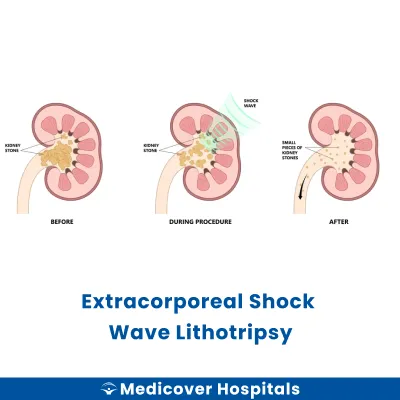
Extracorporeal Shock Wave Lithotripsy (ESWL) is a non-invasive medical procedure used to treat kidney stones (renal calculi). It involves using shock waves to break down stones in the kidney or ureter (tube connecting kidney to bladder) into smaller fragments. These fragments can then pass through the urinary tract more easily. The procedure is performed without any incisions, making it a preferred choice for many patients.
ESWL is needed when kidney stones cause pain, infection, or block urine flow. If left untreated, kidney stones can lead to severe pain, urinary tract infections, or kidney damage. Modern surgical approaches for ESWL include advanced imaging techniques to accurately target stones. This ensures effective treatment with minimal discomfort. Always consult a healthcare professional for appropriate diagnosis and treatment options.
Extracorporeal Shock Wave Lithotripsy Doctors Near You
Discover skilled urologists for extracorporeal shock wave lithotripsy at Medicover Hospitals across India. Choose your city and book a consultation to address your kidney stone concerns today.
Why Choose Medicover Hospitals for Extracorporeal Shock Wave Lithotripsy?
Get a second opinion from trusted experts and makeconfident, informed decisions.
 Get Second Opinion
Complete Guide To Extracorporeal Shock Wave Lithotripsy
Everything you need to know about the procedure, preparation, and recovery
Extracorporeal Shock Wave Lithotripsy Procedure Indications
Doctors recommend Extracorporeal Shock Wave Lithotripsy (ESWL) to treat kidney stones that are causing discomfort or complications. This non-invasive procedure is often suggested when stones are too large to pass naturally or cause persistent symptoms.
Persistent Pain
Patients often experience severe pain in the back or side, which may radiate to the lower abdomen. Imaging tests like an ultrasound or CT scan reveal stones that are unlikely to pass on their own. When pain persists despite medication, ESWL may be advised.
Recurrent Urinary Tract Infections
Frequent urinary tract infections can be a sign of kidney stones. Patients may report burning during urination or cloudy urine. If infections recur and imaging shows stones, ESWL can help remove the underlying cause.
Obstructed Urine Flow
Patients may have difficulty urinating or notice decreased urine output. Tests may show stones blocking the urinary tract. When obstruction leads to kidney swelling or damage, ESWL is considered to relieve the blockage.
Hematuria
Blood in the urine, visible or microscopic, can indicate kidney stones. If imaging confirms stones and bleeding persists, ESWL may be recommended to prevent further complications.
Stones Resistant to Medication
Some stones do not dissolve with medication. Patients may continue to experience symptoms despite treatment. When stones remain unchanged on follow-up imaging, ESWL becomes a viable option.
How to Prepare for Extracorporeal Shock Wave Lithotripsy?
Proper preparation for Extracorporeal Shock Wave Lithotripsy (ESWL) can enhance the procedure's effectiveness and reduce complications. Following the guidelines ensures a smoother experience.
- Medication Review: Stop NSAIDs, anticoagulants, and herbal supplements at least a week before the procedure. Consult your doctor for specific instructions.
- Fasting: Do not eat or drink anything for at least 6 hours before the procedure if anaesthesia is used.
- Hydration: Drink plenty of water the day before the procedure unless advised otherwise by your doctor.
- Clothing: Wear loose, comfortable clothing on the day of the procedure to ease movement and comfort.
- Transportation: Arrange for someone to drive you home after the procedure, as you may feel drowsy from anaesthesia.
- Medication List: Bring a list of all medications you are currently taking, including dosages, for the medical team.
- Pre-Procedure Tests: Complete any required blood tests or imaging studies as advised by your healthcare provider.
- Personal Items: Leave valuables at home and bring only essentials to the hospital.
Extracorporeal Shock Wave Lithotripsy Procedure (Step-by-Step)
Performed by urologists, the procedure typically lasts 45 minutes to 1 hour. It is usually done under general or regional anaesthesia to ensure comfort.
- Preparation: The patient is positioned on a special table. The area around the kidney is cleaned. Anaesthesia is administered for comfort.
- Positioning: The patient lies on a water-filled cushion. This helps in transmitting shock waves effectively to the stone.
- Targeting: Imaging techniques like X-ray or ultrasound are used to locate the kidney stone. The stone's position is marked for precise targeting.
- Shock Wave Delivery: A lithotripter device generates shock waves. These waves pass through the body to reach the stone. The patient might feel mild tapping sensations.
- Stone Fragmentation: The shock waves break the stone into smaller pieces. This process may require several hundred to a few thousand waves.
- Monitoring: The patient's vital signs are monitored throughout. Adjustments are made to ensure effective stone fragmentation.
- Post-Procedure Care: The patient is observed for a short period. Pain relief and hydration are provided. Instructions for passing stone fragments are given.
Who Performs Extracorporeal Shock Wave Lithotripsy procedure?
Extracorporeal Shock Wave Lithotripsy is performed by urologists. These specialists are trained in diagnosing and treating urinary tract disorders. They use advanced imaging and lithotripter devices to ensure effective treatment. Please contact the hospital for current details as insurance panels may change.
Recovery After Extracorporeal Shock Wave Lithotripsy Procedure
Recovery from Extracorporeal Shock Wave Lithotripsy (ESWL) is generally smooth, with most patients resuming normal activities within a few days. Expect some discomfort as the body expels the stone fragments.
Day 1-2:
- Rest at home and avoid strenuous activities.
- Drink plenty of water to help flush out stone fragments.
- Consume light meals like curd, dal-rice, or soups to avoid digestive discomfort.
Day 3-5:
- You may experience mild pain or discomfort as stones pass. Over-the-counter pain relief can help.
- Continue a diet rich in fluids and easy-to-digest foods like khichdi or moong dal.
- Gradually resume light activities, but avoid heavy lifting or intense exercise.
Day 6-7:
- Most patients can return to work or school, depending on their comfort level.
- Maintain hydration and a balanced diet to support recovery.
- Monitor urine for any blood or unusual symptoms.
Phase 2 (Week 2 and beyond):
- Engage in regular activities, but listen to your body and rest if needed.
- Continue to follow dietary recommendations to prevent future stones.
- Schedule a follow-up appointment to ensure complete recovery.
When to Seek Urgent Help:
- Severe pain not relieved by medication.
- Fever or chills indicating possible infection.
- Persistent nausea or vomiting.
- Blood in urine that doesn't clear up.
Benefits of Extracorporeal Shock Wave Lithotripsy Procedure
Extracorporeal Shock Wave Lithotripsy (ESWL) is a non-invasive treatment for kidney stones.
- Non-Invasive: No incisions are required, reducing recovery time.
- Outpatient Procedure: Typically performed without the need for an overnight hospital stay.
- Quick Recovery: Most patients can resume normal activities within a few days.
- Effective for Small to Medium Stones: Particularly useful for stones that are difficult to pass naturally.
Risks and Complications of Extracorporeal Shock Wave Lithotripsy procedure
While ESWL is generally safe, it carries certain risks and potential complications.
- Bruising and discomfort in the treated area.
- Blood in urine for a short period post-procedure.
- Infection requiring antibiotics.
- Kidney damage or reduced kidney function.
- Incomplete stone fragmentation, necessitating further treatment.
- Blockage of the urinary tract by stone fragments.
What is the Cost of Extracorporeal Shock Wave Lithotripsy Procedure?
The cost of Extracorporeal Shock Wave Lithotripsy at Medicover Hospitals ranges from Rs. 18,750 to Rs. 66,000. The price varies depending on the ward category chosen, such as outpatient, day care, or private rooms. We offer transparent pricing to ensure clarity for our patients. Additionally, we provide insurance and TPA support, including CGHS, ESI, and major TPAs, with a cashless facility available. Please contact the hospital for the latest insurance panel details as these may change periodically.
Frequently Asked Questions
1. How much does Extracorporeal Shock Wave Lithotripsy procedure cost at Medicover Hospitals?
The cost ranges from Rs. 18,750 to Rs. 66,000 across Medicover Hospitals. Prices vary based on the type of room and care required.
2. Is Extracorporeal Shock Wave Lithotripsy procedure covered under health insurance at Medicover?
ESWL is often covered by CGHS, ESI, and major TPAs with cashless options. Please contact the hospital for current panel details.
3. Can kidney stones reoccur after ESWL?
Yes, kidney stones can reoccur even after ESWL treatment. Regular follow-ups and lifestyle changes are recommended to prevent recurrence.
4. Will I need dietary changes after ESWL?
Post-ESWL, a diet rich in fluids, curd, and dal-rice is advised. Avoiding high-oxalate foods can help prevent stone formation.
5. How long does it take to pass stone fragments after ESWL?
It usually takes a few weeks to pass stone fragments after ESWL. Drinking plenty of water can aid in quicker passage.
6. Is there pain after ESWL?
Some patients may experience mild pain or discomfort after ESWL. Pain relief medications can be prescribed to manage this.
7. Can I resume normal activities after ESWL?
Most patients can resume normal activities within a few days after ESWL. It's important to follow the doctor's advice on physical exertion.


