 Call
Call Patient Reports
Excisional Biopsy of Benign Lesion Surgery at Medicover Hospitals
At Medicover Hospitals, general surgeons with qualifications like MS, DNB, and FMAS perform open excisional biopsies for benign lesions. This procedure involves removing the entire lesion for analysis. Patients benefit from shorter hospital stays and quicker recovery times due to the precise surgical approach.
Expert Surgeons
Yearly Surgeries
Patient Satisfaction
What is Excisional Biopsy of Benign Lesion?
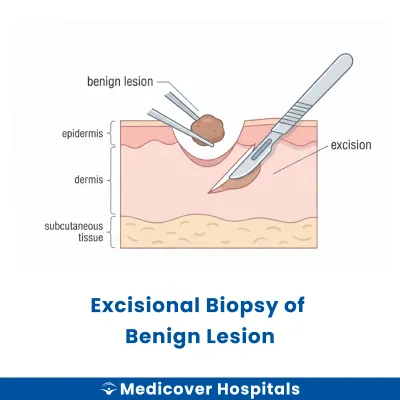
An excisional biopsy of a benign lesion involves the surgical removal of a non-cancerous growth or lump. This procedure can be performed on various body parts, such as the skin, breast, or thyroid. The term "benign" indicates that the lesion is not malignant (cancerous). The excision (removal) helps in diagnosing the nature of the lesion and ensures it does not cause further complications.
This surgery is needed when a benign lesion causes discomfort, pain, or cosmetic concerns. Conditions like fibroadenomas in the breast or lipomas under the skin may require this procedure. If left untreated, these lesions can grow or cause pressure on surrounding tissues. Modern surgical approaches include minimally invasive techniques and laser excision, which aim to reduce recovery time and scarring.
Excisional Biopsy of Benign Lesion Doctors Near You
Discover skilled general-surgeons for excisional biopsy of benign lesions at Medicover Hospitals across India. Select your city and book a consultation to address your health needs effectively.
Why Choose Medicover Hospitals for Excisional Biopsy of Benign Lesion?
Get a second opinion from trusted experts and makeconfident, informed decisions.
 Get Second Opinion
Complete Guide To Excisional Biopsy Of Benign Lesion
Everything you need to know about the procedure, preparation, and recovery
Excisional Biopsy of Benign Lesion Surgery Indications
Doctors recommend an excisional biopsy of a benign lesion when non-invasive methods do not provide a clear diagnosis or when the lesion causes discomfort. This procedure helps in both diagnosis and treatment by removing the entire lesion for examination.
Persistent Pain or Discomfort
Patients may experience ongoing pain or discomfort at the site of the lesion. If physical examination and imaging suggest irritation or pressure on surrounding tissues, an excisional biopsy may be advised. When pain persists despite medication or other treatments, surgery becomes necessary.
Rapid Growth of Lesion
A lesion that grows quickly can be alarming. Doctors may notice changes in size during follow-up visits or through imaging tests. If the lesion continues to enlarge despite monitoring, an excisional biopsy is recommended to rule out malignancy.
Bleeding or Ulceration
Some benign lesions may bleed or develop ulcers. Patients often report bleeding or sores that do not heal. If these symptoms persist and conservative treatments fail, an excisional biopsy is necessary to prevent further complications.
Unclear Diagnosis
When imaging or initial biopsy results are inconclusive, an excisional biopsy can provide a definitive diagnosis. This is crucial when the lesion's nature remains uncertain after non-invasive tests.
Cosmetic Concerns
Lesions in visible areas can cause distress due to appearance. If a patient is concerned about the lesion's impact on their looks and non-surgical options are ineffective, an excisional biopsy may be considered for removal.
How to Prepare for Excisional Biopsy of Benign Lesion?
Proper preparation is crucial for a smooth excisional biopsy of a benign lesion. It ensures safety and helps achieve the best possible outcomes.
- Medication Review: Stop NSAIDs, anticoagulants, and herbal supplements as advised by your doctor to reduce bleeding risk.
- Fasting Guidelines: If general anaesthesia is planned, fast for at least 6-8 hours before the procedure.
- Clothing Choice: Wear loose, comfortable clothing to avoid irritation around the biopsy site post-procedure.
- Transportation: Arrange for someone to drive you home after the procedure, especially if sedation or anaesthesia is used.
- Medication List: Bring a list of all medications you take, including dosages, for the medical team to review.
- Skin Preparation: Follow any specific instructions given by your doctor regarding skin cleansing before the procedure.
- Pre-Procedure Instructions: Follow any additional instructions provided by your healthcare provider to ensure a successful biopsy.
- Confirm Details: Verify the time and location of your procedure and arrive early to complete any necessary paperwork.
Excisional Biopsy of Benign Lesion Surgery (Step-by-Step)
Overview: This procedure is performed by general surgeons. It typically takes about 30 to 60 minutes. It can be done under local, regional, or general anaesthesia, depending on the lesion's location and size.
- Preparation: The patient is positioned comfortably. The area around the lesion is cleaned and sterilised. Anaesthesia is administered to ensure the patient does not feel pain.
- Incision: A small incision, usually 1-2 cm, is made over the lesion using a scalpel. The size depends on the lesion's size and location.
- Excision: The surgeon carefully removes the entire lesion using surgical instruments like a scalpel or curette. The goal is to excise the lesion with clear margins.
- Haemostasis: Bleeding is controlled using bipolar cautery. This helps to seal blood vessels and minimise bleeding during the procedure.
- Closure: The incision is closed with sutures or surgical adhesive. The method depends on the incision size and location.
- Dressing: A sterile dressing is applied over the incision to protect it from infection and aid in healing.
- Recovery: The patient is monitored as they recover from anaesthesia. They may feel slight discomfort or soreness at the incision site.
Who Performs Excisional Biopsy of Benign Lesion Surgery?
This procedure is performed by general surgeons. They are trained to diagnose and surgically remove benign lesions. Their expertise ensures that the lesion is excised safely and effectively.
Recovery After Excisional Biopsy of Benign Lesion Surgery
Recovery from an excisional biopsy of a benign lesion is usually straightforward. Most patients experience minimal discomfort and can resume normal activities soon. However, it's important to follow post-operative care instructions for optimal healing.
Day 1-2:
- Rest is crucial. Avoid strenuous activities.
- Keep the surgical area clean and dry. Follow dressing change instructions.
- Consume soft, easy-to-digest foods like curd, dal-rice, and soups.
Day 3-5:
- Minor swelling or bruising may occur. Use cold compresses if advised.
- Continue with a light diet. Include khichdi and moong dal for protein.
- Gradually increase light activities as tolerated.
Day 6-7:
- Most patients can resume work or school, depending on comfort and doctor's advice.
- Monitor the incision site for signs of infection.
- Maintain a balanced diet to support healing.
Phase 2 (Week 2-4):
- Engage in regular activities but avoid heavy lifting or intense exercise.
- Follow up with your doctor to assess healing progress.
- Continue a nutritious diet to aid recovery.
When to Seek Urgent Help:
- Excessive bleeding or pus from the incision site.
- Fever or chills indicating possible infection.
- Severe pain not relieved by prescribed medication.
Benefits of Excisional Biopsy of Benign Lesion Surgery
An excisional biopsy is a surgical procedure to remove a benign lesion for diagnostic and therapeutic purposes.
- Accurate Diagnosis: Provides a definitive diagnosis by allowing complete tissue examination.
- Complete Removal: Ensures the entire lesion is removed, reducing the chance of recurrence.
- Minimal Scarring: Typically results in minimal scarring due to precise surgical techniques.
- Quick Recovery: Generally involves a short recovery period, allowing patients to resume normal activities soon.
Risks and Complications of Excisional Biopsy of Benign Lesion Surgery
While generally safe, excisional biopsy carries some risks and potential complications.
- Common: Bleeding at the surgical site, which may require additional care.
- Common: Infection, which can occur at the incision site and may need antibiotics.
- Common: Pain or discomfort in the area, usually manageable with medication.
- Rare: Allergic reactions to anaesthesia, which require prompt medical attention.
- Rare: Nerve damage, potentially causing numbness or tingling near the site.
- Rare: Scarring that may be more noticeable than expected.
Cost of Excisional Biopsy of Benign Lesion Surgery
The cost for an excisional biopsy of a benign lesion surgery at Medicover Hospitals ranges from ₹5,000 and ₹50,000. The price varies depending on the ward category chosen, such as day care, general, or private. We offer transparent pricing to ensure clarity for our patients.
Insurance and TPA support is available, with acceptance of CGHS, ESI, and major TPAs. Cashless facilities are also provided for convenience. Please contact the hospital for the latest insurance panel details as these may change periodically.
Frequently Asked Questions
1. How much does Excisional Biopsy of Benign Lesion surgery cost at Medicover Hospitals?
The cost for Excisional Biopsy of Benign Lesion surgery at Medicover Hospitals ranges from ₹5,000 and ₹50,000, depending on the facility type.
2. Is Excisional Biopsy of Benign Lesion surgery covered under health insurance at Medicover?
Yes, it is covered by CGHS, ESI, and major TPAs with cashless options. Please contact the hospital for current panel details.
3. Will I have a visible scar after excisional biopsy?
A small scar may form at the biopsy site. It usually fades over time with proper care and treatment.
4. Can benign lesions grow back after excisional biopsy?
Benign lesions typically do not recur after complete excision. Regular follow-ups help ensure no new growths develop.
5. How soon can I return to work after excisional biopsy?
Most patients can return to work within a few days. Rest and avoiding strenuous activities are recommended for a smooth recovery.
6. Will I need stitches removed after excisional biopsy?
Stitches may be required and are usually removed within 7-10 days. Your doctor will advise on the specific follow-up care needed.
7. What foods should I avoid after excisional biopsy?
Avoid spicy and oily foods to prevent irritation. Opt for light meals like curd, dal-rice, or khichdi for better digestion.


